


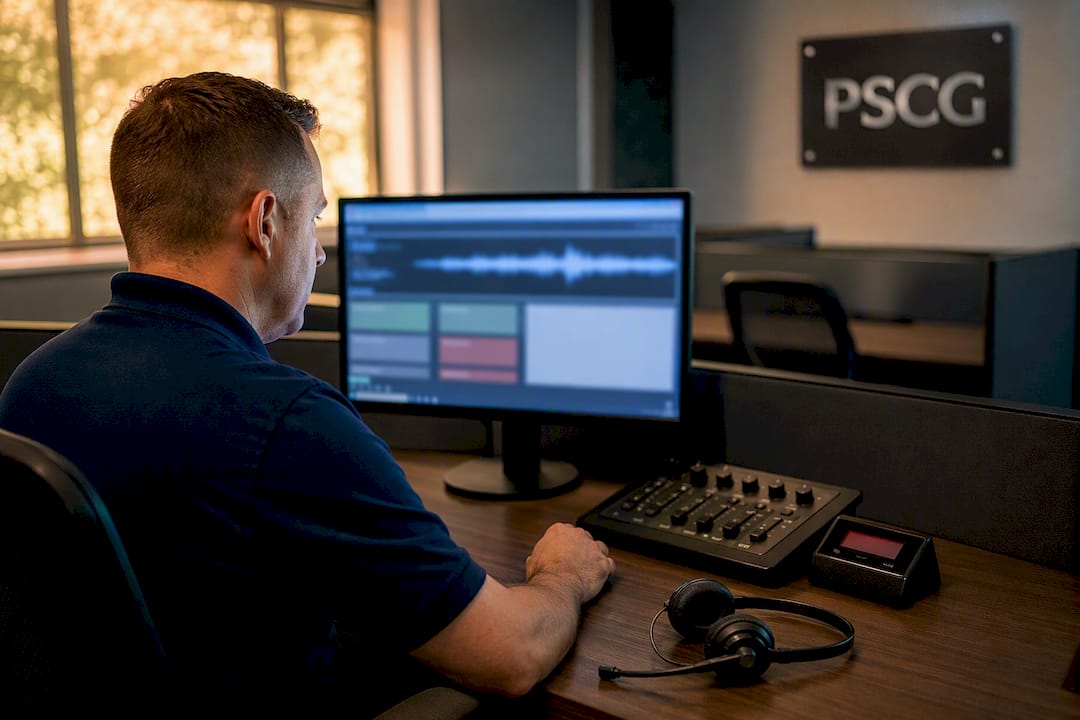
A dispatch QA program is a standards-anchored system for reviewing 911 calls against written protocols, then feeding what you find back into training and staffing decisions. Done right, it delivers three things: defensible safety and compliance, consistent call handling across every shift, and a steady stream of targeted fixes instead of vague “do better” memos. This week, pick one compliance item, like address verification or determinant selection, and run a spot review on ten calls to see where you stand.
TL;DR:
- Running a small, focused scorecard of five to seven critical items ensures consistent monitoring and prevents abandonment of the QA process.
- Clear governance with a designated program owner, written standards, and external accreditation support long-term program success.
- Regular, rapid feedback—within 72 hours—drives immediate correction of safety-critical issues, while larger system changes are reserved for quarterly QI reviews.
- Differentiating between QA for adherence and QI for system improvement prevents confusion and targets specific areas for coaching or process change.
- Using reliable data tools, including centralized review queues and trend dashboards, enhances consistency and scalability of the QA program.
Table of Contents
- What Should Anchor a Dispatch QA Program?
- QA Versus QI: Two Different Jobs, One Program
- Building a Scorecard You Can Actually Finish
- Who Reviews Calls, and How Feedback Actually Lands
- The Data and Tools That Keep QA Repeatable
- How to Launch a Minimum Viable QA Program in Six Steps
- PSCG’s Field Perspective on What Makes QA Programs Stick
- An Editor’s Take: Smaller Programs Beat Ambitious Ones
- Let PSCG Help You Build or Strengthen Your QA Program
- Sources
- FAQ
What Should Anchor a Dispatch QA Program?
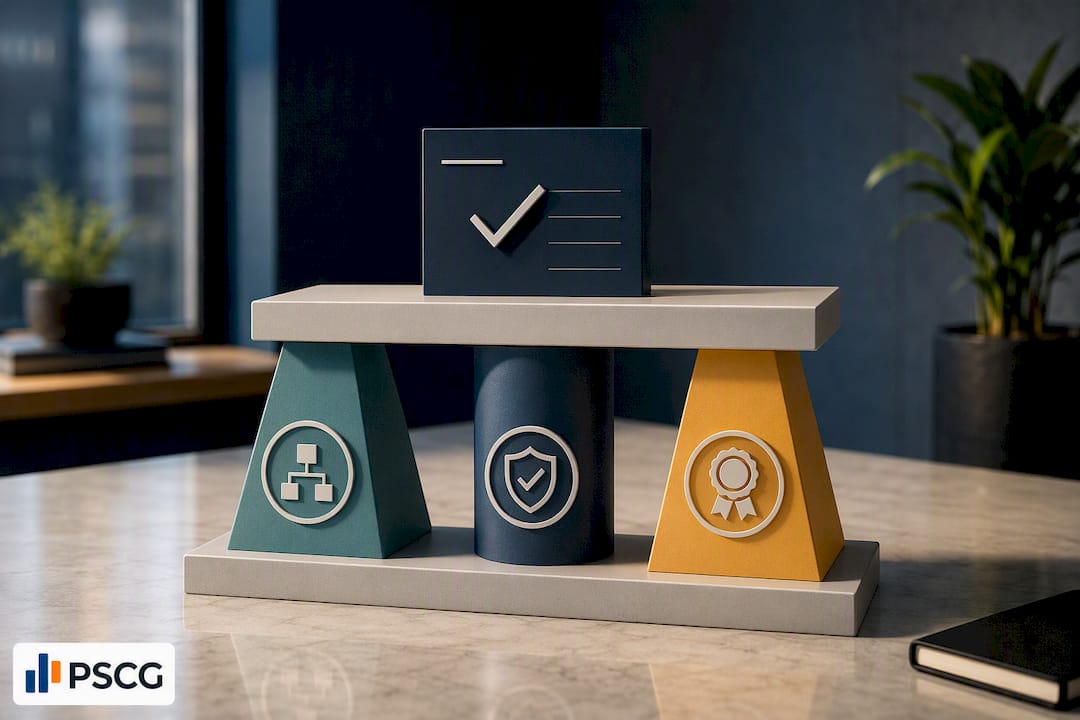
Most defensible QA programs sit on the same three legs: recognized protocol standards, clear governance, and a path toward formal accreditation. Skip any one of them and the program tends to drift into inconsistent, hard-to-defend scoring within a year.
The International Academies of Emergency Dispatch develops the ProQA protocols that a large share of centers use as their scoring baseline, along with certification tracks for the reviewers who audit those calls. Certification matters because it gives your scoring a reference point outside your own building. The National Emergency Number Association reinforces this with its structured review methodology, built specifically for public safety answering points that need a repeatable process rather than an ad hoc one.
Governance is where most programs actually succeed or fail. You need:
- A named program owner accountable for outcomes, not just paperwork
- Written, protocol-specific standards for each call type your center handles
- A documented scorecard tied to those standards
- A case-review workflow with defined sample sizes and timing
- Reliable data sources, including CAD extracts and call recordings
Accreditation, known as ACE status through IAED, signals that your documentation, training, and review rhythm meet an external bar. It is worth pursuing once your governance basics are solid, since pursuing ACE accreditation is typically a multi-month commitment that benefits from outside mentorship.
QA Versus QI: Two Different Jobs, One Program
QA and QI solve different problems, and confusing them is probably the most common mistake I see in early-stage programs. QA confirms whether a specific call met your written standard. QI asks whether the standard itself, or the system behind it, needs to change.
| Factor | QA | QI |
|---|---|---|
| Goal | Verify adherence | Improve the system |
| Method | Scorecard audit | Data-guided test |
| Cadence | Weekly to monthly | Quarterly |
| Output | Individual coaching | Process change |
**A single missed safety question on one call is a QA issue.
Say your reviewers flag late dispatch assignment on emergency calls three weeks running. That is no longer a coaching conversation. It is a signal to run a constrained QI test, maybe a staffing tweak or a script change, and measure whether the numbers actually move.
Building a Scorecard You Can Actually Finish
A scorecard nobody finishes is worse than no scorecard at all, because it creates the illusion of oversight without the substance. Keep it to five to seven checks that map directly to safety and compliance, not administrative nitpicking.
- Address verification completed before proceeding with triage
- Mandatory safety questions asked in full, treated as immediate-fail items on safety-critical calls
- Determinant selection accurate against protocol logic
- Documentation completion in CAD and call records
- Dispatch assignment timeliness against your local benchmark
- Communication quality, scored separately from clinical accuracy so you never conflate the two
Sample size should scale with call volume. Centers with lower call volumes may review a moderate percentage of calls randomly, plus every call tied to a complaint or adverse outcome. Higher-volume centers often run a smaller random sample but use focused sampling on specific determinant codes.
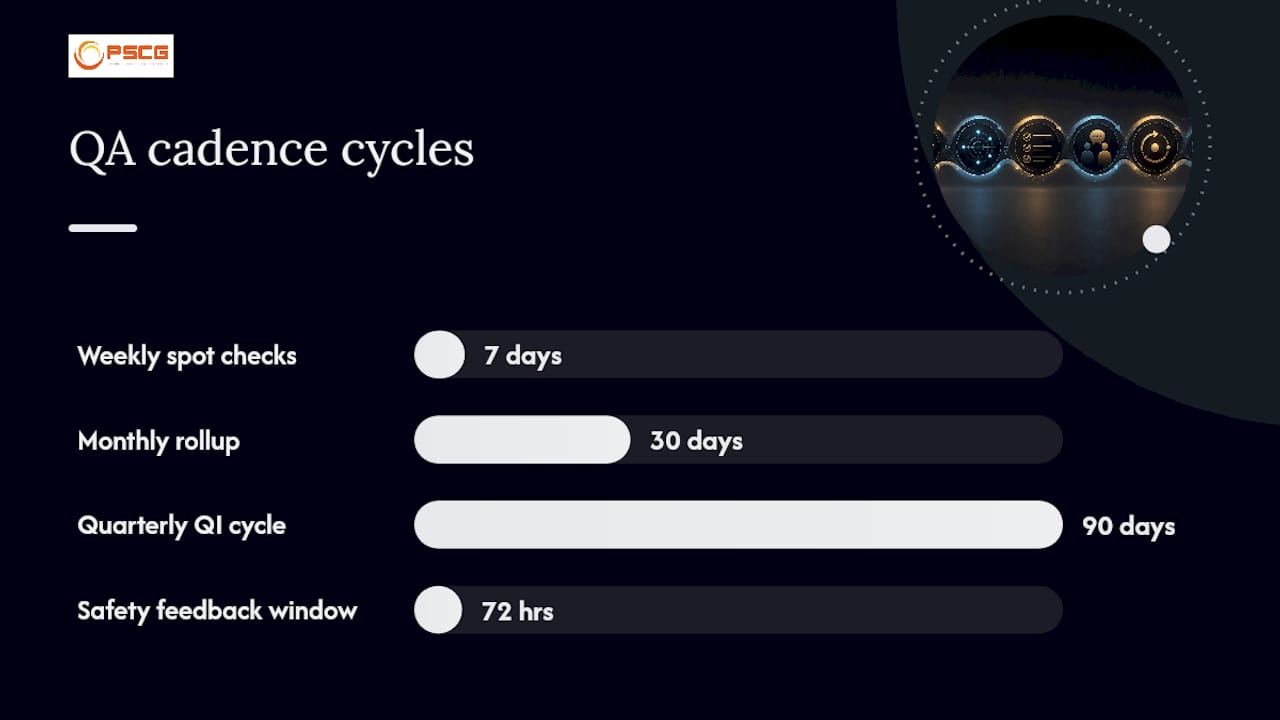
Cadence works best in layers: weekly spot checks on a handful of calls per reviewer, a monthly rollup report to leadership, and a quarterly cycle where recurring findings graduate into QI projects. Feedback timing matters just as much as the review itself. Time-sensitive findings, particularly anything safety-related, should reach the dispatcher within 72 hours, a turnaround window that outsourced QA review models use as their own standard.
Pro Tip: Score documentation and communication quality separately from protocol accuracy. Lumping them together buries clinical performance problems inside administrative noise, and you’ll waste coaching time on the wrong issue.
Who Reviews Calls, and How Feedback Actually Lands
A QA program without clear role definitions turns into a blame exercise fast. Build a simple role matrix before you build anything else.
- Program lead owns the standards, the calendar, and the reporting
- QA reviewer, often IAED-certified as an ED-Q, scores calls against the protocol
- Supervisors deliver coaching and document performance conversations
- Training owner turns recurring findings into refresher content
- Data support pulls CAD extracts and manages the recording archive
Feedback should combine written notes with a short one-on-one conversation, never a written note alone. Repeated findings escalate into a documented performance improvement plan, with dates and specific behaviors, not general impressions.
Build an appeals path from day one. Dispatchers need a way to contest a score, and a documented appeals process with clear confidentiality rules reduces resistance and makes coaching land better, since staff trust a system they can push back against.
The Data and Tools That Keep QA Repeatable
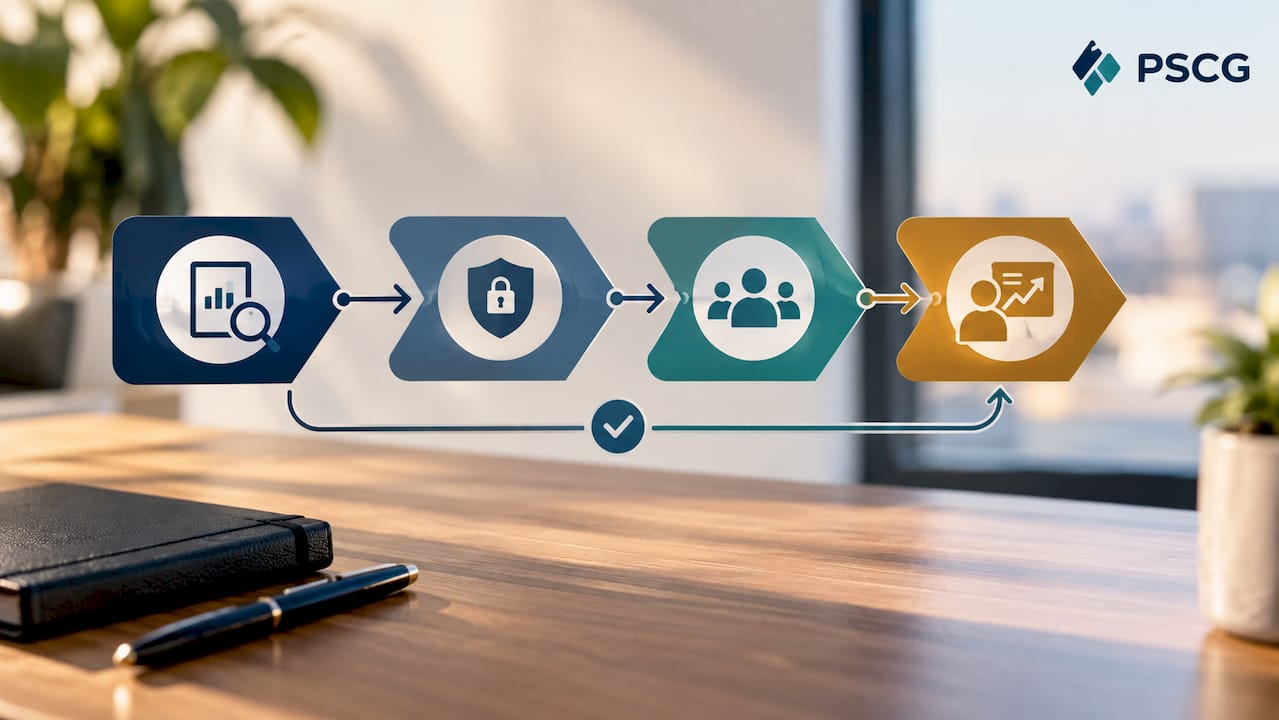
QA lives or dies on whether you can reliably pull the same data every time. That means CAD extracts, call audio, protocol logs from your ProQA system, and staffing overlays that let you connect a bad call to a specific shift pattern rather than guessing.
On the tooling side, look for a centralized review queue instead of scattered spreadsheets, a dashboard that tracks trends over time, and an action-tracking feature that closes the loop on coaching. Some platforms now offer AI-assisted scoring with supervisor validation to widen coverage without adding headcount, though a human still needs to confirm every flagged call.
Spreadsheets work fine for a center just starting out with a handful of reviewers and a small sample size. Once you’re running weekly reviews across multiple shifts with appeals and trend reporting, a purpose-built queue saves real hours and cuts scoring inconsistency between reviewers.
How to Launch a Minimum Viable QA Program in Six Steps
You do not need a fully built system to start. You need a scoped, honest first pass that you can run consistently.
- Name an owner and pick one service area to start, rather than trying to audit every call type at once.
- Write one clear standard per process, then build your lean five-to-seven-item scorecard around it.
- Start a weekly spot-review habit paired with a monthly summary report to leadership.
- Deliver coaching within days, not weeks, and escalate any finding that repeats three times into a controlled QI trial.
- Track a small set of metrics consistently and report what actions came out of them, not just the scores themselves.
- Plan your next phase: additional reviewer staffing, a run at ACE accreditation, or outside program design support if the workload outpaces your team.
PSCG’s Field Perspective on What Makes QA Programs Stick
Our team has observed patterns in stalled QA programs based on extensive experience with public safety agencies in system design and operational risk reduction. Centers try to score everything at once, feedback sits for weeks before reaching the dispatcher, and scoring drifts between reviewers because nobody wrote down what “good” actually means.
A common theme observed is that agencies that succeed treat QA as a small, disciplined habit before treating it as a big system. If your center is stalled on accreditation, your QI cycle has gone quiet, or your reviewers are buried without data support, that is usually the moment to bring in outside dispatch center consulting rather than trying to rebuild everything internally.
An Editor’s Take: Smaller Programs Beat Ambitious Ones
The research here points to an uncomfortable truth for anyone building a QA program from scratch: bigger scorecards do not produce better outcomes, they produce abandoned scorecards. The centers that stick with QA long enough to see it change behavior are almost always running lean, five-to-seven-item checklists that a supervisor can finish in ten minutes.
Conventional advice tends to push agencies toward comprehensive audits from day one, covering every protocol branch and every call type simultaneously. That approach sounds thorough on paper. In practice, it collapses under its own weight within a quarter, because nobody has the bandwidth to sustain it.
If you take one thing from this article, prioritize speed of feedback over depth of scorecard. A dispatcher who hears about a missed safety question within 72 hours will correct it. A dispatcher who hears about it a month later, buried in a report with forty other data points, will not. Start small, stay consistent, and let the program earn its way toward bigger ambitions like ACE accreditation.
— Mike
Let PSCG Help You Build or Strengthen Your QA Program
Our approach to dispatch QA emphasizes hands-on public safety consulting experience applied directly to centers’ protocols, staffing, and review workflows, rather than a one-size-fits-all template. We work alongside your team from initial gap analysis through full program deployment, whether you’re building a QA process from nothing or trying to push a stalled program toward accreditation.
Our services span dispatch center consulting, operational risk reduction, and EMS quality improvement consulting, all grounded in the same standards discussed here. If your agency needs help translating scorecard data into real coaching and QI outcomes, request an assessment through Thepscgroup and let’s talk about where your program stands today.
Sources
Keep these references close as you build or refine your program:
FAQ
How Long Does It Take to Get a Dispatcher Certificate?
Basic dispatcher certification typically takes a few weeks of classroom and practical training, though timelines vary by state and by the specific protocol certification pursued. IAED certification for protocols like ProQA generally requires a dedicated course plus passing an exam before a dispatcher is cleared for independent call-taking.
How Hard Is It to Pass the 911 Dispatcher Test?
The pre-employment test is challenging for candidates unfamiliar with multitasking under pressure, since it measures typing speed, decision-making, and the ability to process multiple information streams at once. Most agencies offer study guides, and candidates who practice with sample scenarios tend to perform noticeably better.
What Is the Highest 911 Dispatcher Salary?
Salaries vary widely by state, agency size, and years of experience, with senior dispatchers or QA leads in larger metro centers earning meaningfully more than entry-level staff. Exact figures depend heavily on local pay scales, so checking your state’s public safety employment listings is the most reliable way to get a current number.
How Long Does It Take to Get an EMD Certification?
Emergency Medical Dispatch certification through IAED typically involves a multi-day course followed by an exam, with total time to certification often running one to two weeks depending on the training provider’s schedule. Recertification then follows on a recurring cycle tied to continuing education requirements.
How Is QA Different From QI in a Dispatch Center?
QA checks whether a specific call met your written protocol standard, while QI asks whether the underlying process or system needs to change based on recurring patterns. A single missed step is a QA finding; the same miss repeating across dozens of calls is a QI project, and agencies like Thepscgroup help centers make that translation systematically.