

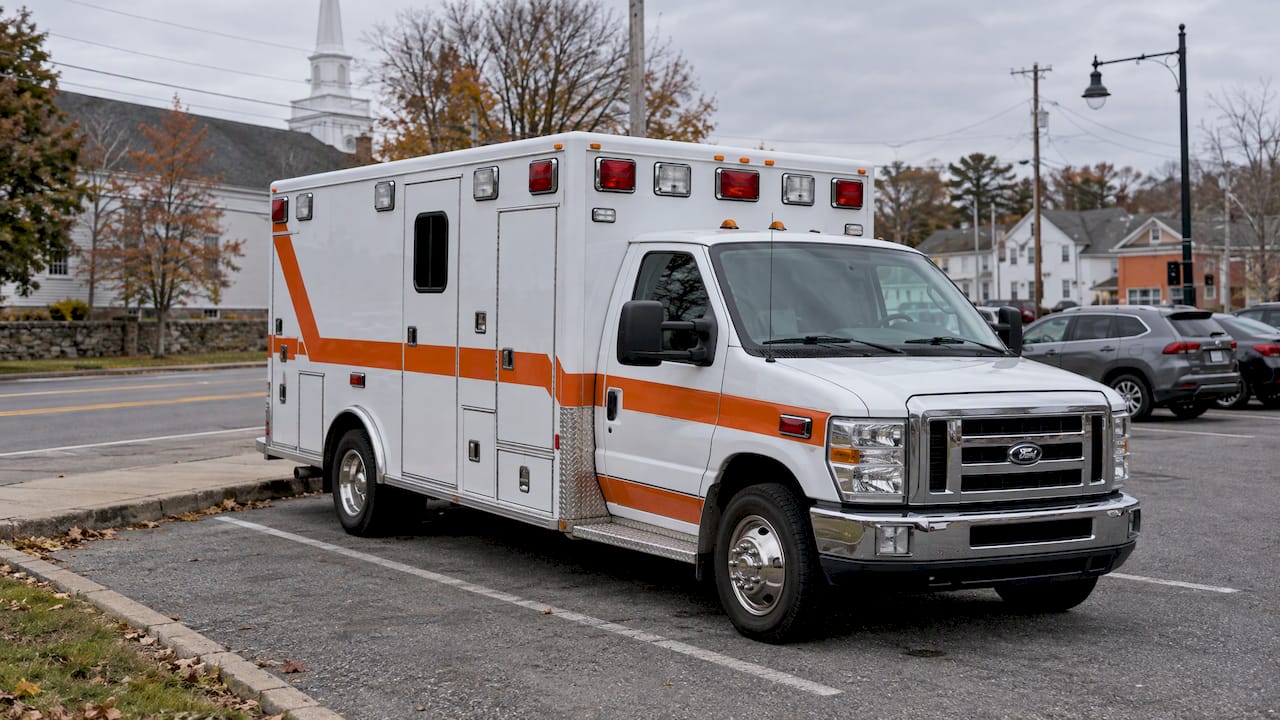
An ambulance posting plan is a written, data-driven schedule that tells your crews where to wait between calls, hour by hour, so the next emergency is closer to a unit than it would be if everyone sat in a station. The plan works when it is built on your own call history, tied to a clear response-time objective, and backed by the staffing and mutual aid agreements that make it possible to follow. We built this guide for EMS chiefs, town leaders, dispatch managers and attorneys who need to decide what belongs in a plan and how to tell whether it is doing its job.
The idea is simple. The execution is where agencies struggle. Let’s walk through both.
TL;DR
- A posting plan assigns ambulances to specific locations by time of day, day of week, season and holiday, and lets dispatchers adjust in real time. It is the working core of System Status Management.
- Evidence is encouraging but specific: studies show shorter response times and better geographic equity, and they also show that the gains depend on local data and good follow-through.
- Build from your own call volume, drive-time coverage and unit availability. Rank candidate posts, write separate lists for peak and off-peak periods, and document a measurable objective.
- Staffing, mutual aid and dispatch policy decide whether a posting plan survives a busy afternoon. Measure it with fractile response times, unit hour utilization and how often you run out of ambulances.
- If you want help designing or evaluating a plan, call us.
Table of Contents
- What a posting plan is, and what it is not
- Why agencies adopt posting plans
- The data a posting plan needs
- Building the plan, step by step
- Staffing, mutual aid and dispatch policy
- Measuring whether the plan works
- How we can help
- Our perspective
- FAQ
- Sources
What a posting plan is, and what it is not
Vermont’s 2025 EMS assessment draws a useful line between three approaches. Static deployment houses a unit at a station and returns it there after every call, with little repositioning based on demand. Dynamic deployment moves units around during the shift based on projected call volume and location. A posting plan, the working tool of System Status Management, uses historical data to decide in advance where ambulances should wait for the next call. Posts change with time of day, day of week, season and holidays, and dispatchers adjust as the shift unfolds.
In practice, that means a unit might sit at a particular intersection, a shopping center lot or a general area rather than a fixed station that was sited decades ago by political boundary. The same source notes that urban agencies commonly work this way, dispersing ambulances to predetermined posts instead of stations.
A few clarifications help when you explain the concept to a council or a board:
- It is not only a map. A map shows where posts are. A plan also states when each post is active, who decides when it changes, and what happens when a unit is pulled away.
- It is not a substitute for enough units. Posting moves resources to where they are most likely to be needed. It does not create resources.
- It is a living document. Demand shifts with population, traffic, hospital patterns and seasons. A plan written once and filed away will drift out of date.
Why agencies adopt posting plans
The case for posting plans rests on a straightforward principle: demand is not evenly spread across a map or a clock, so coverage should not be either.
A few examples show what the evidence looks like.
New Orleans. The city built a posting protocol from daily and weekly patterns in traffic, 911 calls and ambulance availability. According to the city’s data project page, after launch the 4th district gained 20% in the share of calls meeting the 12-minute response standard, and the 7th district gained 9%. Night-shift citywide response times improved modestly but significantly. Day shifts showed no overall significant improvement, but equity across districts improved. That last point matters for elected officials: a plan can do real work for fairness even when the headline average barely moves.
Los Angeles. In a classic management science study from 1973, researchers used a location model to select 14 of 34 possible firehouses for emergency ambulance placement. The final deployment cut mean response time, reduced the probability of excessive response times, and smoothed workload among the 14 crews. Workload balance is easy to overlook, and it is a retention issue as much as an efficiency one.
Dynamic relocation research. A 2023 scoping review found four studies reporting decreased response times with dynamic relocation compared with ordinary dispatching or station-based deployment, with time saved of 130 to 160 seconds in one, 44 seconds in another and 54 seconds in a third. One simulation showed the share of calls reached within 9 minutes rising from 43% to 55%. The same review reported that total distance traveled increased between 7.9% and 31.7%, and that no study measured clinical outcomes. So the fair reading is that posting reliably improves the timeliness metrics agencies track, and that fuel, wear and crew fatigue belong in your planning too.
For the link between speed and patient outcomes, our overview of why faster EMS response times improve outcomes lays out the statistics leaders cite most often.

The data a posting plan needs
Good plans start from your own numbers. Three data streams do most of the work.
Call demand by place and time
Pull at least a year of dispatch records, and two if you can, so you can see seasonality. Break demand out by hour, day of week and geography. A Sullivan County, New York, study using 2017 and 2018 data shows what a rural and seasonal pattern looks like: 16,120 dispatched calls, peak demand from 11 AM to 5 PM on Mondays and Thursdays, and heavier demand in summer. A plan built on annual averages would have missed all of that.
Travel-time coverage
A post is only as good as the area it can reach quickly. New Orleans EMS ranked 55 candidate locations using 8-minute drive-time polygons in ArcGIS and historical call-volume trends, then produced separate day-shift and night-shift posting lists. Two lists, not one, is the lesson. Traffic at 3 PM is not traffic at 3 AM.
Traffic engineering data can sharpen this step. Teams that already work from traffic counts will recognize the discipline in a signal warrant study, which turns raw volume data into a defensible decision. The same habit, applied to call volume and travel time, is what turns a hunch about a good post into a ranked list you can defend.

Unit availability
If your ambulances are often committed, posting becomes a question of where the last available unit should wait. Houston is a useful example. A 2022 ABC13 analysis of Houston Fire Department data found the department entered resource management at some point during 84% of days in 2022. When availability is that tight, the posting plan and the staffing plan are the same conversation.
Building the plan, step by step
Here is the sequence we recommend for an agency starting from scratch or rebuilding an old plan. Each step lists what it takes and where it tends to go wrong.
- Set the objective first. Decide what the plan is meant to achieve, in numbers. Marion County, Oregon, for example, writes its standards into its Ambulance Service Area Plan: response within 8 minutes in urban zones, 15 in suburban, 20 in Rural 1, 45 in Rural 2 and 120 in frontier areas, each met at least 90% of the time. Where it goes wrong: agencies skip this and then cannot say whether the plan worked. Our guide to 90th percentile fractile response time explains why the 90% framing is more honest than an average.
- Clean and map your demand. Geocode every call, remove duplicates, and separate emergency from non-emergency responses. Where it goes wrong: inconsistent addresses and timestamps that shift between systems. Fixing these before analysis saves weeks later.
- Define zones and candidate posts. List every plausible location, including parking lots, fire stations, hospital campuses and municipal facilities. Confirm access, safety, restroom availability for crews and permission from the property owner. Where it goes wrong: a post that looks perfect on a map but has no safe place to park or no place for the crew to take a break.
- Rank posts and build period-specific lists. Score candidates by the demand they cover within your target drive time, then write separate lists for peak and off-peak hours, weekdays and weekends, and seasonal changes. Where it goes wrong: one static list that quietly turns back into station-based deployment.
- Write the move-up rules. Specify what happens when the first-choice post empties: which unit moves, to where, and who authorizes it. Dispatchers need a clear hierarchy so they are not improvising under pressure. Where it goes wrong: rules that exist only in one senior dispatcher’s head.
- Pilot, then adjust. Start with one shift pattern or one district, collect results, and revise. Where it goes wrong: launching everywhere at once, which makes it impossible to tell which change helped.
- Train and communicate. Crews need to understand why they are posted where they are. Explain the data, hear their feedback about sites and workload, and treat their field knowledge as an input. Where it goes wrong: crews who see posting as an unexplained order.
- Review on a schedule. Set a recurring review, and set triggers for off-cycle review, such as a new hospital, a road closure, a population shift or a change in unit count.
Our peak demand staffing tactics and fleet right-sizing guidance pair naturally with steps 4 and 5, because posting lists only work when the right number of units are on the street at the right hours. We design this work through Peak-Load Staffing Modeling and Scheduling and Deployment Plan Design, and we work alongside your team from identifying the issue through deployment.
Staffing, mutual aid and dispatch policy
A posting plan fails quietly when the surrounding system is not ready for it. Three areas deserve attention before launch.
Staffing
A plan that calls for six posted units at 2 PM is only real if six crews are scheduled. New Orleans’ April 2026 inspector general audit recommended a targeted hiring and staffing plan alongside documented response-time objectives. Those two recommendations go together. Objectives without staffing are aspirations, and staffing without objectives has no way to show results. For a deeper look, see what an EMS staffing analysis involves.
Mutual aid
No posting plan can predict every call. Multnomah County’s February 2026 EMS system assessment describes mutual aid as a coordinated network for when emergencies exceed one agency’s capacity, and stresses mutual aid agreements and radio interoperability with neighboring jurisdictions. It also records stakeholder perceptions about when mutual aid is called and whether the closest unit is used. The takeaway for town leaders and attorneys: write the triggers, the responsibilities and the coordination expectations into the agreement, so no one has to guess in the middle of a call.
Dispatch policy
When does the response-time clock start? At call receipt, at call processing complete, or at unit dispatch? The answer changes your numbers and your contractual obligations. Decide it deliberately, write it down and apply it consistently. If you want to see how dispatch performance shapes outcomes, our piece on a 911 dispatcher’s record is a good place to start.
Measuring whether the plan works
Three measures give you a balanced view.
- Fractile response intervals. The share of calls reached within your target time, such as 90% within 8 minutes in an urban zone. See our EMS performance metrics explainer.
- Unit hour utilization. How much of each unit’s time is spent on calls. Too low suggests idle capacity, too high suggests fatigue and thin coverage.
- Level 0 frequency. How often no ambulance is available. This is the measure leaders feel most acutely.
A 2024 study of a static-based 9-1-1 agency used exactly these three. Over a two-year retrospective analysis, moving one ambulance from one service area to another produced a statistically significant change in unit hour utilization and a statistically significant reduction in level 0 frequency, with a non-significant change in fractile response intervals. One unit, moved with intention, changed how often the system ran out of ambulances. That is the kind of result a council can understand.
The New Orleans audit also shows the cost of skipping documentation. It found that the agency had not formally documented its response-time performance objectives, as NFPA best practices call for, and it recommended documented, measurable objectives. The lesson is practical: write the objective, publish the measure and report it on a regular schedule. For a closer look at the methods, read our response time analysis guide.
How we can help
Posting plans sit at the intersection of data, operations, policy and budget. We provide System Status Management, Deployment Plan Design, Response Time Improvement Analysis and Peak-Load Staffing Modeling and Scheduling for municipalities, EMS agencies and private ambulance companies. With more than 32 years of field experience behind our methods, we help your team move from the question of where to post to a plan your crews, dispatchers and elected officials can all stand behind.

You can explore the full range of EMS system design and System Status Management services, see examples of our work, or contact us. Call us for more information. We would be glad to talk it through.
Our perspective
Every community I have worked with wants the same thing: when someone dials 911, help should arrive quickly, wherever that person happens to live. A posting plan is one of the most practical ways to honor that promise, because it turns data your agency already has into a decision about where the next ambulance should be.
What we see again and again is that the plan itself is rarely the hard part. The hard part is the system around it: a clear response-time objective, a staffing schedule that matches the posts, mutual aid agreements that are written down, and a review habit that keeps the plan current. When those pieces fit together, crews understand their posts, dispatchers have confidence in their move-up decisions, and town leaders can explain results to residents in plain language.
That is the work we do. We sit alongside your team, look at your own call history, and help build a deployment approach that fits your community, from issue identification through deployment. If you are weighing a change, call us. We would be glad to start with a conversation.
Michael A. Loiz
FAQ
How is a posting plan different from dynamic deployment?
A posting plan sets in advance where ambulances should wait, by time of day, day of week and season, and dispatchers adjust it as conditions change. Dynamic deployment is the real-time movement of units based on projected demand. Most well-run systems use a posting plan as the foundation and dynamic moves as the adjustment layer.
How many posts does an agency need?
There is no universal number. It depends on call volume, geography, drive times and how many units are staffed at each hour. New Orleans started with 55 candidate locations and produced separate day and night lists from them, so the active list was shorter than the candidate pool.
How often should we revise the plan?
Set a recurring review and add triggers for off-cycle updates, such as population growth, a new facility, major road changes or a change in unit count. Marion County’s plan, for instance, allows zone maps to be revised when growth or other changes show compelling need.
Who should be involved in writing the plan?
Bring in the EMS chief, dispatch manager, field crews, the municipal leader who controls budget and facilities, and the agency’s attorney for mutual aid and contract language. Each sees a different failure point, and the plan is stronger when all of them have shaped it.
Sources
- Emergency Medical Services System Data Collection (Vermont Department of Health, 2025)
- Projects, DataDriven (City of New Orleans)
- A Methodology for Emergency Ambulance Deployment (Management Science, 1973)
- Dynamic ambulance relocation: a scoping review (PMC, 2023)
- NOEMS posting locations (City of New Orleans Office of Performance and Accountability)
- Comprehensive Study of Sullivan County EMS (Benjamin Center)
- 13 Investigates: HFD short on available ambulances (ABC13, 2022)
- Marion County, Oregon Ambulance Service Area Plan
- New Orleans EMS Response performance audit (Office of Inspector General, April 2026)
- Multnomah County EMS System Assessment (February 2026)
- Assessing Efficiency in a Static-Based 9-1-1 Ambulance System (PubMed)
- Defensible Signal Warrant Study playbook