


TL;DR:
- Simulation training is essential for public safety professionals to develop critical skills and decision-making in realistic scenarios. It improves technical proficiency, team communication, and system resilience by exposing vulnerabilities before real incidents occur. Effective programs integrate simulation into core workflows, prioritize structured debriefing, and focus on organizational culture rather than equipment fidelity.
Simulation training is a structured experiential learning method that replicates real-world emergency scenarios to build the skills, decision-making, and team coordination that public safety professionals need before a real crisis arrives. The role of simulation training goes well beyond classroom instruction. The Østergaard Declaration, a landmark 2026 professional consensus statement, advocates simulation as mandatory in professional practice, not optional education. That shift in framing matters. When an agency treats simulation as a core operational function rather than a supplemental course, it builds a fundamentally different kind of readiness.
How does simulation training work for public safety professionals?
Simulation training works by placing professionals in controlled, repeatable scenarios that mirror the conditions, pressures, and decisions of real emergencies. The learning happens through doing, not watching. Three primary modalities drive most programs in EMS and law enforcement today.
- Manikin-based simulation: High-fidelity patient simulators allow EMS personnel to practice airway management, cardiac arrest protocols, and trauma assessment with realistic physiological feedback.
- Virtual and screen-based simulation: Digital environments replicate dispatch decisions, scene management, and multi-unit coordination without requiring physical equipment or space.
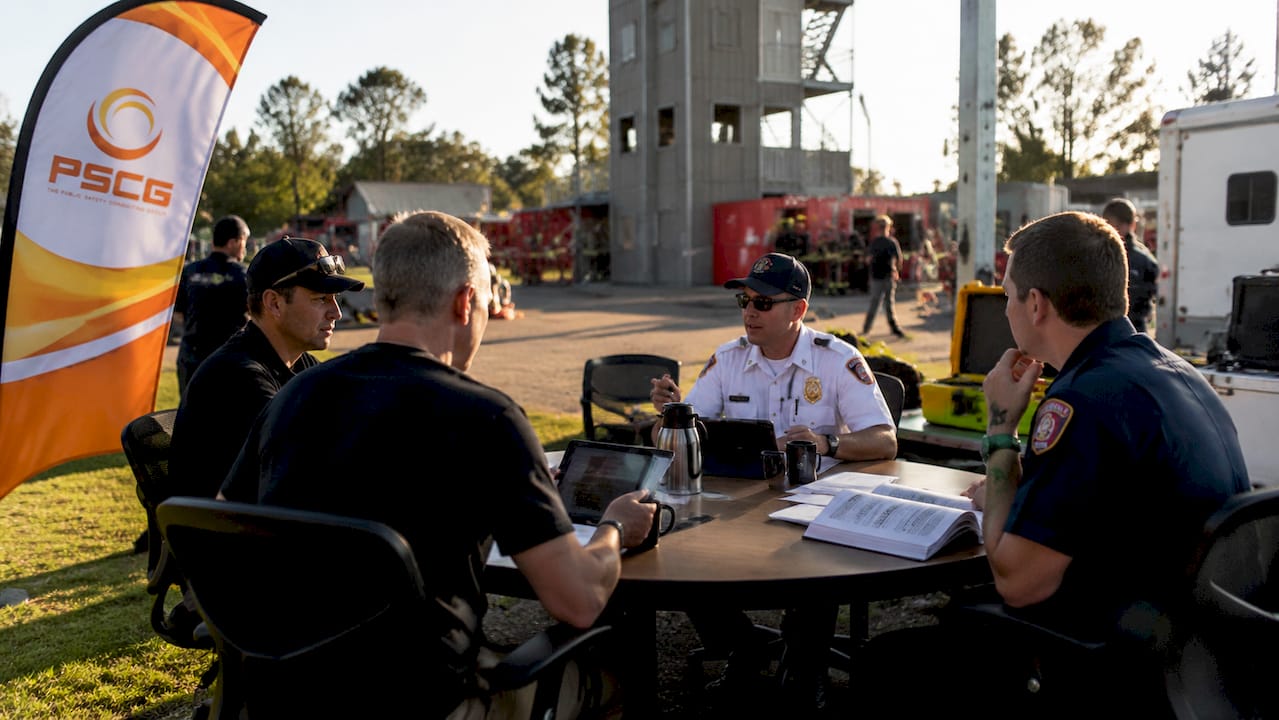
- Interprofessional scenarios: Multi-agency exercises place law enforcement, EMS, and fire personnel in shared scenarios, building the cross-team communication that real incidents demand.
Repetitive practice is the engine of skill retention. A single simulation run builds initial familiarity. Multiple runs under varied conditions build the automatic responses that hold up under stress. The impact of simulation training on learning depends heavily on how scenarios are designed and sequenced, not just how realistic the equipment looks.
The debriefing phase is where learning consolidates. Debriefing quality determines whether participants leave with corrected mental models or reinforced errors. Effective debriefs use structured observation tools, video review, and facilitated reflection to surface what actually happened versus what participants believed happened. Skipping or shortening the debrief is the single most common design failure in public safety simulation programs.
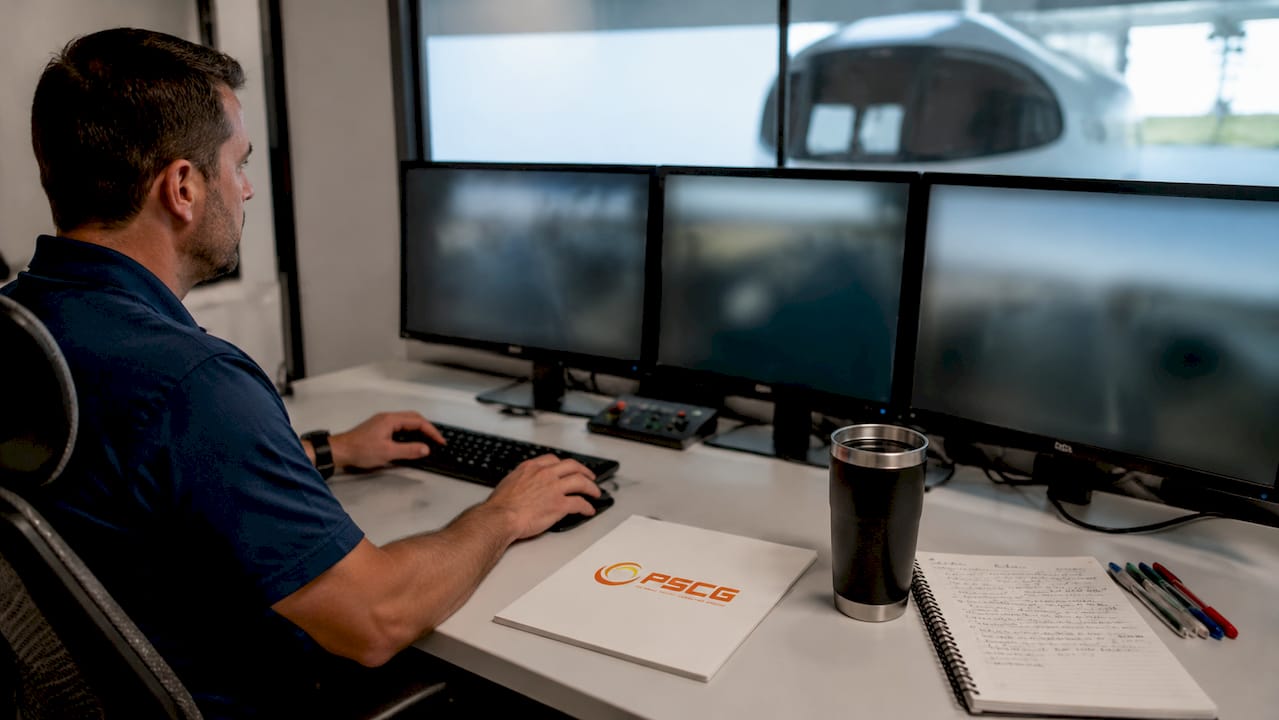
Pro Tip: Record every simulation run and use the footage in the debrief. Video removes the ambiguity of “I thought I said that” and gives the team a shared, objective reference point for improvement.
Simulation also addresses emotional regulation. Repeated exposure to stressors in a controlled environment builds resilience and cognitive control. Personnel who have practiced a mass casualty scenario six times respond differently than those encountering it for the first time on a real call.
What are the key benefits of simulation training in crisis management?
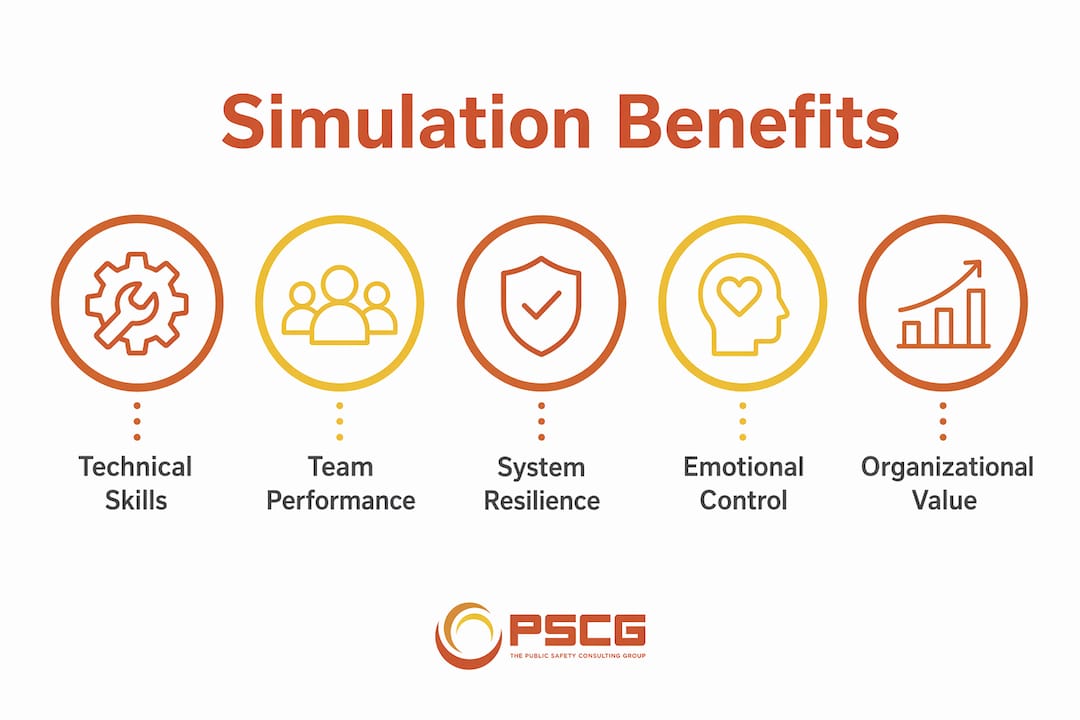
The benefits of simulation training span technical skills, team performance, and system-level safety. A systematic review of 20 studies shows measurable operational performance improvements when simulation programs use structured design. Self-reported satisfaction, by contrast, does not reliably predict real-world performance gains. That distinction matters when you are allocating training budgets.
Technical and procedural proficiency
Simulation gives personnel the repetitions needed to reach procedural automaticity. In EMS, that means intubation, IV access, and medication administration under pressure. In law enforcement, it means use-of-force decision cycles, tactical entry sequencing, and crisis negotiation protocols. Proficiency built in simulation transfers to the field because the cognitive and motor pathways are already established.
Non-technical skills and team performance
High-fidelity simulation improves communication, leadership, and situational awareness in ways that classroom instruction cannot replicate. These non-technical skills determine outcomes in complex incidents just as much as technical proficiency does. A medic who cannot communicate a patient handoff clearly, or a supervisor who cannot delegate under pressure, creates risk regardless of their clinical knowledge.
The following benefits are consistently documented across public safety simulation research:
- Improved closed-loop communication during multi-unit responses
- Clearer role definition and task delegation under cognitive load
- Faster recognition of deteriorating conditions or escalating threats
- Stronger shared situational awareness across agency lines
- Reduced hesitation in high-stakes procedural decisions
System resilience and latent threat identification
Simulation functions as a system stress-test mechanism that surfaces vulnerabilities in operational protocols before those vulnerabilities cause real harm. When a multi-agency simulation exposes a gap in radio interoperability or a missing step in a mass casualty triage protocol, that gap can be corrected in a debrief room rather than at an actual incident scene. This is one of the most underutilized benefits of simulation in public safety. Agencies that run scenario-based exercises with a systems lens, not just an individual performance lens, gain a proactive risk management tool that no tabletop exercise fully replicates.
What best practices maximize the effectiveness of simulation training?
Effective simulation programs share a set of design and implementation principles that separate high-impact training from expensive theater. The technology matters far less than the educational architecture surrounding it.
Integrate simulation into core workflows. Simulation embedded in annual performance cycles, credentialing processes, and new hire orientation produces sustained skill retention. Simulation treated as a periodic optional event produces periodic optional improvement.
Design interprofessional, multi-agency scenarios. Real incidents involve multiple agencies. Training that mirrors that complexity builds the coordination habits that single-discipline exercises cannot. Crisis communication workflows across EMS, law enforcement, and fire services require shared practice, not just shared policy.
Use structured observational assessment tools. Checklists, behavioral anchored rating scales, and video review give facilitators objective data. Self-reported satisfaction often fails to predict real performance. Objective measurement closes that gap.
Invest in faculty development. The facilitator running the debrief is the most important variable in simulation effectiveness. Agencies that invest in training their trainers see compounding returns. Agencies that rotate untrained staff through facilitation roles see inconsistent outcomes.
Prioritize educational design over equipment fidelity. A well-designed scenario run with a basic manikin and a skilled facilitator outperforms a poorly designed scenario run with a $200,000 simulator. The scenario’s learning objectives, the fidelity of the decision environment, and the quality of the debrief drive outcomes.
Pro Tip: Build a shared scenario library across your agency or mutual aid network. Content sharing reduces development time, standardizes training quality, and creates a common operational vocabulary across teams.
Avoid the common pitfall of measuring simulation program success by participant satisfaction scores alone. Satisfaction reflects comfort, not competence. The measure that matters is whether performance in real incidents improves after simulation exposure. Agencies serious about EMS organizational development track both.
How does simulation training address challenges unique to EMS and law enforcement?
Public safety fields carry specific operational and ethical demands that make simulation training not just beneficial but necessary. EMS personnel face an ethical imperative that other professions share but rarely state as directly: no first time on a real patient. Every procedure a new paramedic performs on a patient should already be practiced. Simulation is the mechanism that makes that standard achievable.
Law enforcement faces a parallel challenge. High-stakes, low-frequency events, such as active shooter responses, hostage negotiations, and mass casualty incidents, cannot be rehearsed through real-world exposure alone. Simulation creates the repetitions that build reliable performance in scenarios that may occur once in a career but demand immediate, correct action.
The following challenges are directly addressed by well-designed simulation programs:
- Performance anxiety: Controlled exposure to high-stress scenarios builds the cognitive clarity needed to function under pressure. Personnel who have rehearsed a scenario report lower anxiety and faster decision cycles when the real event occurs.
- Clinical judgment under pressure: Simulation develops the pattern recognition that separates experienced responders from technically trained but inexperienced ones. Judgment is built through repeated exposure to complex, ambiguous situations.
- Culture of continuous improvement: Agencies that run regular simulation cycles normalize the practice of reviewing performance, identifying gaps, and correcting them. That cultural norm transfers to after-action reviews, quality improvement programs, and peer feedback processes.
- Multi-disciplinary crisis communication: Shared simulation exercises build the communication habits and mutual trust that determine how well agencies coordinate during a real multi-agency response. A police department organizational assessment that includes simulation-based evaluation captures performance data that written assessments cannot.
Simulation-driven leadership training also produces measurable gains in trauma resuscitation performance and coordination, with randomized controlled trials showing improved leadership behaviors after simulation courses. That evidence base supports the case for investing in simulation not just for frontline personnel but for supervisors and incident commanders as well.
Key takeaways
Simulation training is the most evidence-supported method for building the technical skills, team coordination, and system resilience that public safety professionals need for crisis management and operational readiness.
| Point | Details |
|---|---|
| Simulation is mandatory, not optional | The Østergaard Declaration classifies simulation as a professional practice requirement, not supplemental education. |
| Debriefing drives learning outcomes | Structured reflection after each scenario is the mechanism that converts experience into lasting skill improvement. |
| System testing is an underused benefit | Simulation surfaces latent threats in operational protocols before they cause real incidents. |
| Educational design outweighs equipment | Scenario quality and facilitator skill determine outcomes more than the cost or fidelity of simulation technology. |
| Non-technical skills are measurable | Structured observational tools capture communication, leadership, and coordination gains that self-reports miss. |
Why simulation’s real value is organizational, not just individual
I have worked with public safety agencies at various stages of simulation adoption, and the pattern is consistent. Agencies that treat simulation as a training event get training-event results. Agencies that treat it as an organizational safety strategy get something fundamentally different: a culture that surfaces problems before they become incidents.
The misconception I encounter most often is that better technology equals better training. Leaders invest in high-fidelity simulators and then under-invest in the facilitators, the scenario design, and the debrief structure that actually produce learning. The simulator sits in a room and gets used twice a year. That is not a simulation program. That is an expensive piece of equipment.
What I have seen work is simpler and harder. It requires committing to regular scenario cycles, training the people who run the debriefs, and using simulation data to inform quality improvement decisions. When an agency runs a mass casualty scenario and discovers that their triage communication breaks down at the 15-minute mark, that is a finding with real operational consequences. Acting on it is what separates a high-performing agency from one that is merely compliant.
Simulation also builds something that no policy document can create: emotional preparedness. Personnel who have rehearsed the worst-case scenario carry a different kind of confidence into the field. That confidence is not overconfidence. It is the calm that comes from having been there before, even if only in a training room.
The importance of simulation training will only grow as public safety systems face more complex, multi-agency incidents. The agencies that build simulation into their operational DNA now will be the ones that perform when it matters most.
— Mike
How Thepscgroup supports simulation training integration
Public safety leaders who want to move simulation from a periodic exercise to a core operational function need more than a training calendar. They need system design that embeds simulation into credentialing, performance review, and quality improvement workflows.
Thepscgroup works alongside EMS and public safety leaders to design systems where training and operations reinforce each other. Our EMS system design examples show how simulation fits within a broader operational architecture, from response time benchmarks to multi-agency coordination protocols. We bring the same evidence-based approach to simulation integration that we apply to every component of EMS system design. Visit us at thepscgroup.net to connect with our team and explore what a fully integrated training strategy looks like for your agency.
FAQ
What is the role of simulation training in public safety?
Simulation training gives public safety professionals a safe, repeatable environment to practice technical skills, team coordination, and decision-making before encountering real emergencies. The Østergaard Declaration classifies it as a mandatory professional practice requirement, not optional education.
How does simulation training work in EMS and law enforcement?
Simulation training uses manikin-based, virtual, and interprofessional scenario formats to replicate emergency conditions. Structured debriefing after each scenario consolidates learning and corrects performance gaps identified during the exercise.
What are the benefits of simulation training for crisis management?
Benefits include improved technical proficiency, stronger team communication, faster decision-making under stress, and the ability to identify latent threats in operational protocols before they cause real incidents.
Why is debriefing so critical in simulation-based education?
Debriefing is where learning transfers from experience to retained skill. Research shows that self-reported satisfaction after simulation does not predict real-world performance gains. Structured, facilitated reflection using objective observation tools does.
How does simulation training build organizational resilience?
Simulation acts as a system stress-test that surfaces gaps in protocols, communication, and coordination. Agencies that act on simulation findings build proactive risk management capacity that reactive training methods cannot replicate.