



TL;DR:
- Attorneys in EMS operations protect agencies from liability, ensure regulatory compliance, and guide legal defense efforts. They review protocols, manage controlled substance laws, and improve documentation practices to reduce legal risk and support immunity. Regular legal involvement in system design, training, and policy updates enhances EMS agencies’ legal resilience and operational safety.
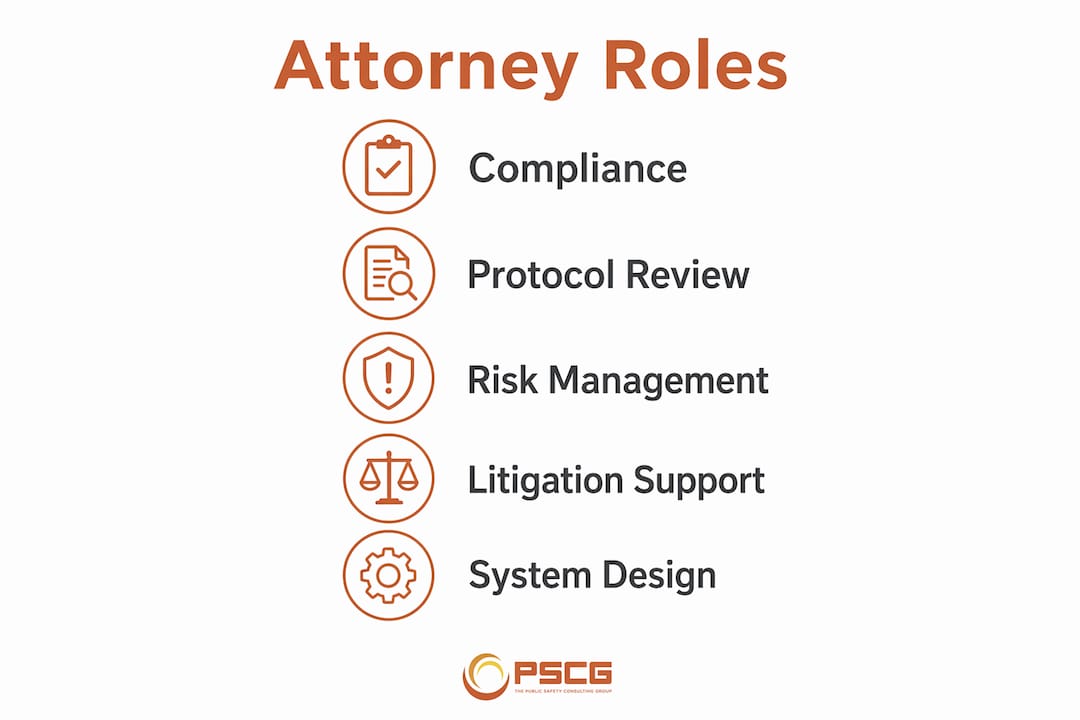
Attorneys in EMS operations are defined as legal counselors who protect agencies from liability, guide regulatory compliance, and defend providers under state and federal law. The role of attorneys in EMS operations spans everything from reviewing clinical protocols to managing DEA controlled substance compliance under 21 CFR 1301.76 to advising on immunity statutes like Ohio’s ORC 4765.49. EMS agencies face a legal environment that grows more complex each year, shaped by interstate compacts, federal drug regulations, and evolving standards of care. Without qualified legal counsel embedded in your operations, your agency is exposed. This guide explains exactly where attorneys add value and how you can put that value to work.
What legal challenges do EMS agencies face that require attorney involvement?
EMS agencies operate at the intersection of healthcare law, public safety regulation, and employment law. That overlap creates legal exposure that most agencies underestimate until a claim arrives.
The most common legal challenges EMS leaders face include:
- Immunity thresholds. Ohio’s ORC 4765.49 immunity law sets a high bar for plaintiffs, requiring proof of “willful or wanton misconduct” to overcome EMS immunity. That standard protects providers, but only when documentation and conduct support it.
- DEA controlled substance compliance. Federal regulations under 21 CFR 1301.76 require agencies to report controlled substance theft and prohibit hiring individuals with drug felony convictions. Attorneys manage the compliance framework that keeps agencies on the right side of the DEA.
- EMS Compact limitations. The Interstate EMS Compact cannot override state scope-of-practice laws or disciplinary actions. Attorneys clarify this boundary so agencies do not assume federal compact protections extend further than they do.
- Patient refusal liability. Refusals are among the highest-risk events in EMS. Shared accountability through documentation rigor and medical control access reduces legal exposure across providers and agencies.
- Documentation gaps. Incomplete or vague patient care reports become liabilities in court. Attorneys review documentation standards and flag language that fails to establish compliance with accepted care protocols.
Each of these areas requires legal counsel who understands EMS operations specifically, not just general healthcare law. An attorney unfamiliar with EMS medical direction or System Status Management will miss the nuances that determine case outcomes.
How do attorneys shape EMS clinical protocols and documentation?
Legal counsel shapes EMS clinical protocols by ensuring they are defensible in court, not just clinically sound. These are two different standards, and the gap between them is where liability lives.
Legal expert Doug Wolfberg notes that the standard of care is defined retrospectively in court, based on expert testimony rather than agency protocols. Courts do not automatically accept your protocols as proof of reasonable care. Attorneys help medical directors write protocols that explain clinical reasoning to a jury, not just to a paramedic.
Effective legal review of EMS protocols follows a clear sequence:
- Audit prescriptive versus permissive language. Overly rigid protocols create court checklists that ignore clinical nuance. Prescriptive and permissive language must be balanced so providers retain clinical judgment while protocols remain defensible.
- Align protocols with accepted standards of care. Attorneys confirm that protocols reflect current clinical consensus, reducing the risk that a plaintiff’s expert witness can characterize your protocols as outdated or substandard.
- Design documentation requirements for high-risk events. Patient refusals, treatment refusals, and altered mental status calls require detailed narrative documentation. Attorneys specify what that documentation must include to establish legal compliance.
- Integrate legal review into quality assurance cycles. EMS quality assurance processes should include periodic legal review to catch protocol drift before it creates liability.
- Embed jurisprudence in clinician training. Donnie Woodyard Jr. advocates that agencies embed legal knowledge during onboarding and annual refreshers for all clinicians. Jurisprudence is a core EMS professional pillar, not an optional add-on.
Pro Tip: Treat your EMS Act and state EMS code as living documents. Distribute updated versions to all clinicians at least annually and build a brief legal review into every new hire orientation.
Documentation quality is the single most controllable variable in litigation defense. Well-documented care that includes detailed assessments, decision rationale, and patient interaction logs gives attorneys the foundation they need to establish immunity and compliance.
What is the attorney’s role in EMS operational leadership and system design?
Attorneys contribute to EMS operational leadership in ways that go well beyond courtroom defense. Their input shapes policy, workforce management, and inter-agency agreements before problems arise.

Proactive attorney involvement in EMS policy, system design, and workforce management reduces liability and improves compliance outcomes. That is not a theoretical benefit. It is the difference between an agency that responds to legal problems and one that prevents them.
Key areas where legal counsel supports EMS operational leadership include:
- Regulatory interpretation. Attorneys translate complex state and federal EMS statutes into operational policy. They clarify where the EMS Compact ends and state authority begins, preventing compliance gaps.
- Contract and inter-agency agreements. Mutual aid agreements, medical direction contracts, and hospital diversion protocols all carry legal risk. Attorneys review these documents to protect agency interests.
- Workforce compliance. DEA employment restrictions, credentialing requirements, and labor law obligations require legal oversight. Attorneys build compliance frameworks that protect agencies from workforce-related claims.
- Immunity protection strategies. Attorneys advise EMS leaders on how operational decisions, such as response time benchmarks and staffing models, interact with immunity statutes.
The table below shows how attorney input maps to specific EMS leadership functions:
| EMS leadership function | Attorney contribution |
|---|---|
| Protocol development | Reviews language for defensibility and standard-of-care alignment |
| Workforce management | Advises on DEA compliance, credentialing, and labor law |
| Inter-agency agreements | Reviews mutual aid and medical direction contracts |
| Quality assurance | Identifies documentation gaps and liability trends |
| System design | Guides regulatory compliance in operational planning |
EMS system design that integrates legal compliance from the start produces agencies that are both operationally sound and legally defensible. Retrofitting legal compliance into an existing system costs more and fixes less.
How do attorneys support EMS agencies during litigation and regulatory scrutiny?
When a claim is filed against an EMS agency, the quality of legal preparation that happened before the incident determines the outcome. Attorneys who understand EMS operations provide a fundamentally different level of defense than general practice counsel.
Attorneys experienced in EMS operations provide superior litigation support because they understand medical directors’ non-delegable duties and high-risk clinical pathways. That operational knowledge shapes how they collect evidence, frame immunity arguments, and cross-examine plaintiff experts.
During litigation, attorneys perform several specific functions:
- Evidence coordination. They organize patient care reports, dispatch logs, quality assurance records, and witness statements to build a complete factual record.
- Immunity defense. Under statutes like ORC 4765.49, attorneys argue that provider conduct did not meet the “willful or wanton misconduct” threshold required to overcome immunity.
- Administrative defense. When state EMS offices initiate disciplinary proceedings, attorneys represent providers and agencies throughout the process.
- Personnel education. Attorneys brief EMS personnel on their legal rights and responsibilities during investigations, reducing the risk of statements that undermine the agency’s defense.
“The standard of care is not what your protocol says. It is what a court decides, after the fact, based on expert testimony. Your attorney’s job is to make sure those two things align.” — Legal expert Doug Wolfberg, as cited in EMS1
Proactive risk management reduces the likelihood of reaching litigation at all. EMS liability consulting that addresses documentation practices, protocol language, and quality assurance cycles builds the legal foundation that makes defense straightforward when claims do arise.
Key takeaways
Attorneys in EMS operations are not optional advisors. They are essential partners in compliance, protocol design, documentation standards, and litigation defense.
| Point | Details |
|---|---|
| Immunity requires proof | Ohio ORC 4765.49 protects EMS providers only when conduct does not meet “willful or wanton misconduct” standards. |
| Protocols must be court-ready | Legal review ensures protocol language explains reasonable care to juries, not just to clinicians. |
| Documentation is your defense | Detailed, clear patient care records establish compliance and support immunity arguments in court. |
| Proactive counsel prevents claims | Attorney involvement in system design, contracts, and workforce policy reduces liability before incidents occur. |
| Jurisprudence belongs in training | Annual legal education for all EMS clinicians reduces liability and builds professional accountability. |
Why I think most EMS agencies are using attorneys wrong
My experience working with EMS leaders across the country shows a consistent pattern. Attorneys get called after something goes wrong. A claim is filed, a disciplinary action is initiated, or a protocol is challenged in court. At that point, legal counsel is doing damage control, not prevention.
The agencies that perform best legally are the ones that treat their attorney the way they treat their medical director: as a standing member of the leadership team. That means regular protocol reviews, annual jurisprudence training for clinicians, and legal input on every major system design decision. It means your attorney knows your agency’s operations before they ever see the inside of a courtroom.
The EMS legal environment has grown significantly more complex over the past decade. The EMS Compact, evolving DEA requirements, and retrospective standard-of-care determinations all demand specialized legal knowledge. A general practice attorney who handles EMS cases occasionally is not the same as counsel who understands incident command, medical direction liability, and the clinical nuances of patient refusal documentation.
My recommendation is direct: find an attorney with actual EMS operational experience, build them into your leadership structure, and treat legal risk management as a continuous improvement process. The agencies that do this spend less time in court and more time delivering care.
— Mike
How Thepscgroup supports EMS leaders with legal and operational expertise
Thepscgroup works alongside EMS leaders to build systems that are operationally sound and legally defensible from the ground up. Our consulting integrates compliance frameworks, protocol review processes, and risk management strategies into every engagement.

Whether you are designing a new EMS system or auditing an existing one, legal compliance cannot be an afterthought. Our EMS system design consulting incorporates the regulatory and documentation standards your agency needs to protect providers and serve your community. For municipal leaders, our municipal EMS strategy guide provides a practical framework for building legally sound, high-performing EMS operations. Contact us at thepscgroup.net to start the conversation.
FAQ
What is the role of attorneys in EMS operations?
Attorneys in EMS operations provide legal oversight across compliance, protocol design, documentation standards, and litigation defense. Their role is to protect agencies, guide regulatory adherence, and defend providers under state and federal law.
How do attorneys help with EMS clinical protocols?
Attorneys review protocol language to ensure it is defensible in court and aligned with the retrospective standard of care that judges and juries apply. They balance prescriptive and permissive language to preserve clinical judgment while reducing liability.
What EMS laws do attorneys most commonly address?
Attorneys most commonly address state immunity statutes like Ohio ORC 4765.49, DEA controlled substance regulations under 21 CFR 1301.76, and the scope and limits of the Interstate EMS Compact.
Why does EMS documentation matter legally?
Well-documented patient care establishes compliance with EMS standards and supports immunity defenses in court. Incomplete documentation removes the factual foundation attorneys need to defend providers effectively.
How can EMS leaders reduce litigation risk proactively?
EMS leaders reduce litigation risk by embedding attorneys in system design, conducting annual jurisprudence training for all clinicians, and building legal review into quality assurance cycles. Proactive legal involvement consistently produces better outcomes than reactive defense.