



TL;DR:
- Mobile Integrated Healthcare (MIH) is a distinct, community-focused care model integrating EMS with preventive, chronic, and follow-up services beyond hospitals. Its success depends on strong governance, comprehensive regulatory compliance, tailored partnerships, and proactive data and quality management systems. Building an infrastructure that emphasizes policy, integration, and community engagement ensures MIH programs survive regulatory and funding challenges and deliver lasting public safety benefits.
Mobile Integrated Healthcare, known as MIH, is reshaping how public safety systems deliver care. Yet too many decision-makers still treat it as an extension of traditional emergency response rather than what it actually is: a distinct, community-focused care model that integrates EMS capabilities with preventive health, chronic disease management, and cross-sector collaboration. If you are evaluating whether to build, expand, or restructure an MIH program, this guide gives you the operational context, regulatory grounding, and strategic insight to make that decision with confidence.
Table of Contents
- Key takeaways
- Understanding MIH: models, components, and workflows
- The regulatory landscape for MIH programs
- MIH benefits and implementation challenges
- MIH program development best practices
- My perspective on where MIH is headed
- How Thepscgroup supports your MIH strategy
- FAQ
Key takeaways
| Point | Details |
|---|---|
| MIH is not traditional EMS | MIH delivers ongoing, preventive, and follow-up care outside hospital settings using mobile teams. |
| Regulation is accelerating | States like New Jersey have established the first statewide MIH licensure frameworks as of 2026. |
| Benefits go beyond clinical care | MIH reduces emergency department overload and improves patient experience simultaneously. |
| Program sustainability requires governance | Durable MIH programs depend on quality management systems, data collection, and documented policies. |
| Implementation challenges are manageable | Funding, staffing, and community engagement hurdles can be overcome with disciplined planning. |
Understanding MIH: models, components, and workflows
MIH, short for Mobile Integrated Healthcare, refers to a care delivery framework in which trained mobile healthcare professionals provide patient-centered services in non-facility settings. The MIH meaning goes beyond emergency response. Where traditional EMS responds to acute events, MIH teams proactively engage patients at home, in shelters, or in community settings to prevent the crises that drive emergency department use.
Understanding MIH requires familiarity with its core structural components. Most programs share a recognizable architecture built around three pillars: mobile care delivery, interdisciplinary team composition, and integration with clinical and community partners. MIH components typically include mobile EMS responses, follow-up care visits, community paramedicine, and telehealth connections to manage chronic conditions and avoid unnecessary hospital use.
The typical MIH team may include:
- Community paramedics who complete advanced training beyond traditional EMT or paramedic certifications, enabling them to conduct health assessments, administer medications, and coordinate follow-up care
- Nurse triage lines that provide real-time clinical guidance and help route patients to the appropriate level of care without defaulting to 911
- Social workers or case managers who address the social determinants of health driving repeated emergency utilization
- Telehealth platforms connecting field staff with physicians or specialists for real-time consultation during home visits
Patient populations served by MIH programs tend to cluster around high-frequency EMS users with chronic conditions, patients discharged from hospitals who need transitional support, and vulnerable community members with limited access to primary care. King County, Washington’s MIH program describes this precisely: connecting low-acuity, high-need patients to tailored community resources through mobile integrated healthcare teams. For a deeper look at how MIH program setup works for EMS leaders specifically, the MIH program setup guide from Thepscgroup is worth reviewing before you design your operational model.
The regulatory landscape for MIH programs
Regulatory clarity for MIH has been slow to arrive nationally, but that is changing. 2026 marks a turning point. New Jersey’s Department of Health established the first statewide regulatory framework for MIH programs, mandating licensure, operational policies, quality management systems, and enforcement procedures. This is not a minor administrative update. It signals that regulators increasingly treat MIH as a licensable, governed care delivery model requiring comprehensive policies and enforcement to ensure quality and safety.
For any public safety agency operating or planning an MIH program, the NJ framework offers a useful compliance benchmark. Here are the core administrative requirements it establishes:
- Program licensure with documented application procedures, service area definitions, and organizational oversight structures
- Written administrative policies covering personnel management, patient rights, safety protocols, and chain of command
- Recordkeeping standards specifying what patient encounter data must be captured, retained, and made available for regulatory review
- Event reporting requirements for adverse outcomes, sentinel events, and quality-of-care concerns
- Quality management systems with defined metrics, review cycles, and corrective action protocols
- Enforcement mechanisms including penalty structures, license suspension procedures, and formal appeal rights for licensees
Most agencies underestimate how much compliance infrastructure MIH actually requires beyond hiring a community paramedic and buying a vehicle. The regulatory burden is real, and it is growing.
Pro Tip: Before your program ever sees its first patient, audit your administrative infrastructure against the NJ framework. Even if your state has not yet adopted equivalent rules, building to that standard positions you well for future compliance and demonstrates program maturity to funding partners.

The broader legislative picture is also shifting. States and federal agencies are increasingly recognizing MIH as a reimbursable service category, which changes the financial calculus for program sustainability considerably.
MIH benefits and implementation challenges
The operational case for MIH rests on a specific and measurable value proposition. MIH programs in Massachusetts use mobile EMS resources to provide preventive and follow-up care in non-facility settings, improving outcomes and addressing hospital capacity constraints. That dual benefit, better patient outcomes AND reduced facility burden, is what makes MIH a genuinely strategic tool for public safety systems under resource pressure.
The benefits worth quantifying for your leadership and elected officials include:
- Reduced emergency department utilization, particularly among high-frequency callers who cycle through 911 and the ED without receiving appropriate longitudinal care
- Improved chronic disease management for conditions like congestive heart failure, COPD, and diabetes, where home-based monitoring and medication reconciliation produce measurable clinical gains
- Hospital capacity relief, since MIH is a critical strategy for reducing costly emergency department use while improving clinical outcomes and patient satisfaction
- Enhanced patient experience, because patients with complex needs consistently report higher satisfaction with care delivered in their own environment
- EMS workforce engagement, since community paramedic roles offer career development pathways that improve retention in systems struggling with staffing
“MIH is a strategic healthcare system efficiency tool as much as a clinical service, helping alleviate pressure on hospitals and emergency departments by delivering care directly in patients’ homes.” — Massachusetts Health & Hospital Association
That framing matters. If you present MIH solely as a compassion initiative, you will struggle to win budget approval. Present it as a capacity management strategy with clinical dividends, and the conversation changes.
Challenges are real, though. Common obstacles in MIH programs include adapting EMS staff roles, managing quality while expanding mobile services, and building effective community partnerships. Sustainable funding remains the most persistent barrier. Federal grant programs, Medicaid waivers, and hospital partnership agreements each offer partial solutions, but no single funding stream fully covers program costs in most markets. Staffing is equally complex. Community paramedic training is not standardized across states, and field personnel accustomed to emergency response need genuine role transition support, not just a few hours of additional training.
MIH program development best practices
Building a durable MIH program requires more than clinical competence. It requires operational governance that can survive leadership turnover, budget cycles, and regulatory scrutiny. The programs that fail within three years almost always share the same weakness: they invested in personnel and equipment before they built the policy and data infrastructure to sustain operations.
The table below compares two approaches to MIH program development, one that prioritizes operational governance from the start, and one that delays it:
| Development element | Governance-first approach | Clinical-first approach |
|---|---|---|
| Policy framework | Developed before launch | Added reactively after problems arise |
| Data collection | Structured from day one | Informal until regulatory pressure increases |
| Quality management | Scheduled review cycles built in | Ad hoc review triggered by incidents |
| Regulatory readiness | Proactive alignment with state standards | Retroactive compliance under enforcement |
| Program sustainability | Higher, due to documented processes | Lower, dependent on key individuals |
Robust quality management, including data collection, event reporting, and continuous improvement protocols, is not optional in a compliant MIH program. It is the architecture that holds everything else together. NJ MIH regulations require comprehensive operational policies and establish penalties and appeal rights for licensing violations, which means your documentation practices will be tested.
Performance monitoring for MIH programs should track encounter volume by patient category, clinical outcome measures tied to specific diagnoses, ED diversion rates attributable to MIH intervention, and patient satisfaction scores. Connecting field data to clinical outcome data requires interoperability between your EMS records management system and your healthcare partners’ platforms. That integration is worth investing in early. Thepscgroup’s EMS quality improvement consulting services address exactly these data and governance challenges for agencies building or restructuring MIH operations.
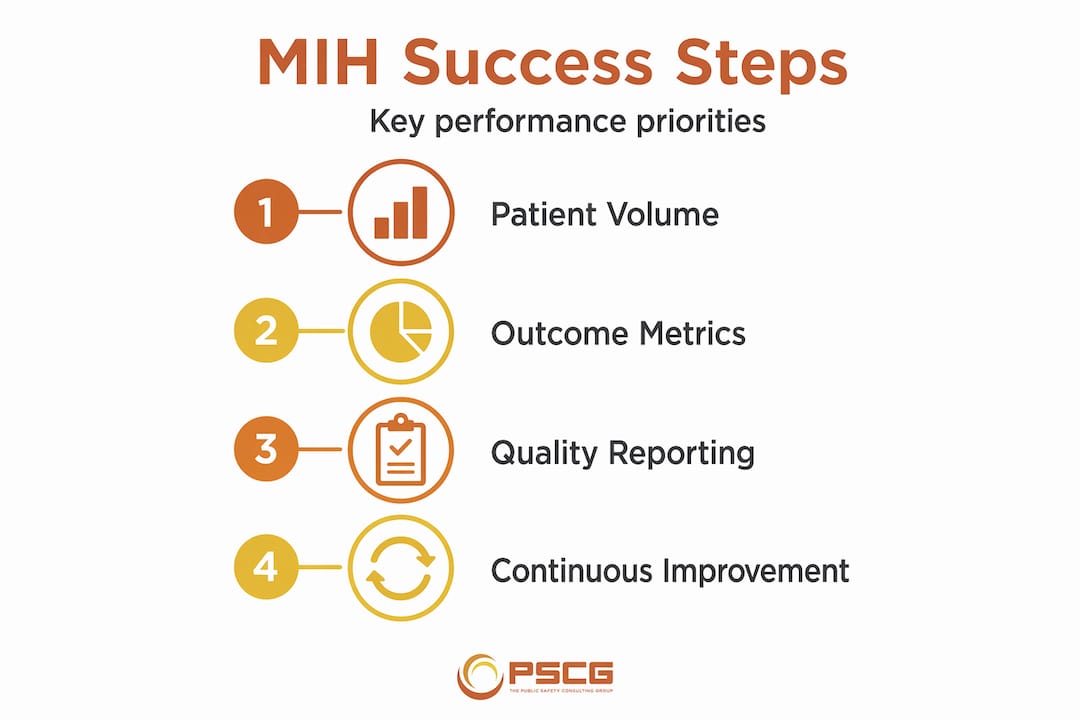
Pro Tip: Design your data collection fields before you deploy your first MIH crew. Retrofitting a data system onto an existing program is three times more disruptive than building it correctly at launch. Your future quality reports, grant applications, and regulatory submissions all depend on what you capture in the field today.
My perspective on where MIH is headed
I’ve spent years working alongside public safety agencies at different stages of their MIH development, and the pattern I see most often is this: the agencies that treat MIH as a staffing solution struggle, while the agencies that treat it as a system redesign opportunity thrive.
What I’ve learned is that MIH’s greatest value is not clinical. It is structural. It gives EMS systems a mechanism to engage patients between crises rather than only during them. That shift, from reactive to proactive, is genuinely significant. But it requires cross-sector relationships that most EMS agencies have never had to build before. Partnering with primary care physicians, behavioral health providers, housing agencies, and social service organizations is not instinctive for organizations built around emergency response.
The misconception I encounter most often is that MIH is scalable simply by hiring more community paramedics. It is not. Scaling MIH without scaling your governance, data, and partnership infrastructure creates programs that are clinically active but operationally fragile. I’ve seen well-intentioned programs collapse when a key staff member left or a grant cycle ended, because the program existed in people’s heads rather than in documented systems.
My practical advice is straightforward. Start with a clear patient population definition, build your compliance infrastructure before your first deployment, and invest in community relationships as seriously as you invest in clinical training. MIH programs that do those three things tend to survive budget cycles and regulatory changes. Programs that skip those foundations rarely do.
— Mike
How Thepscgroup supports your MIH strategy
If you are building or restructuring an MIH program, the operational and strategic complexity involved deserves expert support. Thepscgroup works with municipalities, EMS agencies, and public safety leaders to design systems that function at the level MIH requires, from policy architecture and quality management frameworks to deployment modeling and reimbursement strategy.
Our team brings hands-on experience in EMS system design that accounts for the specific demands of MIH integration, including data infrastructure, interagency coordination, and compliance readiness. We also support agencies in developing municipal EMS strategy that positions MIH not as a standalone project but as a core component of a high-performing, community-oriented public safety system.
Whether you are at the planning stage or working to stabilize an existing program, we are ready to work alongside your leadership team. Contact us at thepscgroup.net to schedule a consultation and take the next step toward an MIH program your community can count on.
FAQ
What does MIH stand for in public safety?
MIH stands for Mobile Integrated Healthcare. It refers to a care delivery model that uses mobile EMS resources to provide preventive, follow-up, and chronic disease management services outside of traditional hospital or clinic settings.
What are the main MIH benefits for EMS systems?
MIH benefits include reduced emergency department utilization, improved management of chronic conditions, hospital capacity relief, and enhanced patient satisfaction, while also providing career development pathways for EMS personnel.
What regulations govern MIH programs in 2026?
Regulation varies by state, but New Jersey’s 2026 framework is the first statewide standard requiring MIH program licensure, written operational policies, recordkeeping, event reporting, quality management systems, and defined enforcement mechanisms.
How is MIH different from traditional EMS?
Traditional EMS responds to acute emergencies on a call-by-call basis, while MIH involves proactive, ongoing engagement with high-need patients to prevent emergencies, manage chronic conditions, and connect individuals to community resources.
What does a successful MIH program require?
Sustainable MIH programs require a clearly defined patient population, comprehensive administrative policies, structured data collection from launch, quality management review cycles, and active partnerships with healthcare and community organizations.