

TL;DR:
- Cerebral palsy (CP) is a complex neurological condition affecting movement and posture, often misunderstood by emergency responders. Recognizing that each patient presents differently and communicates uniquely is vital for effective treatment and safety. Specialized training, awareness of implanted devices, and engaging caregivers are essential for managing CP emergencies successfully.
Cerebral palsy, or CP, is one of the most common neurological conditions you will encounter in both pediatric and adult emergency calls, yet it remains one of the most misunderstood. CP affects approximately 3 out of every 1,000 children in the United States, and many of those individuals grow into adults who interact with EMS and law enforcement regularly. The challenge is not just recognizing the condition. It is understanding that CP presents differently in every patient, that its symptoms shift under stress, and that standard assessment protocols can miss critical warning signs if responders have not been trained specifically for this population.
Table of Contents
- Key takeaways
- CP types and symptoms every responder should recognize
- EMS and law enforcement challenges on CP calls
- Treatment options and their impact on emergency decisions
- Best practices for public safety professionals
- My perspective on where we are falling short
- How Thepscgroup helps agencies prepare for complex calls
- FAQ
Key takeaways
| Point | Details |
|---|---|
| CP is not a single condition | CP includes multiple types with distinct presentations that directly affect how responders should assess and treat patients. |
| Atypical pain expression is common | Stiffening, irritability, and withdrawal may signal distress in a CP patient where verbal reports are unavailable. |
| Medical devices require protocol | Implanted devices like baclofen pumps must be identified before transport, positioning, or imaging decisions are made. |
| Emergency care plans exist | Families often maintain personal files with critical information that can dramatically improve EMS outcomes on scene. |
| Individualized assessment is the standard | No single protocol fits all CP patients; responders must adapt to the patient’s specific profile, communication style, and care history. |
CP types and symptoms every responder should recognize
Understanding the CP definition at a clinical level is the foundation for effective emergency response. CP is not a single disorder. It is a group of neurological conditions caused by abnormal brain development or damage that affects muscle movement, posture, and motor coordination. The brain injury is permanent, but the functional impact varies widely across individuals and can shift with age, health status, and stress.
The four main CP types each carry distinct presentations that matter during an emergency call.
| CP Type | Key Features | Emergency Relevance |
|---|---|---|
| Spastic | Stiff muscles, increased tone, scissor gait | Muscle rigidity complicates positioning and transport |
| Dyskinetic | Involuntary, uncontrolled movements | May be misread as agitation or intoxication |
| Ataxic | Poor balance and coordination, tremors | Fall risk; poor coordination may mimic intoxication |
| Mixed | Combination of above types | Unpredictable presentation requiring adaptive assessment |
Spastic CP is the most common type, affecting around 80% of individuals with CP. The increased muscle tone in spastic CP can make standard patient positioning significantly more difficult, and forced repositioning without understanding the patient’s baseline can cause real harm. Dyskinetic CP, by contrast, involves fluctuating tone and involuntary movements that have been mistaken for behavioral disturbance or intoxication on scene.
CP symptoms frequently include associated conditions that compound the complexity of emergency calls. Seizures are common. Communication difficulties affect a significant portion of the CP population. Many patients rely on augmentative communication devices, which may not be available during an emergency. Some patients have implanted baclofen pumps to manage spasticity, gastrostomy tubes for nutrition, or orthotic devices that affect how they can be moved or secured.
Pro Tip: If a CP patient appears to suddenly increase in tone or becomes visibly agitated without an obvious cause, do not assume behavioral issues. That presentation can be an indicator of pain, seizure activity, or a failing implanted device.
EMS and law enforcement challenges on CP calls
The most critical gap in emergency response to CP patients is the failure to recognize that their distress signals are different. Pain may manifest as stiffening, irritability, or withdrawal rather than the verbal report or facial grimacing most responders are trained to assess. That difference is not a minor clinical footnote. It can mean the difference between identifying a hip dislocation and missing it entirely.
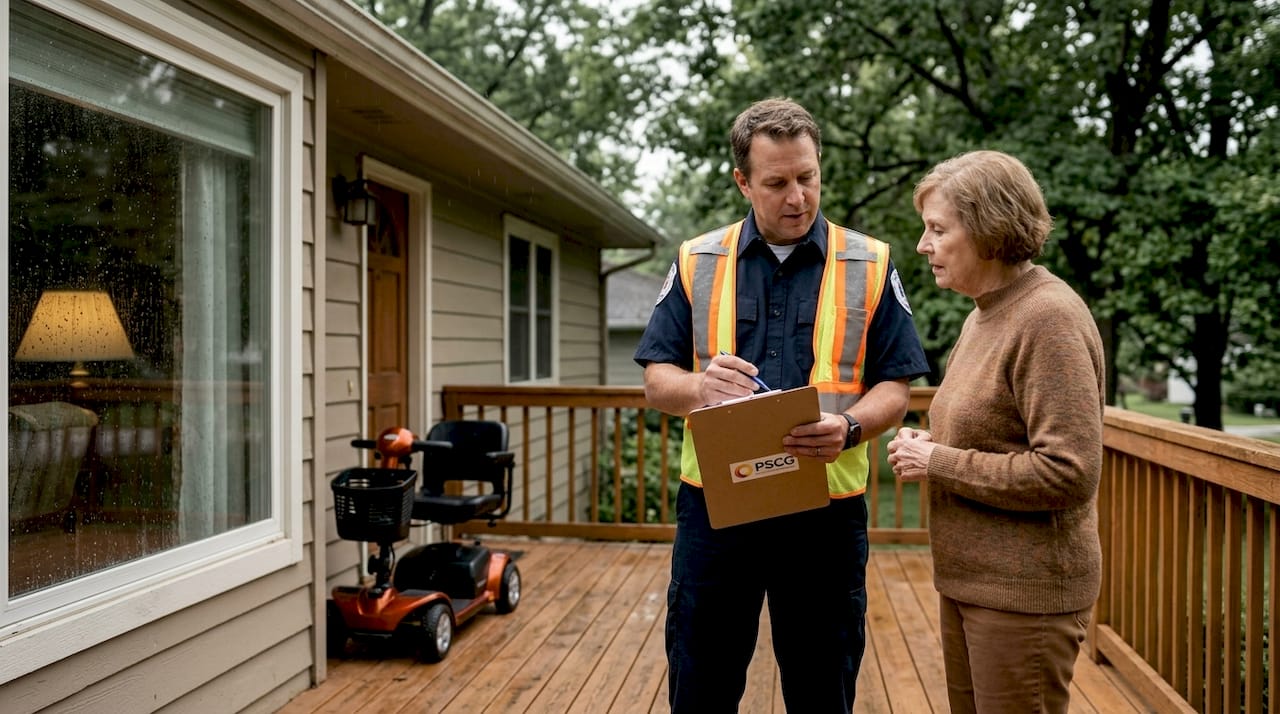
Law enforcement encounters carry an additional layer of risk. Involuntary movements, slurred speech, and unsteady gait are features of dyskinetic and ataxic CP that closely resemble intoxication. Without CP-specific awareness, those encounters can escalate unnecessarily. Responders who understand CP risks and know what they are looking at can de-escalate before the situation becomes dangerous for everyone involved.
Here are the top safety protocols for EMS when managing CP emergencies:
- Identify implanted devices immediately. Ask the caregiver or check for a medical ID bracelet before transport, positioning, or any imaging decision. Baclofen pump malfunction is a medical emergency in itself.
- Request the patient’s emergency care plan. Families often maintain personal files with seizure management protocols, communication preferences, equipment details, and baseline behavior descriptions.
- Establish a communication method before assuming incapacity. Eye gaze, head nods, or a caregiver intermediary may be sufficient for basic consent and history gathering.
- Do not force positioning. Muscle contractures and spasticity mean that standard spinal precaution positioning can cause injury. Work with the patient’s natural posture when safe to do so.
- Assess for constipation as a pain source. Constipation is a common complication in CP patients and is frequently overlooked as a source of acute distress or agitation during emergency calls.
- Include the caregiver in your assessment. A parent or professional caregiver knows this patient’s baseline. Their input is clinical data, not a distraction.
Pro Tip: When communication is difficult, ask yes or no questions and confirm answers by having the patient blink or squeeze your hand. This small adjustment keeps the patient involved in their own care and dramatically improves your assessment accuracy.
Treatment options and their impact on emergency decisions
CP requires multidisciplinary management including physical and occupational therapy, medications, and sometimes surgery. There is no cure. Treatment is focused on improving function, reducing pain, and supporting quality of life. For EMS, the relevant question is: how does this patient’s current treatment affect what you can safely do on scene?
Medications are the first consideration. Baclofen, delivered orally or via implanted intrathecal pump, reduces muscle spasticity. If a pump malfunctions, the patient can experience acute baclofen withdrawal, which presents with high fever, extreme spasticity, altered mental status, and rhabdomyolysis. That is a time-sensitive emergency that looks nothing like a typical call. Botulinum toxin injections are also common and reduce focal spasticity, but they do not typically affect emergency care directly.
Surgical history matters too. Selective dorsal rhizotomy, a neurosurgical procedure to reduce spasticity, and orthopedic procedures like tendon releases or hip reconstruction alter the patient’s musculoskeletal anatomy. Neurosurgical approaches require individualized management based on patient profile, goals, and family context. Responders who move or position a post-surgical CP patient without understanding their anatomy risk serious harm.
Key emergency management considerations related to CP treatment:
- Baclofen pump location and status. Know where it is, whether it is functional, and when it was last refilled.
- Seizure medications and current seizure frequency. A patient with poorly controlled seizures on a new medication regimen may present differently than their baseline suggests.
- Orthopedic hardware. Plates, rods, or other fixation devices from prior surgeries affect positioning, splinting, and fracture assessment.
- Communication devices. If an AAC device is damaged or unavailable, your assessment capacity drops significantly. Document this and compensate accordingly.
- Tone medications. Medications that reduce spasticity may also affect respiratory muscle control, particularly in high-dose scenarios or overdose situations.
Best practices for public safety professionals
Individualized assessment and family engagement are the twin pillars of effective CP emergency response. The CP management strategies that work in clinical settings translate directly to the field: know the patient before you act, and when you cannot know them in advance, gather information fast and adapt.
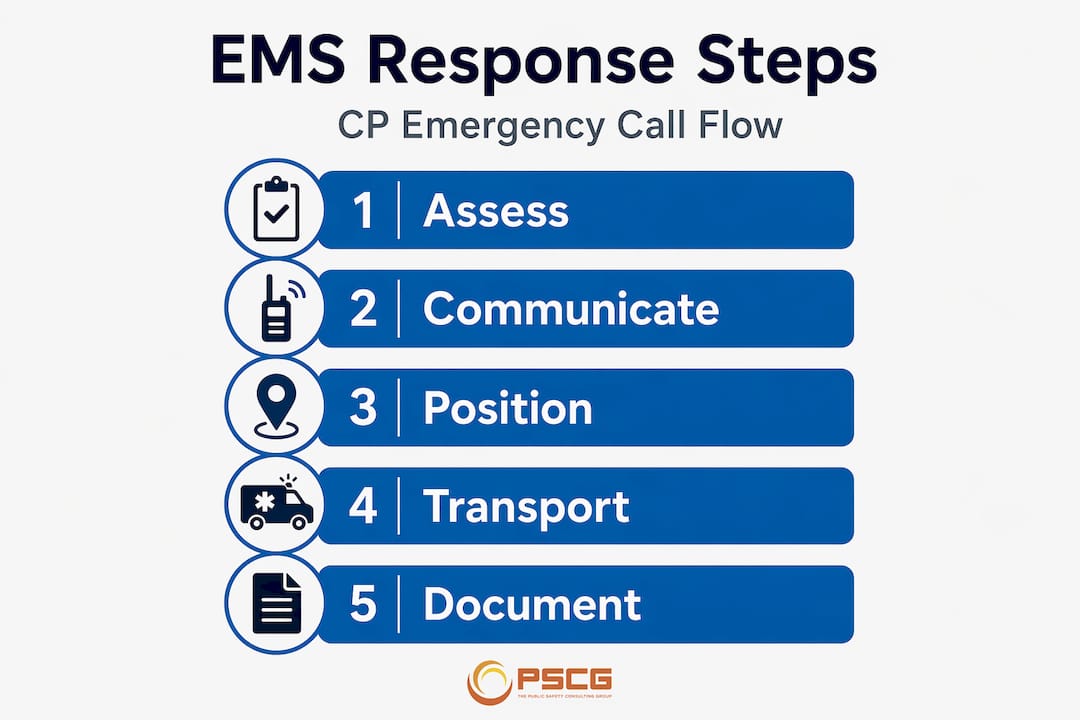
Scene management starts with communication. When you arrive, identify who the primary caregiver is and get them close. Do not treat their input as interference. Their knowledge of the patient’s baseline behavior, pain expression, and medical history is operationally significant. If the caregiver is absent, look for a binder, folder, or tablet near the patient. Emergency care plans are real and are used by families who have learned the hard way that responders need specific information to help effectively.
Transport decisions require attention to positioning, securing methods, and equipment. Standard stretcher restraints may not accommodate significant contractures or spasticity. Bring in additional support if needed. Document the patient’s position at scene pickup and any adjustments made, because post-transport changes can become a clinical and liability issue.
Training for EMS instructors covering special populations should include not just CP definition and CP symptoms but simulation-based scenarios that put responders in the position of communicating with a non-verbal patient under time pressure. That is where the real learning happens. Reading about CP risks in a manual does not prepare a responder for the discomfort of working with a patient who cannot confirm their own history.
Pro Tip: Build relationships with local schools, adult day programs, and residential facilities that serve individuals with CP. A 30-minute site visit in a non-emergency context teaches more than any classroom hour and builds the kind of mutual familiarity that saves time on actual calls.
My perspective on where we are falling short
I have seen how CP emergencies go wrong, and almost every time, the breakdown is not clinical knowledge. It is assumption. Responders assume that because a patient cannot speak clearly, they cannot communicate at all. They assume that a patient who looks distressed is behaviorally dysregulated rather than in pain. They assume that standard protocols apply.
The honest truth is that most EMS curricula give CP less than one lecture hour across an entire program. Law enforcement training may not mention it at all. And yet these patients are in our communities, using emergency services at higher rates than the general population, and coming to us with presentations that genuinely require specialized knowledge.
Specialized training and multidisciplinary partnerships improve CP emergency outcomes. That is not a theory. It is documented. What I have found, working alongside EMS agencies and medical directors, is that the agencies doing this well have made CP part of a broader commitment to special population preparedness, not a one-off in-service. They have built protocols, consulted with families, and trained their people to default to curiosity rather than assumption when a patient does not fit the standard profile.
The technology and procedural advances are helping. Better AAC devices, more families with documented care plans, and stronger community paramedicine programs all move the needle. But the mindset shift matters more than any tool. A responder who approaches a CP patient with genuine curiosity and patience will outperform one with perfect protocol knowledge but no willingness to adapt.
— Mike
How Thepscgroup helps agencies prepare for complex calls
At Thepscgroup, we work alongside EMS agencies, municipal governments, and public safety leadership teams to build systems that handle complex emergencies with the same precision they bring to standard calls. Special population preparedness, including CP emergency response, is part of the EMS system design consulting we provide to agencies across Connecticut and beyond. We help you design training programs, develop response protocols for special populations, and align your operational structure with the real-world complexity of your community’s needs.
If your agency is ready to close the gap between standard protocols and the patients who fall outside them, we are ready to help. Visit our municipal EMS strategy guide or reach out to us directly at thepscgroup.net to start the conversation.
FAQ
What is CP and why does it matter for EMS?
CP, or cerebral palsy, is a group of neurological disorders affecting movement, posture, and coordination caused by abnormal brain development or injury. It matters for EMS because CP symptoms vary widely between patients, and standard assessment protocols can miss critical signs without condition-specific training.
What are the most common CP types responders will encounter?
Spastic CP is the most common type, affecting around 80% of individuals with the condition, and it is characterized by muscle stiffness and increased tone that directly affects transport and positioning decisions on scene.
How should EMS handle a CP patient with an implanted baclofen pump?
Identify the pump location and status before repositioning or transport, and watch for signs of malfunction including sudden increase in spasticity, fever, or altered mental status, which indicate a time-sensitive medical emergency.
What communication strategies work best for non-verbal CP patients?
Use yes or no questions with physical confirmation methods like hand squeezes or eye blinks, keep a caregiver close as an intermediary, and look for augmentative communication devices at the scene.
How does CP affect law enforcement encounters?
Dyskinetic and ataxic CP symptoms including involuntary movements, unsteady gait, and unclear speech can closely resemble intoxication or behavioral disturbance, making CP awareness training critical for officers to avoid unnecessary escalation.
Recommended
- 911 replies before killing faulted | The Public Safety Consulting Group
- Practical examples of customer service principles in EMS | The Public Safety Consulting Group
- EMS Myth Buster’s: What the public needs to know | The Public Safety Consulting Group
- 911 dispatcher has spotty record | The Public Safety Consulting Group