


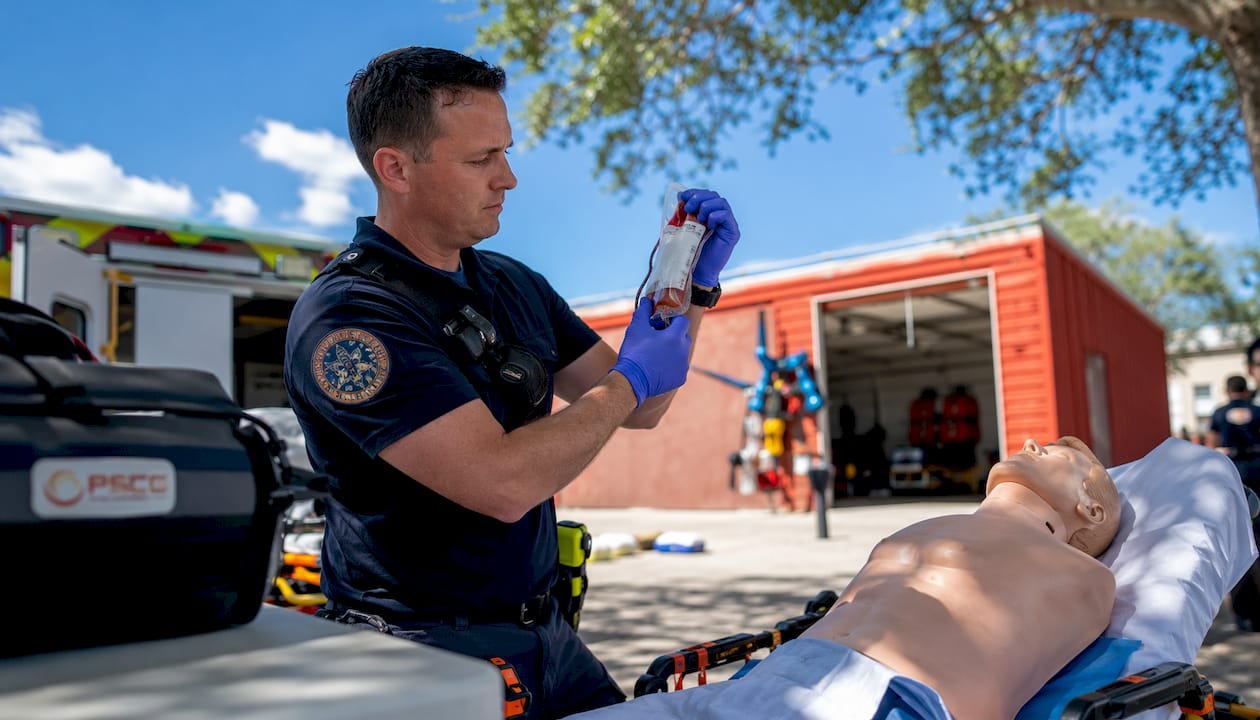
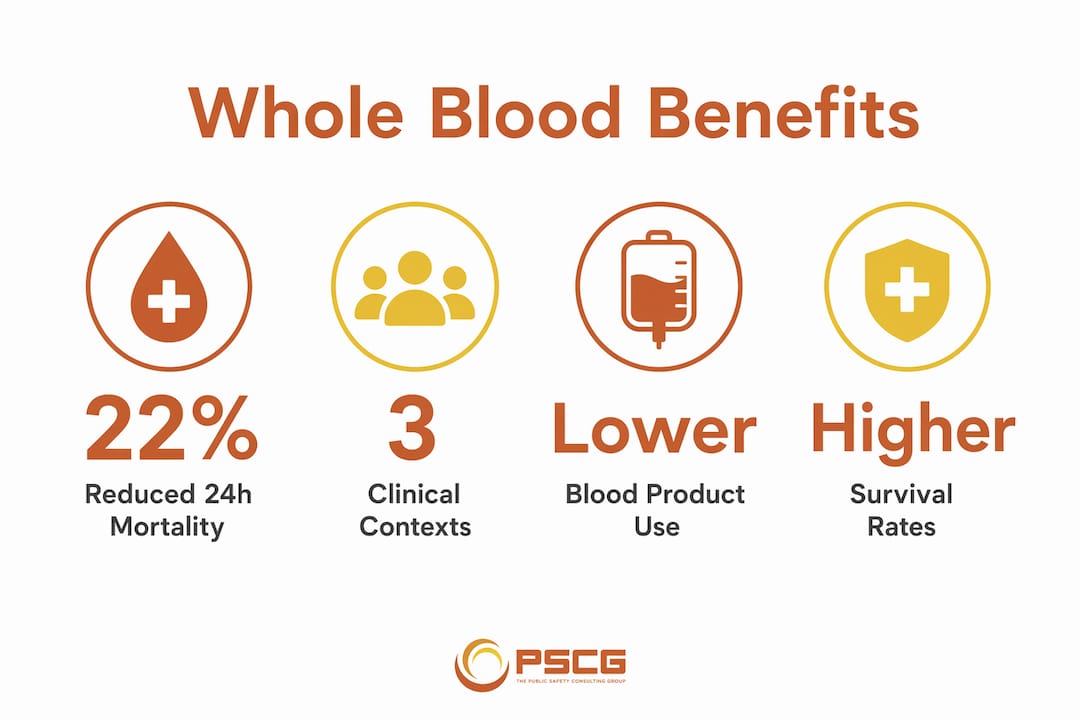
Prehospital whole blood programs are ready for municipal EMS adoption — but only when your system has cleared specific clinical, operational, and regulatory thresholds. The evidence is clear: low-titer Type O whole blood (LTOWB) is associated with reduced 24-hour mortality (OR 0.78) and reduced in-hospital mortality (OR 0.88) compared to component therapy in trauma patients. A number of U.S. trauma centers have already implemented LTOWB programs. The question for municipal leaders is not whether the clinical case exists. It is whether your system is operationally and legally ready to act on it.
Key qualifiers before you proceed:
- The FDA, AABB, and American College of Surgeons (ACS) all provide guidance that must shape your protocols before a single unit is carried on a unit.
- LTOWB is indicated for life-threatening hemorrhage and massive transfusion scenarios, not as a replacement for component therapy when monocomponent treatment is sufficient.
- Thepscgroup recommends beginning with a formal readiness assessment before committing to procurement or training expenditures.
Pro Tip: Schedule a readiness assessment with Thepscgroup before drafting protocols. Identifying supply-chain, cold-chain, and medical-oversight gaps early prevents costly program restarts.
Table of Contents
- What does whole blood actually do in prehospital trauma care?
- When is whole blood indicated, and when is it not?
- What does adopting whole blood require operationally?
- What regulatory and legal clearances does your agency need?
- How do you design a whole blood pilot program?
- What training and QA structures keep a program safe?
- What does a whole blood program cost, and how do you fund it?
- Key Takeaways
- A frank perspective on whole blood adoption in municipal EMS
- How Thepscgroup helps your agency adopt whole blood safely
- Authoritative sources and further reading
What does whole blood actually do in prehospital trauma care?
True whole blood is unfractionated human blood containing red blood cells, white blood cells, platelets, and plasma in their natural proportions. It differs fundamentally from reconstituted blood, which combines separately processed red cell concentrates, fresh frozen plasma, and platelet units. In a massive hemorrhage scenario, whole blood delivers all hemostatic components in a single product, with no thaw time for plasma and no need to coordinate multiple component units under field conditions.
The clinical case for prehospital use is grounded in battlefield-derived evidence that balanced, rapid resuscitation improves survival, and that evidence has now translated into civilian trauma settings.
“Multiple studies reported reduced 24-hour mortality and improved 30-day survival with whole blood compared to component therapy; one large analysis found reduced 24-h mortality (OR 0.78) and reduced in-hospital mortality (OR 0.88).” — PMC Whole Blood Transfusion in Trauma Review
Whole blood is most compelling in three clinical contexts: massive hemorrhage requiring damage control resuscitation, high-acuity penetrating trauma, and multi-system blunt trauma with hemorrhagic shock. It is less advantageous when a patient’s deficit is component-specific and monocomponent therapy is sufficient.
| Study Endpoint | Direction of Effect | Source |
|---|---|---|
| 24-hour mortality | Reduced (OR 0.78) | PMC multicenter review |
| In-hospital mortality | Reduced (OR 0.88) | PMC multicenter review |
| Massive transfusion logistics | Simplified (no FFP thaw, single product) | PMC operational analysis |
| 30-day survival | Improved vs. component therapy | PMC cohort studies |
When is whole blood indicated, and when is it not?
AABB guidance endorses LTOWB as a universal donor product when appropriate safety measures are in place, including titer limits. Medscape’s clinical reference is explicit: whole blood is primarily indicated for life-threatening hemorrhage and is not appropriate when component-specific therapy is sufficient.
Indications:
- Hemorrhagic shock with suspected massive blood loss
- Damage control resuscitation in the prehospital phase
- Penetrating trauma with signs of exsanguination
- Settings where component therapy logistics are impractical
Contraindications and cautions:
- Patients with known alloantibodies requiring crossmatched blood
- Pediatric patients and females of childbearing age (require additional protocol review for LTOWB)
- Situations where a specific component deficit is identified and treatable with monocomponent therapy
LTOWB safety depends on strict control of anti-A and anti-B IgM/IgG titers. Many centers adopt conservative cut-offs (commonly below 1:256), though practices vary and must be codified in your written protocol. Key transfusion risks include hemolytic reactions, transfusion-related acute lung injury (TRALI), and circulatory overload. All require monitoring protocols and documented adverse event response pathways.
Pro Tip: Medical directors should set conservative initial unit caps (commonly 2 units per patient in the field) and document titer thresholds, age and sex exclusions, and reaction management steps before the program goes live. Conservative early limits reduce program risk and build provider confidence.
What does adopting whole blood require operationally?
Implementing a whole blood program is as much an organizational change as a medical one. It forces rethinking procurement, storage, waste management, and interagency agreements across your entire system.
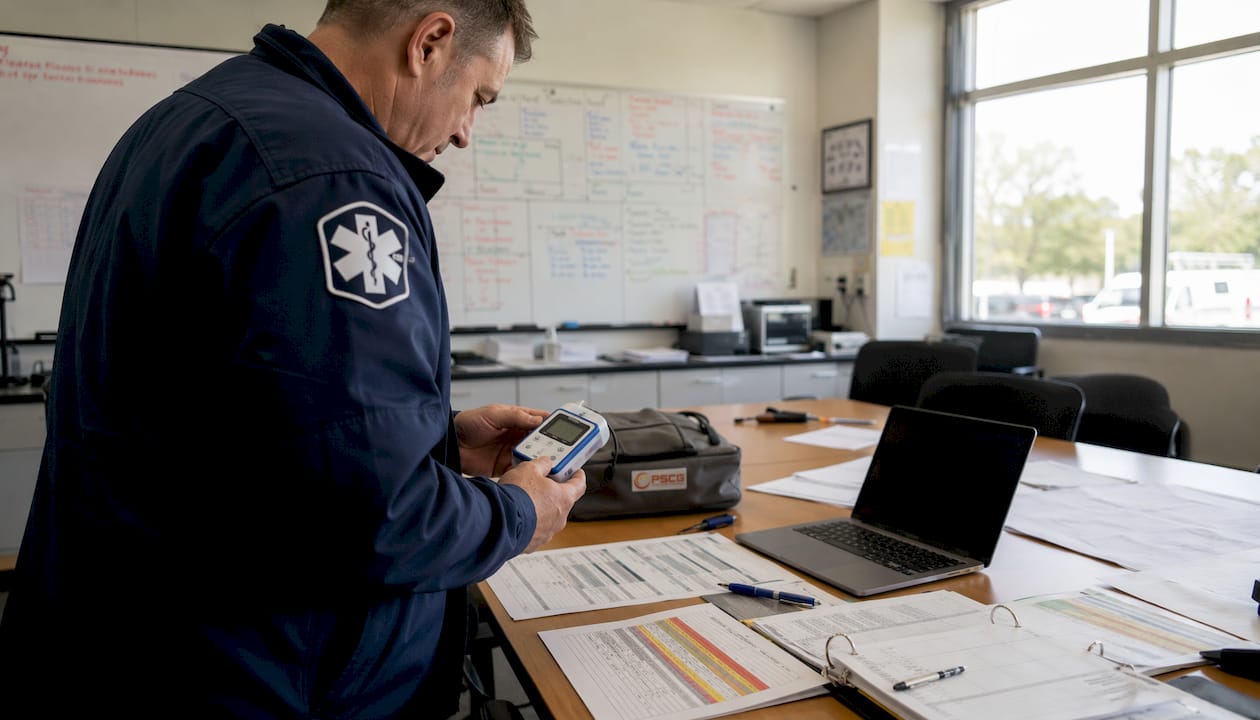
Cold-chain requirements are the most operationally demanding element. Whole blood must be stored at 1–6°C continuously. Units collected with CPDA-1 anticoagulant can be stored up to 35 days; units collected with CPD anticoagulant are limited to 21 days. Labile clotting factors and platelet function degrade quickly under refrigerated storage, so hemostatic benefit is greatest with fresher units. That creates direct pressure to rotate inventory aggressively and minimize waste.
Numbered operational steps for program setup:
- Identify a licensed blood supplier or regional blood center partner capable of providing LTOWB units with documented titer testing.
- Procure validated refrigerated transport containers with continuous temperature monitoring and data logging.
- Establish a consignment or purchase agreement that defines re-supply windows, titer documentation requirements, and recall procedures.
- Define vehicle storage protocols, including temperature excursion thresholds and out-of-range response procedures.
- Negotiate hospital turnaround expectations with receiving trauma centers, including documentation handoff and inventory reconciliation at patient transfer.
Cold-chain failure and poor inventory rotation are leading causes of unusable units and higher per-patient costs. Most successful civilian LTOWB programs pair consignment or hospital-partnership supply models with temperature monitoring telemetry and scheduled re-supply windows to minimize expired units. For broader municipal EMS best practices that frame these operational decisions, Thepscgroup’s published guidance provides a useful system-design reference.
Pro Tip: Negotiate a consignment agreement with your blood supplier before purchasing units outright. Consignment reduces waste-related financial exposure during the pilot phase, when utilization rates are unpredictable.
What regulatory and legal clearances does your agency need?
No whole blood program should go live without clearing a defined regulatory and legal checklist. The authorities you must consult include the FDA, AABB, your state health department, and ACS trauma quality guidance. Each governs a different layer of your program.
Regulatory checklist for municipal legal and risk teams:
- Confirm your blood supplier holds current FDA registration and operates under AABB accreditation standards.
- Verify state blood bank regulations for prehospital transfusion, which vary by jurisdiction.
- Establish a written medical direction agreement that names the physician medical director, defines scope of practice for prehospital transfusion, and documents protocol approval.
- Negotiate supplier contracts that specify titer documentation, lot traceability, recall notification timelines, and responsibility allocation for adverse events.
- Define informed-consent procedures for conscious patients and document the medical necessity basis for unconscious patients.
- Build an incident reporting pathway that meets both your agency’s QA requirements and any state-mandated adverse event reporting obligations.
Transfusion safety risks including TRALI and circulatory overload require documented response protocols that are reviewed by your medical director and legal counsel before launch. For agencies navigating the legal dimensions of prehospital clinical programs, Thepscgroup’s resources on the role of attorneys in EMS operations offer practical framing for those conversations.
How do you design a whole blood pilot program?
A phased pilot approach reduces risk and generates the outcome data your governing body will need to authorize a full program. The framework below reflects the governance, supply, training, and QA readiness dimensions that Thepscgroup evaluates in system assessments.
Pilot timeline:
| Phase | Activities |
|---|---|
| Planning (Months 1–3) | Governance approval, medical director agreement, supplier selection, legal review |
| Procurement (Months 3–4) | Equipment purchase, cold-chain validation, consignment agreement execution |
| Training (Months 4–5) | Paramedic and EMT certification, simulation exercises, dispatch notification protocols |
| Live Pilot (Month 6) | Limited deployment on highest-acuity units, real-time QA monitoring |
| Review (Month 8) | KPI analysis, adverse event review, go/no-go decision for full deployment |
KPI table for pilot measurement:
| Metric | Target |
|---|---|
| Cold-chain compliance rate | Units maintained within 1–6°C at administration |
| Waste rate (expired units) | Units procured meeting rotation targets |
| Documentation completeness | All transfusion events fully documented |
| Transfusion reaction rate | Tracked and reviewed against national benchmarks |
| 24-hour survival (transfused patients) | Tracked and compared to pre-program baseline |
Go/no-go gates should require sign-off from the medical director at training completion, the agency director at pilot launch, and the governing municipal body at the full-deployment decision. For EMS system design examples that illustrate how other agencies have structured phased clinical capability rollouts, Thepscgroup’s published case references are a practical starting point.
What training and QA structures keep a program safe?
Training is not a one-time event. A whole blood program requires a structured curriculum, a simulation cadence, and continuous QA/QI integration to remain safe and auditable.
Core training modules:
- Indications and contraindications for prehospital LTOWB administration
- ABO compatibility rules and titer-based universal donor protocols
- Administration technique, IV and intraosseous access, and flow rate management
- Transfusion reaction recognition and field management
- Cold-chain handling, temperature excursion response, and documentation
Simulation and competency schedule:
- Initial certification: full-scenario simulation before any field deployment.
- Annual recertification: scenario-based competency assessment with documented sign-off.
- Quarterly case reviews: QA committee review of all transfusion events, including near-misses and cold-chain excursions.
QA/QI metrics to track continuously include transfusion reaction rates, cold-chain excursion frequency, documentation completeness, and 24-hour clinical outcomes for transfused patients. These metrics should feed directly into your existing EMS quality improvement program and medical oversight reporting cycle. Applying structured job hazard analysis best practices to the transfusion workflow can also help identify procedural risks before they reach patients.
Pro Tip: Assign a designated whole blood program coordinator within your QA structure. A single accountable owner for cold-chain compliance, documentation audits, and adverse event tracking prevents gaps that only surface during external review.
What does a whole blood program cost, and how do you fund it?
Budget planning for a whole blood program requires separating capital costs from ongoing operating costs, and understanding that reimbursement pathways are still maturing in most U.S. jurisdictions.
Primary cost drivers:
- Blood acquisition: per-unit cost for LTOWB from a licensed supplier, plus titer testing documentation fees
- Temperature-monitoring equipment: validated refrigerated transport units and telemetry devices
- Training: initial certification, simulation, and annual recertification costs
- Waste: expired units represent a direct operating cost tied to utilization rates and inventory rotation
- QA staffing: program coordinator time and medical director oversight hours
Budget checklist:
| Cost Category | Pilot Phase | Steady State |
|---|---|---|
| Blood acquisition | Low volume, consignment preferred | Volume-based purchase or consignment |
| Cold-chain equipment | One-time capital purchase | Maintenance and replacement reserve |
| Training | Full curriculum build-out | Annual recertification only |
| Waste | Higher during ramp-up | Reduced with optimized rotation |
| QA/medical oversight | Intensive | Integrated into existing program |
Reimbursement for prehospital blood products varies by payer and state. Hospital charge-back and consignment models are the most common mechanisms for managing blood costs in civilian EMS programs. Federal and state grants targeting trauma system improvement, as well as regional blood-bank partnerships, can offset startup costs. Thepscgroup’s work in EMS financial analysis helps agencies build the financial model before committing capital.
Key Takeaways
Prehospital whole blood programs deliver measurable mortality benefits in trauma, but safe adoption requires clinical, operational, regulatory, and financial readiness across your entire EMS system.
| Point | Details |
|---|---|
| Clinical evidence is strong | LTOWB is linked to reduced 24-hour mortality (OR 0.78) and in-hospital mortality (OR 0.88) in multicenter trauma studies. |
| Cold-chain compliance is non-negotiable | Whole blood must stay at 1–6°C continuously; excursions render units unusable and drive up per-patient costs. |
| Regulatory clearance comes first | FDA registration, AABB standards, state blood bank rules, and a written medical direction agreement must all be in place before deployment. |
| Pilot before full deployment | A phased pilot with defined KPIs, go/no-go gates, and medical director sign-off reduces risk and builds governing-body confidence. |
| Thepscgroup supports full-cycle adoption | From readiness assessment through protocol development, training, and QA design, Thepscgroup guides municipal agencies at every phase. Visit thepscgroup.net to start. |
A frank perspective on whole blood adoption in municipal EMS
The clinical argument for whole blood in prehospital trauma care is no longer a debate. The data from military and civilian multicenter studies is consistent enough that the question has shifted from “does it work?” to “can your system actually do this safely?” That shift is where most municipal programs run into trouble.
What we see most often is agencies that move from clinical enthusiasm directly to procurement, skipping the organizational groundwork that makes a program sustainable. Cold-chain infrastructure gets underestimated. Medical director agreements get drafted without legal review. Training gets compressed to meet a launch deadline. The result is a program that works on paper but generates adverse events, waste, and liability exposure that erodes political support before the clinical benefits can be measured.
The agencies that succeed treat this as a system design problem, not a supply problem. They build the governance structure first, negotiate the right supplier agreements, and invest in QA infrastructure that can actually detect and respond to problems in real time. That approach takes longer at the front end, but it produces programs that survive their first adverse event and continue to improve patient outcomes over time. The clinical benefit of whole blood is real. The organizational lift to capture it safely is equally real, and it deserves the same rigor.
How Thepscgroup helps your agency adopt whole blood safely
![PSCG Logo]
Thepscgroup brings the full consulting infrastructure municipal leaders need to move from clinical interest to a functioning, auditable whole blood program. We conduct formal readiness assessments that identify gaps in cold-chain capability, medical oversight, supplier agreements, and QA structure before they become program failures. We develop written protocols aligned with FDA, AABB, and ACS standards, design training curricula for paramedics and medical directors, and build the QA/QI metrics that keep your program defensible under external review.
For agencies ready to scope a pilot or evaluate system-level readiness, our EMS system design consulting services provide the structured engagement your governing body needs to make a confident decision. We also support the municipal EMS strategy work that positions whole blood adoption within your broader public safety investment plan. Contact us at thepscgroup.net to schedule your readiness assessment today.
Authoritative sources and further reading
These are the primary sources your medical director, blood-bank partner, and legal counsel should review before program launch.
- PMC: The Use of Whole Blood Transfusion in Trauma — The most comprehensive peer-reviewed review of LTOWB outcomes data, operational considerations, and civilian adoption trends. Essential for medical directors building the clinical case.
- AABB: Whole Blood and Red Blood Cell Components — Governing standards for LTOWB product definitions, titer limits, and storage protocols. Required reading for blood-bank agreement negotiations.
- Medscape: Whole Blood Dosing, Indications, and Adverse Effects — Clinical reference covering indications, contraindications, shelf life, and transfusion reaction management. Useful for protocol drafting and training curriculum design.
- Mayo Clinic: Whole Blood Donation — Covers donor eligibility, collection volumes (400–550 mL per unit), and screening requirements. Relevant for procurement planning and supplier partnership discussions.
- American College of Surgeons (ACS) Trauma Quality Programs — ACS trauma verification standards and damage control resuscitation guidance provide the clinical governance framework for hospital integration and handoff protocols.
- Your state health department’s blood bank and prehospital transfusion regulations — State rules vary significantly and must be reviewed by legal counsel before any deployment.
For integrated, locally adapted guidance that connects these sources to your specific system design, contact Thepscgroup at thepscgroup.net.
This article provides general informational guidance on prehospital whole blood programs and does not constitute medical, legal, or regulatory advice. Municipal leaders and medical directors should confirm current FDA, AABB, and state requirements with qualified legal counsel and a licensed physician medical director before implementing any transfusion program.