



TL;DR:
- Many EMS agencies operate with minimal staffing, relying heavily on volunteers and reactive responses.
- Aligning EMS development with EMS Agenda 2050’s outcome focus improves community impact and funding access.
- Building a high-performance culture through authentic leadership, data use, and legislative advocacy drives sustainable progress.
Public safety agencies across the U.S. are under pressure to deliver more with less, and over 50% of local EM agencies have one or fewer full-time employees. For municipal leaders, this is not a footnote; it is the operating reality. Building a high-performing EMS organization under these constraints demands more than good intentions. It requires clear frameworks, data-driven deployment, authentic leadership, and strategic legislative engagement. This article walks you through the foundational principles and actionable steps that separate reactive agencies from resilient, outcome-focused systems that communities depend on.
Table of Contents
- Framing organizational development in public safety: Challenges and context
- Aligning EMS organizational development with the EMS Agenda 2050 vision
- Data-driven EMS system design and workforce optimization
- Cultivating high-performance EMS culture and legislative advocacy
- Why authentic leadership and flexible models are the real differentiators
- Take the next step: Partnering for EMS development success
- Frequently asked questions
Key Takeaways
| Point | Details |
|---|---|
| Assess your starting point | Audit your current workforce and resources before setting organizational development goals. |
| Adopt data-driven models | Use response data and tiered deployment to match resources and reduce staff burnout. |
| Lead with culture | Foster accountability and collaboration to transform EMS agency performance. |
| Engage in advocacy | Actively participate in legislative efforts to secure resources and shape EMS policy. |
Framing organizational development in public safety: Challenges and context
Municipal EMS leaders navigate a complex operating environment where workforce shortfalls, funding gaps, and shifting community needs collide daily. Staffing varies dramatically, with many agencies operating with minimal full-time staff and a mix of paid and volunteer directors. This structure limits organizational flexibility and makes sustained development initiatives difficult to execute without a clear plan.
Volunteerism, while invaluable, introduces its own volatility. Volunteer availability is inconsistent, training standards differ widely, and succession planning is rarely formalized. Smaller municipalities in particular find themselves caught between community demand and the operational ceiling imposed by thin staffing. Without structural clarity, most organizational development efforts stall before they deliver measurable results.
Many agencies also remain locked in reactive postures. They respond to crises rather than anticipating them, reallocate resources under pressure rather than by design, and rely on informal culture rather than intentional leadership practices. This is not a failure of commitment; it is a failure of framework. Reviewing municipal strategy tips can help leaders build that framework from the ground up.
What makes the current moment different is the availability of practical models that account for lean staffing realities. Smart government tech and data platforms now allow smaller agencies to operate with the analytical sophistication previously reserved for large metropolitan systems. Combine that with strong EMS best practices and you have a viable path forward even in resource-constrained environments.
| Organizational challenge | Impact on development |
|---|---|
| Limited full-time staffing | Reduces capacity for training and planning |
| Heavy reliance on volunteers | Introduces scheduling and standard gaps |
| Reactive resource allocation | Undermines proactive system improvement |
| Informal leadership culture | Weakens accountability and retention |
Before setting any development goals, you need to know your starting point. Key baseline areas to assess include:
- Current full-time versus part-time and volunteer ratios
- Training completion rates and certification compliance
- Response time performance against local benchmarks
- Budget allocation by operational versus administrative function
- Turnover rates and exit interview themes
Pro Tip: Assess your current personnel and resource baselines before setting development goals. Without this data, even well-designed initiatives miss the mark.
Aligning EMS organizational development with the EMS Agenda 2050 vision
The EMS Agenda 2050 encourages integration with public health, emphasizing regulation, resource management, education, and performance evaluation as the pillars of modern EMS design. For municipal leaders, this is not just a federal vision document; it is a practical calibration tool. When your local EMS plan reflects these pillars, you gain alignment with state and federal funding criteria, which opens doors to resources that fragmented agencies cannot access.
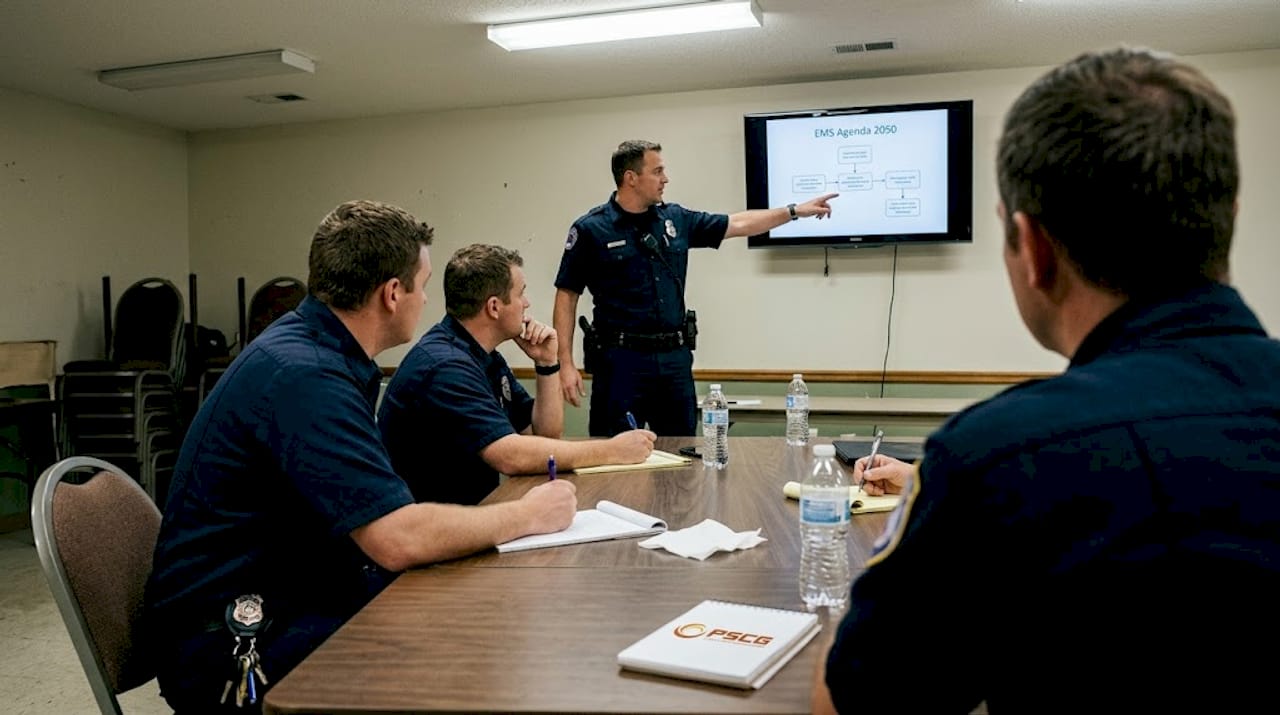
The framework pushes agencies away from volume-based metrics and toward outcome-focused evaluation. That is a meaningful shift. Rather than measuring success by the number of calls handled, agencies begin asking whether those responses actually improved patient outcomes. This perspective change alone can reorient your entire development strategy. Exploring an EMS leadership development approach grounded in outcome-based thinking is one of the most effective first steps.
| Current municipal approach | EMS Agenda 2050 recommendation |
|---|---|
| Volume-based performance metrics | Outcome-based patient and system evaluation |
| Siloed EMS operations | Integration with public health systems |
| Reactive workforce planning | Continuous education and workforce development |
| Minimal data infrastructure | Performance data collection and analysis |
To start aligning your local EMS program with this national vision, consider these practical steps:
- Map your current agency structure against the Agenda 2050 pillars
- Identify specific gaps in education, data use, and public health coordination
- Set measurable outcome targets, not just activity counts
- Create a formal review cycle tied to state EMS plan benchmarks
- Engage regional EMS councils for collaborative planning support
Pioneering public sector progress through structured alignment with national frameworks is not about compliance for its own sake. It is about giving your agency a coherent direction that evolves with the system around it. For a practical roadmap, our EMS strategy guide outlines how municipalities can operationalize these principles effectively.
The most effective EMS leaders do not chase frameworks. They set local outcome targets, measure rigorously, and adapt continuously. Frameworks are a starting point, not a destination.
Data-driven EMS system design and workforce optimization
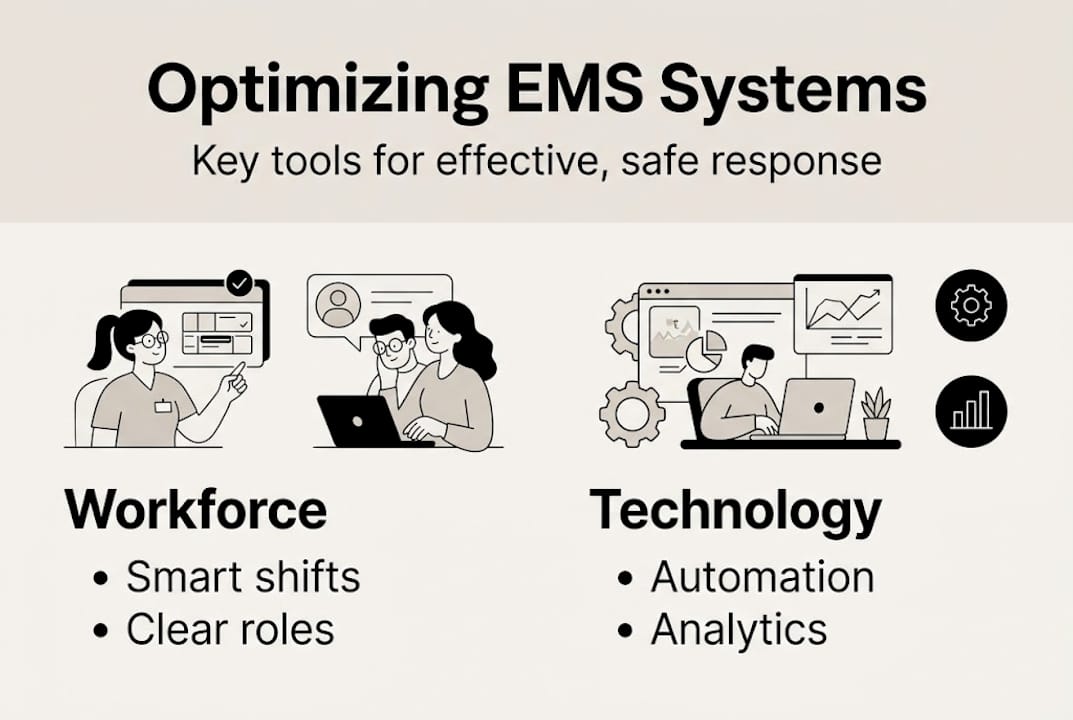
One of the most persistent myths in EMS management is that deploying lights and sirens (L&S) on every call is the safest and most responsive approach. The data challenges that assumption directly. High-performance EMS systems use tiered deployment and data-led decision-making, achieving 100% benchmark compliance while demonstrating that selective L&S deployment and extended response windows do not degrade patient outcomes but do reduce staffing strain significantly.
Tiered Advanced Life Support and Basic Life Support (ALS/BLS) deployment models match resource intensity to actual call acuity. A sprained ankle does not require a paramedic-level response. A cardiac arrest does. When your dispatch system uses structured call interrogation and clinical algorithms to differentiate these scenarios, you stop burning out your highest-trained staff on low-acuity calls. Reviewing your EMS planning process with tiered deployment in mind is a practical starting point.
Here is a straightforward process to shift toward a data-driven deployment model:
- Audit your last 12 months of call data by acuity level and unit response type
- Identify calls where ALS resources were dispatched but BLS or EMT response would have been clinically appropriate
- Implement structured dispatch protocols with clinical decision support tools
- Define response time benchmarks separately for high-acuity and low-acuity call categories
- Track and report outcomes monthly, including patient care metrics not just response times
| Deployment model | Staffing impact | Outcome impact |
|---|---|---|
| Universal ALS response | High unit hours used, burnout risk | No measurable outcome advantage |
| Tiered ALS/BLS model | Balanced utilization, lower fatigue | Comparable or improved outcomes |
| Data-led dispatch protocols | Efficient resource matching | Benchmark compliance maintained |
Leveraging automation in public safety platforms further extends these gains by reducing dispatcher cognitive load and improving routing decisions in real time. Pairing automation with solid system assessment steps creates a feedback loop that continuously refines your deployment model.
Pro Tip: Prioritize low-acuity call processing improvements first. Freeing your paramedics from non-emergency responses is one of the fastest ways to reduce burnout and improve response availability for high-impact calls.
Cultivating high-performance EMS culture and legislative advocacy
Data and system design only carry an agency so far. Culture determines whether those systems are actually used with discipline and consistency. Leadership accountability and collaboration shape high-performing EMS cultures, while agencies that rely on compliance alone tend to stagnate. The difference is whether leaders model the virtues they expect from their teams.
Core leadership virtues that drive EMS organizational development include:
- Accountability: Owning outcomes, not just processes, at every level of the organization
- Transparency: Sharing performance data openly so teams understand their impact
- Collaboration: Breaking down silos between EMS, fire, law enforcement, and public health
- Adaptability: Treating protocol updates and system changes as opportunities rather than threats
- Advocacy: Actively representing EMS interests in legislative and policy forums
Advocacy at the legislative level is often overlooked by agency leaders who see it as someone else’s responsibility. That is a costly assumption. EMS funding, scope of practice, staffing standards, and reimbursement rates are all shaped by legislative decisions. Agencies that build EMS leadership capable of engaging policymakers directly are better positioned to protect their operations and expand their capabilities. It takes preparation, but the return is significant.
The EMS culture catalyst literature consistently shows that teams with trust and psychological safety outperform those driven purely by compliance mandates. Investing in best practices for EMS instructors is one concrete way to embed these values into your workforce pipeline from day one.
Compliance tells your team what to do. Culture tells them why it matters. Agencies that invest in the ‘why’ are the ones that attract talent, retain it, and perform when it counts most.
Why authentic leadership and flexible models are the real differentiators
Here is the perspective that most organizational development conversations avoid: copying a national framework without adapting it to your local context often produces paperwork, not progress. We have seen it repeatedly. An agency implements every recommendation from a state EMS plan, checks every box, and still struggles with retention, response times, and morale. The reason is almost always the same. The framework was adopted without genuine leadership buy-in and without customization to the community’s actual needs.
Sustainable gains come from combining virtues, data, and grassroots advocacy, not from ticking framework boxes. The agencies that pull ahead are the ones where the EMS director genuinely knows their frontline staff, where performance data is discussed in team huddles and not just leadership reports, and where local legislators know EMS leadership by name.
Our public safety trend analysis consistently shows that agencies with locally adapted approaches outperform their peers who follow rigid templates. The framework is a map. Local leadership is the vehicle.
Pro Tip: Survey your frontline staff for actionable feedback monthly. Twelve annual data points from the people closest to real operations are worth far more than a single annual report from the top down.
Take the next step: Partnering for EMS development success
Building a high-performing public safety organization is not a solo effort. It requires the right frameworks, the right data, and the right partner who understands both the strategic and operational demands your team faces every day.
At PSCG, we work alongside municipal leaders to turn these principles into practical action. Whether you are starting with a staffing baseline review or redesigning your entire EMS consulting structure, we bring the expertise and collaborative approach your agency needs. Our municipal EMS strategy guide and municipal strategic planning services are designed specifically for leaders like you. Contact us today and let’s build something that lasts.
Frequently asked questions
What is public safety organizational development in EMS?
It refers to the strategies, structures, and leadership practices that help EMS agencies grow their workforce capabilities and deliver measurably better community outcomes. EMS Agenda 2050 emphasizes workforce development and outcome-based improvement as central pillars of this work.
Why are tiered EMS deployment models recommended over universal ones?
Tiered models match resource levels to actual call acuity, reducing unnecessary strain on advanced-level staff without harming patient outcomes. Tiered ALS/BLS models improve efficiency and consistently meet all response benchmarks in high-performance systems.
How can municipal leaders foster a high-performance EMS culture?
Leadership virtues like accountability and transparency, paired with proactive legislative advocacy, are the most reliable drivers of strong EMS agency culture. Leadership accountability and collaboration consistently distinguish high-performing agencies from those that plateau.
What is a first step for public safety organizational development?
Assess your current workforce structure, staffing ratios, and resource baselines to identify gaps before building a targeted development strategy. Staffing and resource baselines are critical starting points for meaningful organizational improvement.
Is legislative engagement essential for public safety agencies?
Yes, active legislative advocacy directly shapes EMS funding, scope of practice, and staffing standards. Legislative advocacy is a defining factor in the long-term success of high-performing EMS systems.
Recommended
- Municipal EMS Best Practices: Optimize Response And Impact
- How to Build Public Safety Leadership for EMS Success
- Public Safety Definition: Impact on EMS Operations
- Best Practices for EMS Instructors: Shaping the Future of Emergency Medical Services Education | The Public Safety Consulting Group
- Pioneering Public Sector Progress: A Digital Transformation Journey – Stratgetic IT Consultants For Accountants