


Customer service – good or bad – has an impact on patient responsiveness, provider stress and agency objectives
Michael A. Loiz | Aug 7, 2023 | EMS1.org
While the primary focus of EMS is to deliver timely and efficient medical care, the principles of customer service are equally significant. Exceptional customer service in EMS ensures not only the delivery of competent medical aid but also compassion, understanding and support during stressful situations. This becomes the lifeblood for everything else. In this article, we will explore practical examples of how the principles of customer service are applied in EMS settings.
1. Empathy and active listening
One of the fundamental principles of customer service is empathy, and it’s especially vital in EMS. EMS providers must actively listen to patients and their loved ones to understand their fears, concerns and medical history. During an emergency, individuals may be in distress, and showing empathy helps create a sense of comfort and trust. Ask open-ended questions, allowing patients to express themselves, and genuinely listen without interrupting.

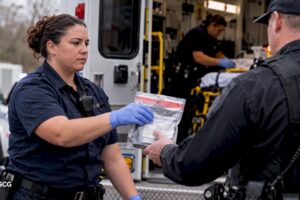
“In EMS, customer service principles are not just an added bonus, but an integral part of providing comprehensive care,” writes Loiz. (Photo/Getty Images)
For instance, when responding to an MVC, an EMS provider might say, “I can see this has been a frightening experience. Can you tell me where it hurts and any other symptoms you’re experiencing?” or “You said, the best place to place an IV for you is your left hand, would you mind if I go ahead and use that site now?”
2. Respect and dignity
Respecting the dignity of patients is a paramount aspect of customer service in EMS. Regardless of a patient’s background, race, age, gender or condition, every individual should be treated with the utmost respect. EMS personnel must communicate respectfully, use appropriate language, and maintain a professional demeanor. In situations involving vulnerable or elderly patients, extra care should be taken to preserve their dignity.
For example, an EMS team might use a privacy screen while assisting an elderly patient who has fallen to ensure they feel comfortable and respected. Likewise, when responding to high utilizers, we must resist the temptation to allow jaded mindset to approach the care of these patients. Yes, there are individuals who abuse the EMS system, just like in any other line of work. We cannot be considered professionals unless we are willing to treat people like we are professionals and allow the system, legislation and authority to work out the loopholes. This is almost never where a provider’s responsibility lies; rather, their focus is on providing unbiased and ecumenical care.
3. Clear communication
Effective communication is essential in EMS, both with patients and among EMS team members. Clear and concise communication helps avoid misunderstandings, enhances patient safety, and builds trust with patients and their families. EMS professionals should explain medical procedures and treatments in a way that is easily understood by civilians.
For example, if an EMS team needs to administer a medication to a patient, they might inform the patient and their family about the purpose, potential side effects, and expected outcomes in simple terms. This builds and establishes trust, and allows the patient and family to easily “lean in” to your care plan and even support the effort.
4. Timeliness and responsiveness
Timeliness is critical in emergency medical situations, and being responsive can make a significant difference in patient outcomes. EMS providers must prioritize quick response times, especially during life-threatening emergencies. However, being responsive also involves promptly answering patient and family inquiries, even after the immediate emergency has been addressed. Returning calls or providing updates to concerned family members can help ease their anxiety and assure them that their loved one is receiving proper care. Responding in a professional way that shows no sign of “taking things personally,” demonstrates maturity and empathy.
When we respond as if the patient, family or public we serve, should never question our actions, it removes the patient’s right to advocate for their care and presents us as more authoritarian, which is not really our role. Instead, we benefit more from leaning into the challenge with professionalism and reassuring the patient that they are in the right hands when we respond with compassion, empathy and professionalism. Remember, the old adage, you get more flies with honey than you do with vinegar.
5. Teamwork and collaboration
EMS operations heavily rely on teamwork and collaboration. Excellent customer service is demonstrated when EMS teams work together seamlessly, ensuring a smooth patient experience from the initial call for help to hospital handover. Team members should support and respect each other’s roles and input, fostering a positive and efficient work environment. In the case of a mass casualty incident, effective teamwork is essential to manage multiple patients simultaneously. Cooperation among dispatch, EMS, law enforcement and fire services is a shining example of collaboration for the greater good. Patients recognize this and it brings them great comfort (I am in excellent hands). Likewise, it also serves us well to collaborate (when appropriate) with the patient and their family. Many patients know about their disease and symptoms; we should listen and work with them. Likewise, family members can be a tremendous help on scene or even remotely. Providers should take the time to try utilizing them for support.
A FINAL NOTE FOR EMS LEADERS
These five principles can have a direct impact on providers’ mental health and resilience by reducing possible conflict and stress.
In addition, you cannot manage what you don’t measure. While patient satisfaction reports/surveys (PSRs) get a bad rap due to the fact that they do not always demonstrate that care was provided effectively or perfectly to protocol, they do provide a good indication of how the end user (the VIP) viewed your service and staff. EMS leaders can gain valuable insight into the strengths and weaknesses of their system when they utilize PSRs properly. I do not support, except in certain extreme circumstances, using PSRs toward discipline, however, to gain a high-level overview of how your organization is performing in the eyes of the customer/community, they can be a valuable dataset. Likewise, they can also be used to communicate to staff those high performing behaviors we’d like to see continue, as all providers want to know how they are doing meeting the mission objectives.
It’s also important to note that some issues are not related to the providers’ care, but to dispatch, billing ambulance ride or other non-provider-related experiences during their time in our care. This intelligence can be used to bolster customer service and experience, as well as team dynamics.
It is also important for an agency’s educational efforts to clearly communicate that good customer service, as well as bad, does have a direct impact on the patients’ responsiveness to the care being provided. The best paramedic in the world can limit the effectiveness of their care through poor customer service. The department can also be held back from being able to give providers the tools they need when the community they serve does not support the agency due to poor customer service.
In EMS, customer service principles are not just an added bonus, but an integral part of providing comprehensive care. Empathy, respect, clear communication, timeliness and teamwork contribute to an enhanced patient experience and positive outcomes. The application of these principles in EMS demonstrates a commitment to both medical excellence and compassionate care, comforting patients and their families during times of distress. By prioritizing customer service alongside medical expertise, EMS professionals can create a lasting impact on the lives of those they serve, have a positive impact on their own mental health and enhance the ability of their organization to be able to provide the tools they need toward continued enhancement.