



The best legislative advocacy strategies rest on one repeatable framework: name a clear Goal, pick a specific Target, build a Theory of Change that connects your tactics to that target, and sequence your Tactics so pressure builds instead of spiking and fading. Every durable campaign, from a statehouse budget fight to a city council ordinance push, traces back to these four moves.
Here’s the framework in its simplest form:
- Goal: the policy outcome you want, stated in plain language
- Target: the specific person or body who can deliver that outcome
- Theory of Change: the logic connecting your actions to that target’s decision
- Tactics: the sequenced, evidence-backed actions that execute the theory
Organizations that skip straight to tactics, holding a rally before naming a target, tend to burn volunteer energy without moving a vote. The Community Tool Box frames this as organizing discipline: assign a coordinator, define roles, and commit to the long view before you print a single flyer.
Key Takeaways
Legislative advocacy strategies succeed when a named coordinator pairs a precise ask with sequenced insider and outsider tactics, tracked consistently over a multi-year relationship with legislative staff.
| Point | Details |
|---|---|
| Use the four-part framework | Define Goal, Target, Theory of Change, and Tactics before taking any action. |
| Make the ask specific | Convert broad goals into a co-sponsorship, budget line, or amendment request. |
| Combine insider and outsider tactics | Pair legislator meetings with grassroots pressure and social-setting relationship building. |
| Score tactics before committing resources | Use the Apply Pressure, Build Power, Build Leaders test to prioritize. |
| Call in specialized support when needed | Thepscgroup assists public-safety organizations with technical legislative advocacy and EMS policy strategy. |
Table of Contents
- Building Your Legislative Advocacy Strategy Framework
- How Do You Define a Precise Legislative Ask?
- Mapping Stakeholders and Tracking the Bill
- Building Evidence-Based Messages That Move Legislators
- What Insider Tactics Actually Move Legislation?
- Outsider Tactics: Grassroots, Media, and Digital Pressure
- Sequencing Tactics: The Pressure, Power, and Leaders Test
- Tracking Metrics and Sustaining Relationships
- Different Legislatures, Different Playbooks
- Planning for Risk in an Advocacy Campaign
- What I’ve Learned Running Advocacy Campaigns
- If You Need Help Running a Public-Safety Advocacy Campaign
- Sources
Building Your Legislative Advocacy Strategy Framework
Each element of the framework does distinct work. Your Goal has to be specific enough that you’d recognize success if you saw it. Your Target is not “the legislature” but the three or four committee members who actually control the bill’s fate. Your Theory of Change explains, in one sentence, why your target will move: because constituents in their district are watching, because a peer legislator vouches for the bill, or because the data makes inaction politically costly.
Campaigns fall apart when nobody owns a role. At minimum, assign:
- A coordinator who centralizes information and is the single point of contact
- A messaging lead who owns talking points and keeps language consistent
- A research lead who tracks bill status, amendments, and committee movement
- A grassroots lead who mobilizes constituent contacts and local voices
Pro Tip: Run a 15-minute weekly stand-up and keep one shared tracking sheet as the single source of truth. Missed follow-ups kill more campaigns than bad messaging does.
How Do You Define a Precise Legislative Ask?
A vague goal like “improve EMS funding” won’t move a bill. A precise ask does. Convert your goal into one of these forms:
- Co-sponsorship ask: “Will you sign on as a co-sponsor of H.B. 1234?”
- Budget line item ask: “Fund the emergency medical services grant program at $2 million in the next appropriations cycle.”
- Amendment language ask: “Add language to Section 4 requiring regional EMS coordination plans.”
Pair each ask with a measurable, short-term objective: five co-sponsors by the next session, a committee hearing scheduled within 60 days, or a favorable vote out of committee before the legislative recess. Measurable milestones let your coalition know whether it’s winning or drifting, and they give you honest checkpoints for adjusting tactics before momentum stalls.
Mapping Stakeholders and Tracking the Bill
You can’t advocate effectively for a bill you can’t see moving. Set up a simple legislative tracker with these fields: bill number, current status, committee of jurisdiction, key staff contact, last action date, and next scheduled action. Update it weekly at minimum.
Pair the tracker with a stakeholder map covering five categories:
- Legislators: sponsors, swing votes, committee chairs
- Staff: legislative aides and committee staff who shape the agenda
- Allied organizations: coalition partners who can amplify the ask
- Opposition: who benefits from the status quo and why
- Funders and media contacts: who can extend your reach
Pro Tip: Committee jurisdiction and staff contact details are often buried on legislative websites. For accurate information, go straight to House or your state legislature’s equivalent rather than relying on secondhand lists.
Building Evidence-Based Messages That Move Legislators
Data alone rarely changes a vote. Neither does a story alone. The combination does. Structure your core message as a one-to-two-minute constituent narrative paired with two supporting statistics, one on scale and one on local impact.
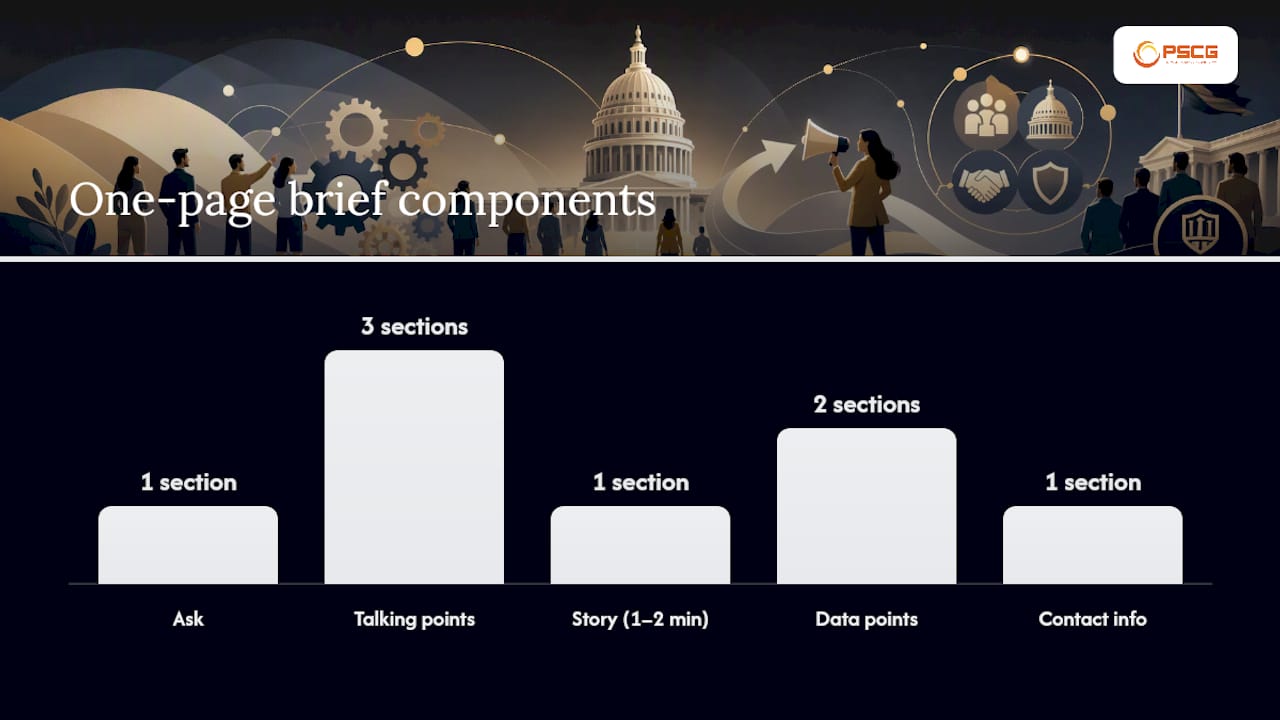
Build a one-page brief with these sections: the ask, three talking points, one constituent story, two data points, and contact information for follow-up. Insight from advocacy training materials at the Community Tool Box confirms that legislators are most persuaded by constituents directly affected by the policy at hand, not by outside experts alone.
Before any message leaves your coalition, run three checks:
- Is the source credible and citable?
- Is the example locally relevant to this legislator’s district?
- Can it be delivered in under two minutes?
Pro Tip: Cut your brief in half. If it survives the cut and still makes the ask clear, it’s ready.
What Insider Tactics Actually Move Legislation?
Meetings remain the highest-leverage insider tactic available to any campaign, according to the ILRC’s legislative advocacy toolkit. Before any meeting, research the legislator’s committee assignments, past votes, and district concerns. Structure a 30 to 45 minute meeting as: five minutes of introductions and relationship-building, ten minutes presenting your ask and evidence, ten minutes for questions, and the final stretch confirming next steps.
Beyond meetings, insider tactics include briefing staff directly (often more productive than reaching the legislator), preparing formal testimony for hearings, and working through caucuses where members with shared interests can co-sign letters or statements.
Follow-up determines whether a good meeting turns into a vote. Log every meeting: date, attendees, ask made, commitment received, and next action. Send a follow-up email within 48 hours that thanks the legislator, restates the ask in one sentence, and attaches any materials requested.
- Research the legislator’s record before walking in
- Bring no more than three to four people to the meeting
- Confirm one concrete next step before you leave the room
Pro Tip: A short handwritten thank-you note after a productive meeting is rare enough now that it stands out. Staff remember it.
Outsider Tactics: Grassroots, Media, and Digital Pressure
Insider access only goes so far without visible constituent pressure behind it. Grassroots tactics include organized phone outreach, district office visits, and targeted email campaigns that flood a legislator’s inbox with specific, personalized asks rather than form letters.
Digital tactics extend that reach: social media amplification tagging the legislator directly, petitions with real signature counts, and coordinated posting around hearing dates. A basic press release checklist covers a clear headline, one quote from an affected constituent, the specific ask, and contact information for follow-up questions from reporters.
- Schedule constituent call days ahead of key committee votes
- Coordinate social posts to land the same week as a hearing
- Use petitions to demonstrate breadth, not as a replacement for direct contact
Randomized research on lobbying tactics found that social-setting engagement, think receptions, community events, and informal settings, produced roughly 19.5% public support from legislators afterward, compared to about 7.9% from office-only lobbying or no contact at all. When you have the chance to build relationships outside a formal office meeting, take it.
Escalation means starting with calls and letters, moving to district visits if there’s no response, and reserving public pressure tactics like media events for when insider access has stalled entirely.
Sequencing Tactics: The Pressure, Power, and Leaders Test
Score every tactic on your list against three questions before committing resources to it:
- Does it apply pressure? Will the target feel political or reputational cost from inaction?
- Does it build power? Does it grow your coalition’s numbers, visibility, or credibility?
- Does it build leaders? Does it develop a constituent or volunteer who can carry the campaign forward?
A tactic that scores on all three, a well-prepared constituent testifying at a hearing, for instance, earns priority over one that only checks a single box. Campaign planning research from the Climate Advocacy Lab recommends sequencing lower-risk actions early and saving higher-risk, higher-visibility moves for when your coalition has the capacity to sustain them.
Tracking Metrics and Sustaining Relationships
Track four core metrics throughout the campaign: meetings logged, constituent actions taken, bill milestones reached, and your own win/loss criteria defined at the outset. A lightweight report-back template for coalition members should cover: action taken, date, outcome, and next step needed.
- Assign one person to own the master tracking sheet
- Set a biweekly check-in cadence with coalition partners
- Archive meeting notes, testimony, and materials centrally after each session ends
Legislative advocacy is a relationship business played over years, not weeks. Staff turnover, committee reassignments, and election cycles mean the champion you build today may matter more in the next session than in this one.
Different Legislatures, Different Playbooks
A strategy built for a part-time state legislature won’t transfer cleanly to a full-time state house or to Congress, and treating them the same is a common, avoidable mistake. Part-time legislatures, common in smaller states, compress their sessions into a few months, which means your timeline for building co-sponsors and securing hearings has to move faster and rely more heavily on relationships built during the off-season.
Full-time legislatures and Congress operate on longer cycles with more committee layers, more staff to brief, and more competing priorities pulling at any given member’s attention. Here, insider tactics like sustained staff relationships and caucus work often matter more than a single high-profile meeting.
Municipal and county governments present a third context entirely. Public comment periods, planning board hearings, and council votes move on compressed local timelines, and a single well-organized turnout at a public meeting can carry outsized weight compared to the same effort at the state level.
Public-safety and EMS advocacy campaigns often intersect with technical, regulatory bodies, health departments, emergency medical services boards, or public utility commissions, where the “legislators” are appointed officials rather than elected ones. Your theory of change has to adapt accordingly: technical credibility and data quality often outweigh constituent volume when your target is a regulatory board rather than an elected body. Reviewing a public safety legislative process guide built for EMS contexts can help you calibrate which environment you’re actually operating in before you commit resources.
Planning for Risk in an Advocacy Campaign
Every campaign carries risk, and the strongest ones plan for it rather than hoping it doesn’t materialize. The most common risk is losing your champion, a sponsoring legislator who retires, loses reelection, or simply moves on to other priorities mid-session. Build in a backup plan by cultivating at least two potential champions from the start rather than betting everything on one relationship.

Opposition research matters just as much as your own messaging. Know who benefits from the status quo and what arguments they’re likely to raise, so your coalition isn’t caught flat-footed in a hearing room. A contingency plan should include alternate messaging ready if your primary narrative gets challenged publicly.
Timeline risk deserves its own line item. Legislative sessions end on fixed dates regardless of how close your bill is to passage, and a bill that dies in committee at the end of session often has to restart from zero next cycle. Build slack into your timeline assuming delays, not the fastest possible path.
Coalition risk is real too: partner organizations can shift priorities, pull staff, or disagree publicly on strategy. A simple memorandum of understanding at the coalition’s formation, covering decision-making process and public communication protocols, prevents most of these disputes before they surface. None of this eliminates risk entirely, but it keeps a single setback from ending the campaign.
What I’ve Learned Running Advocacy Campaigns
The lesson that changed how I approach this work: campaigns don’t stall because the ask was wrong. They stall because nobody owned the follow-up. I’ve watched a strong meeting with a genuinely sympathetic legislator go nowhere simply because the promised one-page brief never got sent. The tweak is almost embarrassingly simple: assign a follow-up deadline out loud, in the room, before the meeting ends.
Editor’s note: Mike’s full credentials and detailed case studies from specific campaigns will be added during final review.
If You Need Help Running a Public-Safety Advocacy Campaign
Most coalitions can run the framework above on their own. Where things get harder is when the bill touches technical regulatory language, reimbursement formulas, or EMS system design standards, exactly the terrain where a general advocacy toolkit runs out of runway and public-safety-specific expertise starts to matter.

Thepscgroup works alongside municipal leaders, EMS agencies, and fire departments who need someone who has already sat in front of legislative committees on EMS system design and reimbursement policy. A first engagement typically starts with a scoping call to define the ask, the target committee, and the deliverables you need, whether that’s testimony preparation, a technical brief, or a full legislative strategy aligned with your municipal EMS strategy. We bring the same rigor to policy work that we bring to EMS system design consulting: clear scope, a defined timeline, and measurable outcomes you can report back to your board or council.
If your campaign has reached the point where the language in the bill is more technical than your coalition can confidently explain in a hearing room, that’s usually the signal to bring in outside support. Visit Thepscgroup to start that conversation, or reach out directly through our services page to discuss what a legislative advocacy engagement with Thepscgroup would look like for your organization.
Sources
- Section 10. General Rules for Organizing for Legislative Advocacy — Community Tool Box (CTB)
- TOOLKIT: LEGISLATIVE ADVOCACY — ILRC
- Journal of Politics study on social lobbying effectiveness