



The fastest path to a credible EMS needs assessment runs through five stages: set clear objectives, gather multi-source data, analyze and prioritize the gaps, write an action-focused report, and put a monitoring plan in place. Agencies that skip straight to data collection, without pinning down what decision the assessment is supposed to inform, tend to produce reports nobody acts on. That is the single most common failure mode we see, and it is entirely avoidable.

Here is what to do this week if you are starting from zero:
- Name a project lead and identify who on your team, or outside it, will serve as facilitator.
- Request the last 12 to 24 months of CAD/dispatch logs and NEMSIS extracts from your data manager or state EMS office.
- Schedule a kickoff meeting with command staff, medical direction, and finance to agree on the two or three questions the assessment must answer.
- Draft a one-page memorandum of understanding if outside partners (hospitals, mutual aid departments, county officials) will be asked for data.
- Block time on the calendar for stakeholder interviews four to six weeks out.
Timeline varies with scope. A single-department internal review can be scoped and drafted in three to four weeks. A regional or multi-agency assessment usually takes eight to twelve weeks once you account for scheduling interviews across departments. A full state-level technical assistance review, the kind NHTSA facilitates, typically runs several months from initial request to final report.
Key Takeaways
A rigorous EMS needs assessment succeeds when objectives are defined before data collection begins, findings are scored against consistent criteria, and recommendations carry an owner, timeline, and cost estimate.
| Point | Details |
|---|---|
| Define objectives first | Write the two or three specific questions your assessment must answer before requesting data. |
| Triangulate your data | Combine NEMSIS extracts and CAD logs with interviews, focus groups, and direct observation. |
| Score gaps consistently | Rank findings using severity, frequency, impact, and evidence strength before prioritizing. |
| Write SMART recommendations | Tag every recommendation with an owner, timeline, and cost estimate in the final report. |
| Consider outside support | Thepscgroup runs advisory reviews and full technical assistance engagements when internal bandwidth or politics call for a neutral facilitator. |
Table of Contents
- How Do You Conduct an EMS Needs Assessment?
- Setting Scope, Governance, and Team Roles
- What Data Sources and Indicators Matter Most?
- Which Methods and Tools Work Best?
- How Do You Score and Prioritize the Findings?
- How Do You Write the Final Report and Action Plan?
- Two Worked Examples: State Assessment and Simulation Training Review
- How Does PSCG Approach an EMS Needs Assessment?
- Where to Turn When You Need Outside Support
- Frequently Asked Questions
- Sources
How Do You Conduct an EMS Needs Assessment?
An EMS needs assessment is a structured review of an agency’s or system’s capacity, clinical quality, financial health, and training gaps, built to answer a specific operational question rather than to produce a generic status report. Departments run them before a municipal redesign, before committing budget to new technology, before restructuring a training program, or when a trauma system is being reevaluated at the regional or state level.
Done well, an assessment tells a fire chief or EMS director three things: where the system is underperforming relative to peer benchmarks, what it would cost to fix the top issues, and which fixes deliver the most benefit per dollar. Done poorly, it becomes a binder that sits on a shelf.
A few reference points anchor this work in something more durable than local habit. The federal government’s Model EMS System Self-Assessment gives states and large systems a structured self-review framework, with recommended reassessment every three to five years or continuous review through an ongoing performance improvement process. NEMSIS, the national EMS data standard, is what makes your ePCR data comparable across time and against state or national benchmarks. And the Rural Health Information Hub’s community-based needs assessment guide offers a template built specifically for smaller and rural systems that lack a dedicated analytics staff.
Common triggers for launching an assessment include:
- A municipality is weighing a shift from volunteer to career staffing, or from single to dual-role deployment.
- Response time complaints or council inquiries have created political pressure to show data.
- A training academy or educator wants to realign curriculum around actual field performance gaps rather than assumptions.
- A regional trauma or STEMI system is up for periodic review, similar to how Washington State runs its biennial trauma system assessment.
The table below sums up why agencies invest the time.
| Driver | What the assessment delivers |
|---|---|
| Budget justification | Data-backed case for staffing, apparatus, or technology requests. |
| Training alignment | Evidence of which skills gaps actually affect patient outcomes. |
| System redesign | Objective comparison of deployment models against peer systems. |
| Regulatory or grant compliance | Documentation that satisfies state EMS office or funder requirements. |
Setting Scope, Governance, and Team Roles
Every assessment needs a governance structure before it needs a spreadsheet. Skip this step and you will spend more time renegotiating scope mid-project than you would have spent defining it up front.
Start with objectives, not methods. Write down the two or three questions your assessment must answer, in plain language a city manager could read. “Should we add a second ambulance to the north district?” is answerable. “Improve our EMS system” is not. NHTSA’s approach to statewide reviews works precisely because the technical assistance team frames its work around specific system gaps rather than an open-ended audit, and that framing carries over cleanly to a single-department review.
A workable governance structure has five roles, though one person can hold more than one on a smaller project:
- Project lead — internal staff member who owns the timeline and keeps stakeholders informed.
- Internal review team — operations, clinical, and finance staff who pull and validate data.
- External facilitator or technical assistance team — brings objectivity and protects confidentiality when staff self-report on their own agency, a role emphasized in Oregon’s guidance on using outside facilitators for EMS assessments.
- Subject-matter experts — medical director, training officer, dispatch supervisor.
- Legal and finance representation — especially where reimbursement, labor contracts, or liability questions surface.
| Role | Typical time commitment | Who usually fills it |
|---|---|---|
| Project lead | 5–8 hours/week for 6–10 weeks | Deputy chief or EMS coordinator |
| Internal review team | 3–5 hours/week each | Ops supervisor, billing manager, QA officer |
| External facilitator | 3–5 consulting days total | Outside consultant or state TA team |
| Subject-matter experts | 2–4 hours total | Medical director, training officer |
Set a meeting cadence early: a kickoff, a midpoint data review, and a findings walkthrough before the report is finalized. That third meeting matters more than people expect. Stakeholders who see the findings before the report is public are far more likely to support the recommendations once it goes to a council or board.
Build a simple risk register alongside the plan. Common entries include: data owner unavailable during collection window, key stakeholder unavailable for interview, scope creep from added questions mid-project, and political sensitivity around a specific finding (staffing levels or response times in a particular district, for instance).
Pro Tip: Put your objectives in writing and get sign-off from whoever will receive the final report, before you collect a single data point. It takes an extra week up front and saves months of rework later.
- Draft objectives and circulate for stakeholder comment.
- Assign governance roles and confirm availability for the full project window.
- Build the risk register and revisit it at each milestone meeting.
- Lock the reporting deadline and work backward to set data collection cutoffs.
What Data Sources and Indicators Matter Most?
Good analysis depends on data you can actually access and trust. Pull from both internal operational systems and external community data before you start drawing conclusions.
Internal sources include CAD and dispatch logs, ePCR data reported through NEMSIS, vehicle and equipment inventories, staffing schedules and vacancy records, billing and revenue reports, and hospital handoff or turnaround metrics. External sources round out the picture: county or state demographic data, and workforce shortage indicators from tools like the Health Resources and Services Administration’s shortage area finder, which flags whether your service area is a designated health professional shortage area.
| Indicator category | Examples to pull |
|---|---|
| Demand | Call volume by hour/day, dispatch priority mix |
| Response performance | Response time by priority level, unit-hour utilization |
| Workforce | Vacancy rate, turnover, certification levels |
| Clinical quality | Protocol compliance, cardiac arrest survival proxies |
| Equipment readiness | Fleet age, out-of-service hours, inventory gaps |
| Financial | Cost per transport, collection rate, payer mix |
When you request a NEMSIS extract, do not settle for summary tables. Ask your data manager for raw event IDs, full timestamp fields, disposition codes, eTimes, and provider identifiers. That level of detail lets you verify records and catch data entry errors before they distort your analysis, a step the health systems approach to EMS assessment treats as essential rather than optional.
Before analysis begins, run three quick data quality checks:
- Scan for duplicate or missing event IDs across the extract period.
- Spot-check a sample of timestamp sequences to confirm dispatch, en route, on scene, and transport times are logically ordered.
- Compare total call volume against a known reference (annual report, state submission) to confirm the extract is complete.
Pro Tip: Request data in raw, exportable format from day one. Agencies that accept PDF summaries from their CAD vendor almost always end up re-requesting the same data two weeks later in a usable format.
Response time data alone rarely tells the full story. A department can hit its response time benchmark on average while still failing a specific district or shift, which is exactly why unit-hour utilization and call volume by geography belong in the same table as raw response times.
Which Methods and Tools Work Best?
Quantitative data tells you what is happening. Qualitative methods tell you why, and they surface problems no spreadsheet will show you, like a scheduling policy that technically meets minimum staffing but demoralizes an entire shift. The strongest assessments triangulate across both, which is exactly what a validated mixed-methods EMS assessment framework recommends: pair service counts and vehicle inventories with key informant interviews, focus groups, and direct observation.
Surveys work best for reaching a large group quickly, front-line providers, dispatchers, or community members. Keep them under 15 questions, mix scaled and open-response items, and pilot with three or four people before wide release.
Key informant interviews (KIIs) target people with specific institutional knowledge: the medical director, a senior dispatcher, a hospital ED charge nurse who receives your transports. Plan for 30 to 45 minutes, six to eight open-ended questions, and always leave room for “what haven’t I asked you that I should have?”
Focus group discussions (FGDs) work well for surfacing shared frustrations among a peer group, six to ten field providers from the same shift, for example. A trained facilitator matters here more than in a one-on-one interview, since group dynamics can silence dissent if not managed carefully.
Direct observation of stations, apparatus, and dispatch operations catches gaps that no self-report will reveal. Build a simple checklist covering equipment placement, response readiness, documentation practices at the point of care, and dispatch protocol adherence.

Simulation-based assessment works particularly well for identifying training gaps. One published assessment used a three-step approach, focus groups, then a broader survey, then facilitated synthesis of the findings, to identify priority training topics for emergency providers, and that sequence transfers cleanly to most training-needs reviews.
For technology and equipment decisions, use a structured scoring approach rather than an ad hoc vote. The EMS Technology Assessment Template weights existing evaluations, clinical efficacy, real-world effectiveness, and economic impact into a single composite score, which keeps a persuasive sales pitch from outweighing the actual evidence.
A few practical notes on execution:
- Get informed consent before any interview or focus group, and explain how responses will be used and reported.
- Anonymize quotes and data in the final report unless a participant explicitly agrees to attribution.
- Sample deliberately. Interview across ranks, shifts, and tenure, not just whoever is easiest to reach.
- Use a qualitative coding tool (something as simple as a shared spreadsheet with tagged themes works for smaller projects) to keep interview and focus group data organized before analysis.
Pro Tip: Interview at least one known critic of the department alongside your supporters. A community assessment framework designed for rural EMS systems makes this explicit: detractors surface friction points that allies never mention, and skipping them is the single most common way assessments miss what actually blocks implementation.
How Do You Score and Prioritize the Findings?
Raw findings without a prioritization method just produce a longer list of problems. Score each identified gap on four criteria: severity (how much patient or operational risk it carries), frequency (how often it occurs), impact (how many calls, providers, or residents it affects), and strength of evidence (how solid the supporting data is). A simple 1 to 5 scale on each, summed or weighted, gives you a comparable score across very different types of findings, from a fleet maintenance backlog to a documentation compliance gap.
| Criterion | Weight (suggested) | What it measures |
|---|---|---|
| Severity | 30% | Risk to patient safety or system reliability |
| Frequency | About one quarter | How often the issue occurs |
| Impact | About one quarter | Scope of people or calls affected |
| Evidence strength | About one fifth | Quality and completeness of supporting data |
Plot scored findings on a simple impact versus feasibility matrix. High impact, high feasibility items go to the top of your action list, these are your quick wins. High impact, low feasibility items (a full deployment model overhaul, for example) become medium-term priorities that need budget cycles and political buy-in. Low impact items, regardless of feasibility, get parked unless they are cheap enough to fix in passing.
A reasonable cut point for most agencies: anything scoring in the top quartile with feasible implementation inside six months goes on the urgent list. Everything else gets a 12 to 24 month horizon, tied to your budget cycle.
For the top recommendations, attach a rough cost estimate and a resource need (staff time, capital, training hours). Run a basic sensitivity check on any budget assumption. If a recommendation depends on a grant that has not been awarded yet, or a staffing addition that assumes flat overtime costs, say so explicitly in the report. Washington State’s trauma system assessment partners directly with state financial offices for exactly this reason, cost estimates built without finance input tend not to survive budget season.
- Score every finding using the same four-criteria template.
- Plot scored items on the impact/feasibility matrix.
- Assign urgent, medium-term, and long-term horizons based on score and feasibility.
- Attach a cost estimate and sensitivity note to every top-tier recommendation.
How Do You Write the Final Report and Action Plan?
A report that sits unread helps nobody. Structure it so a city manager or board member can get the essential findings from the first two pages and a project team can use the rest as a working implementation guide.
A workable outline: executive summary, methodology (briefly, who you talked to and what data you pulled), key findings organized by category, prioritized recommendations, implementation timeline, and appendices with the full data tables. The executive summary should fit on one page and answer three questions directly: what did you find, what should the agency do about it, and what will it cost.
Write every recommendation in SMART format, specific, measurable, achievable, relevant, time-bound, and tag each one with an owner, a target date, and an estimated cost. “Improve dispatch protocol compliance” is not actionable. “Retrain all dispatchers on protocol X by Q2, led by the QA officer, at an estimated cost of $3,200 in overtime coverage” is something a supervisor can actually execute and a board member can track.
Build a short KPI list into the implementation plan so progress is measurable after the report is delivered:
- Response time by priority level, tracked monthly
- Protocol compliance rate, tracked quarterly
- Staffing vacancy rate, tracked quarterly
- Cost per transport and collection rate, tracked quarterly
Set a reporting cadence up front, most agencies do well with a 90-day check-in after the report lands, then quarterly updates for the first year. Departments that skip this step often see strong initial momentum on recommendations fade within six months simply because nobody is tracking follow-through.
Two Worked Examples: State Assessment and Simulation Training Review
State-level technical assistance. When a state EMS office requests support through NHTSA’s process, the state typically convenes a technical assistance team, emergency physicians, trauma surgeons, the state EMS director, and legal counsel, who conduct briefings and stakeholder interviews over several months before delivering a formal report with specific recommendations. The value of this model is not the credential of the reviewers. It is the framing: NHTSA-cited experts specifically recommend approaching the review as assistance rather than audit, which measurably improves how receptive agency staff are to the eventual findings.
Simulation-based training needs review. A published assessment aimed at identifying training gaps for emergency providers ran focus groups first, then a broader survey to validate what the focus groups surfaced, then a facilitated synthesis session to rank priority training topics. The sequencing mattered. Starting with the survey alone would have missed nuance that only emerged in open discussion; starting with focus groups alone would have left the findings anecdotal rather than validated at scale.
The most durable lesson from both approaches is the same one: an assessment framed as collaborative problem-solving, rather than as a judgment on performance, gets better information and better buy-in on implementation.
Quick dos and don’ts drawn from both examples: do bring in an outside or semi-outside perspective for objectivity, do sequence qualitative before quantitative when you are exploring an unfamiliar problem, don’t skip the synthesis step, raw survey data and raw interview transcripts rarely speak for themselves, and don’t rush the stakeholder briefing that precedes the final report.
How Does PSCG Approach an EMS Needs Assessment?
We built our assessment workflow around the same five-step structure this guide walks through, refined through work with municipal and regional EMS systems across a range of sizes. It starts with a discovery phase, understanding your objectives, existing data systems, and political context, before a single data request goes out.
From there, our process moves through structured data collection (including NEMSIS extract requests and CAD data review), mixed-methods field work (interviews, focus groups, and direct observation of stations and dispatch), gap analysis and prioritization scoring, and a final report built around SMART recommendations your team can actually execute.
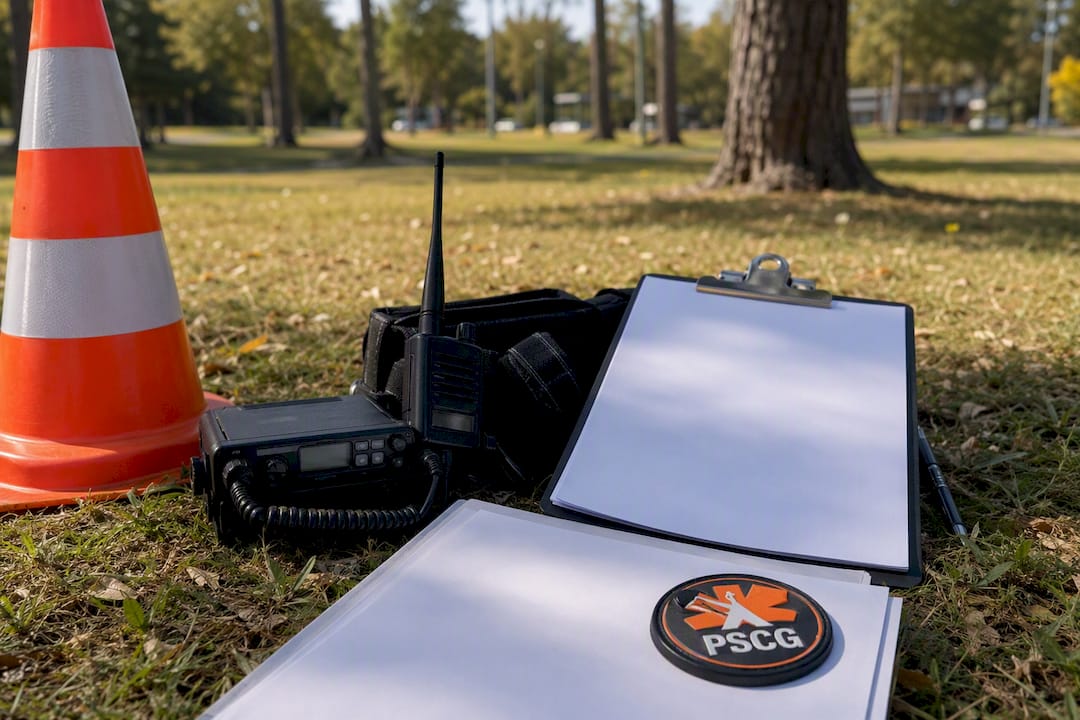
Engagement options range from a short advisory review focused on a single question (should you add a unit, restructure a shift) to a full technical assistance engagement covering system-wide performance, reimbursement, and training gaps, with optional implementation and monitoring support after the report lands. Our EMS quality improvement consulting work often picks up exactly where an internal needs assessment leaves off.
Timelines run from two to three weeks for a narrow advisory review, to two to four months for a full system assessment, depending on system size and data availability. Whether to run an assessment internally or bring in outside help usually comes down to two factors: whether your team has the analytical bandwidth to do the work on top of daily operations, and whether internal politics make an outside facilitator necessary to get honest input from staff.
- Discovery call to define scope and objectives.
- Data collection and mixed-methods field work.
- Gap analysis, scoring, and prioritization.
- Final report delivery with SMART recommendations.
- Optional implementation and monitoring support.
Pro Tip: If your team has never run a formal needs assessment before, start smaller than you think you need to. A focused review of one system question builds internal credibility for a broader assessment later.
What I’d Tell an Administrator Starting Their First Assessment
Map your stakeholders before you map your data. I have seen more assessments stall from a forgotten stakeholder, a union representative, a mutual aid partner, than from any data gap. Build your interview list with intention, and build a standard data request template before you ask for anything, so every department gets the same clear ask instead of a slightly different email each time.
Manage expectations early and often. Tell your command staff and your board, in plain terms, that the report will surface uncomfortable findings, and that surfacing them is the point, not a failure of the department.
Pro Tip: Add at least one known skeptic to your interview list in week one, not week six. Their pushback early saves you from a credibility problem when the report goes public.
First 30 days checklist: name your project lead, write your two or three core objectives, request your NEMSIS and CAD data, schedule your kickoff and first three stakeholder interviews, and draft your risk register.
Where to Turn When You Need Outside Support
Running a full needs assessment on top of daily operations is a real lift, and plenty of agencies get most of the way there with internal staff and the templates covered above. Where Thepscgroup adds the most value is at the two hardest parts: building a defensible scoring and prioritization framework, and giving staff a neutral outside interviewer they can be candid with, without worrying about internal politics shaping what gets said in a focus group.
We offer both narrow advisory reviews built around a single operational question and full technical assistance engagements that cover system performance, reimbursement, staffing, and training in one pass, all built on the same mixed-methods approach this guide describes. If your board is weighing a deployment change, our EMS system design examples page shows what an assessment can lead to once findings turn into an actual redesign, and our step-by-step EMS system design guide picks up the implementation work after your report is done.
If you would rather talk through your specific situation before committing to a full engagement, visit Thepscgroup to schedule a scoping call. Most first conversations run under an hour and focus on nothing more than your objectives, your data landscape, and whether an outside team makes sense for your timeline.
Frequently Asked Questions
How long does an EMS needs assessment take?
A single-department internal review typically takes three to four weeks. A regional or multi-agency assessment runs eight to twelve weeks, and a full state-level technical assistance review can take several months.
Who should be on the assessment team?
A project lead, an internal review team pulling data, an external facilitator for objectivity, subject-matter experts like the medical director and training officer, and legal or finance representation for cost and liability questions.
What data do I need before starting?
CAD and dispatch logs, NEMSIS ePCR extracts (raw fields, not just summaries), staffing and vacancy records, vehicle and equipment inventories, and billing and payer mix data at minimum.
Do I need an outside consultant to conduct an EMS needs assessment?
No, many agencies run a solid internal review using public templates like the Model EMS System Self-Assessment. Outside help from a firm like Thepscgroup tends to matter most when staff need a neutral interviewer or when the scope spans multiple departments with competing interests.
How often should an EMS system reassess its needs?
Most guidance points to every three to five years for a full review, with ongoing performance improvement data collection filling the gaps in between reassessment cycles.
Sources
Before you build your own instruments from scratch, pull from templates already tested in the field. The Model EMS System Self-Assessment gives you a structured framework for state or large-system self-review. The Rural Health Information Hub’s community-based needs assessment guide includes a memorandum of agreement template, agency self-assessment tool, and community questionnaire built for smaller systems. The EMS Technology Assessment Template offers a ready-made scoring framework for equipment and IT decisions, and the published simulation-training needs assessment walks through a full focus group and survey instrument you can adapt directly.
- Assessment of pre-hospital emergency medical services in low-income settings using a health systems approach
- Community-Based Needs Assessment – Rural Health Information Hub
- EMS and Trauma Care System Assessment | Washington State Department of Health