


TL;DR:
- Police consulting helps high-performing departments improve operational efficiency, accountability, and technology use.
- The consulting process involves assessment, stakeholder input, benchmarking, and embedded implementation.
- Effective consulting requires leadership involvement, clear deliverables, and ongoing change management.
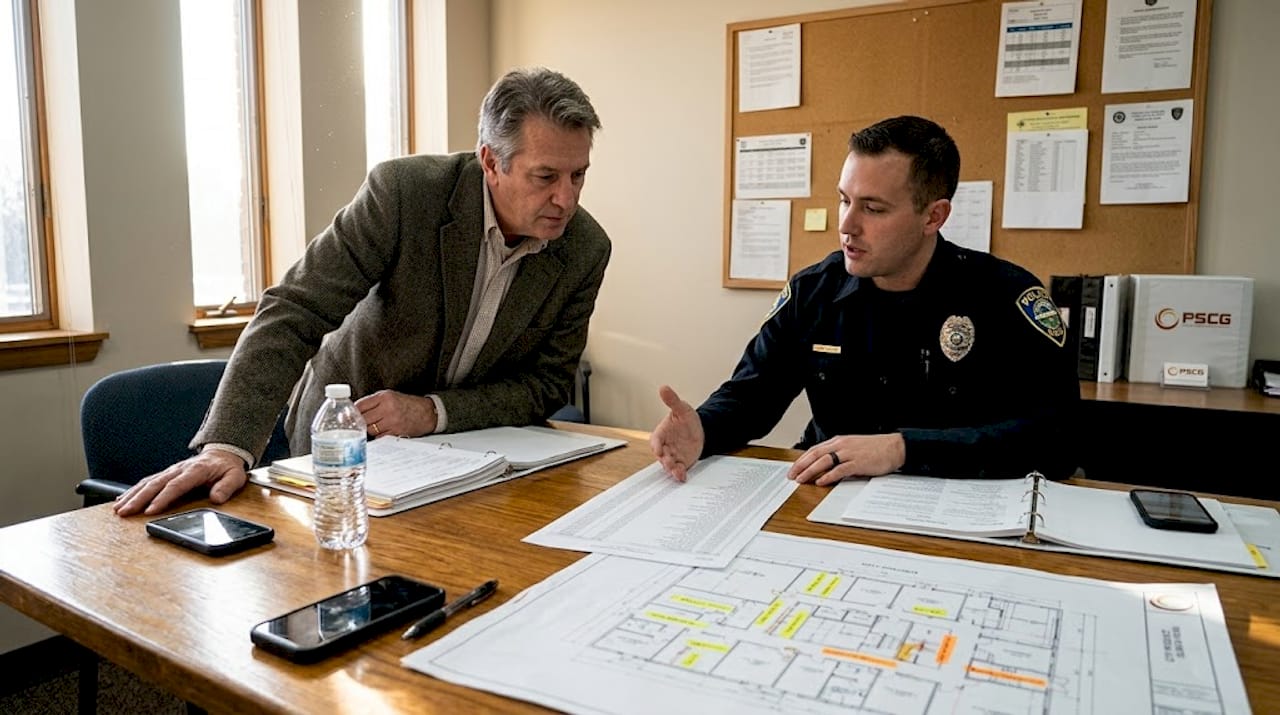
Police department consulting carries an undeserved reputation as a tool for agencies in crisis. In reality, top public safety consulting firms like Deloitte, McKinsey, and KPMG work with high-performing departments that want to stay ahead of rising community expectations, not just departments struggling to stay afloat. This guide unpacks what police consulting actually involves, which services drive the most measurable improvement, and how the engagement process unfolds from first assessment to embedded change. If you lead a municipality or a law enforcement agency, this is a framework worth understanding before your next budget cycle.
Table of Contents
- Why municipalities turn to police consulting
- Key services offered by police department consultants
- How the consulting process works: From assessment to action
- Technology upgrades and data-driven policing
- What most departments miss about police consulting
- Connect with leading police consulting expertise
- Frequently asked questions
Key Takeaways
| Point | Details |
|---|---|
| Consulting isn’t just a last resort | Forward-thinking municipalities use police consulting to proactively boost operations and trust. |
| Consultants offer hands-on improvement | Key services include tech upgrades, operational reviews, and leadership development for long-term impact. |
| Engagement is a guided journey | A typical process moves from assessment to action—and demands strong communication throughout. |
| Tech and data are front and center | Digital transformation and analytics drive most consulting engagements for police departments today. |
Why municipalities turn to police consulting
Now that we’ve reframed what consulting really is, let’s explore why so many municipalities apply it proactively. The decision to bring in external experts rarely starts with failure. More often, it starts with a gap: a response time benchmark the department can’t close, a community trust initiative that lacks structure, or a technology upgrade that stalled because internal bandwidth ran out.
Police consulting addresses a specific set of operational challenges that are difficult to solve from the inside:
- Operational efficiency: Workflow redesign, resource allocation, and shift optimization that reduce costs without reducing coverage
- Accountability frameworks: Policy reviews, use-of-force analysis, and performance gap analysis aligned with national standards
- Technology and data use: Analytics platforms, digital dispatch integration, and reporting infrastructure
- Interagency collaboration: Coordination protocols between police, EMS, fire, and emergency management
Common triggers for engaging a consultant include rising community expectations around transparency, state or federal compliance requirements, technology gaps that internal IT teams can’t bridge, and the need for an impartial review of department practices. Consultants also draw on best practices refined across dozens of US cities, which means your agency benefits from proven frameworks rather than trial and error. Well-designed EMS consulting strategies often run parallel to police consulting engagements, creating integrated public safety improvements that compound in impact.
“External consultants bring proven frameworks and unbiased insights to help agencies operate at their best.”
The advantages of consulting for public safety extend beyond individual departments. When one agency improves its accountability systems or response protocols, those improvements create ripple effects across regional partnerships and mutual aid agreements. That systemic value is what separates reactive problem-solving from proactive strategy.
Key services offered by police department consultants
Understanding why you might seek consulting, let’s break down the core services that leading consultants bring to the table. Firms like Deloitte, McKinsey, and KPMG deploy experts for data analytics, process redesign, and digital field solutions that transform how departments collect and act on information.
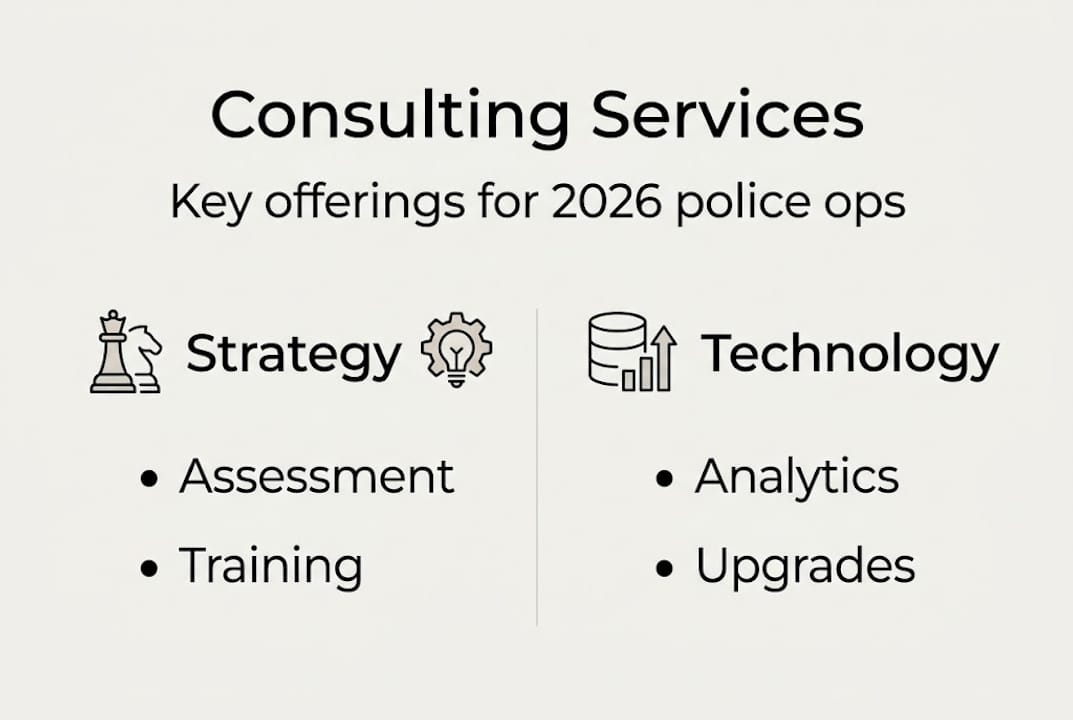
The most requested services in active police consulting engagements include:
- Data analytics and performance reporting: Building dashboards that give commanders real-time visibility into call volume, response times, and officer deployment patterns
- Digital transformation planning: Mapping the transition from legacy systems to integrated platforms that support both field operations and administrative oversight
- Interagency process improvement: Streamlining handoffs between police, EMS, and emergency management to eliminate duplication and reduce response gaps
- Training and leadership coaching: Developing command staff through structured programs that build decision-making capacity, not just procedural compliance
| Service offered | Key benefit |
|---|---|
| Data analytics | Real-time performance visibility |
| Digital transformation | Reduced legacy system risk |
| Process redesign | Faster, cleaner interagency coordination |
| Leadership development | Stronger command decision-making |
| Compliance auditing | Reduced liability exposure |
Understanding emergency management consulting alongside police consulting helps leaders see how these services connect across the full public safety spectrum. Similarly, grounding your expectations in the public safety definition ensures you’re evaluating consulting proposals against a complete picture of what modern public safety actually requires.
Pro Tip: When evaluating consulting proposals, insist on hands-on implementation support. A report that sits on a shelf does not improve response times. Require deliverables that include embedded change management, not just recommendations.
How the consulting process works: From assessment to action
If you decide to engage a consultant, what does the process look like from start to finish? Most structured engagements follow a clear lifecycle that moves from diagnosis to solution to sustained improvement.
- Initial gap analysis: Consultants conduct a structured review of current operations, identifying performance gaps, compliance risks, and resource inefficiencies
- Stakeholder interviews: Command staff, front-line officers, and community representatives provide qualitative context that data alone cannot supply
- Benchmarking: Your department’s metrics are measured against national standards and peer agencies of comparable size and jurisdiction type
- Action plan development: A prioritized roadmap is built around your most critical gaps, with realistic timelines and resource requirements
- Implementation support: Consultants work alongside your team to execute the plan, adapting recommendations based on real-world feedback
- Follow-up and performance review: Progress is measured against baseline data, with structured checkpoints to sustain gains over time
Firms that apply frameworks honed across public safety agencies bring a level of cross-agency insight that internal reviews rarely achieve. The comparison below illustrates the structural difference.
| Factor | Traditional improvement | Consulting-driven improvement |
|---|---|---|
| Objectivity | Internal bias risk | External, unbiased perspective |
| Speed | Slow, informal | Structured timelines |
| Cross-agency insight | Limited | Broad, benchmarked |
| Implementation support | Inconsistent | Embedded and accountable |
Learning from effective public safety partnerships shows how structured collaboration produces lasting results. Leaders in states like Connecticut can also find value in reviewing advocacy steps for public safety leaders to ensure consulting efforts align with legislative and funding realities.
Pro Tip: Prioritize transparent communication with your staff at every phase. Officers who understand why the engagement is happening are far less likely to resist new processes, and their cooperation directly accelerates implementation timelines.
Technology upgrades and data-driven policing
A major driver of consulting engagements today is technology change. Here’s how the best firms help departments adopt and adapt. Consultants drive digital transformation and analytics for law enforcement agencies by building structured adoption plans that account for both technical requirements and human factors.
The most common technology upgrades that consulting projects address include:
- Body-worn cameras: Policy development, data storage strategy, and public access protocols that reduce liability while supporting officer accountability
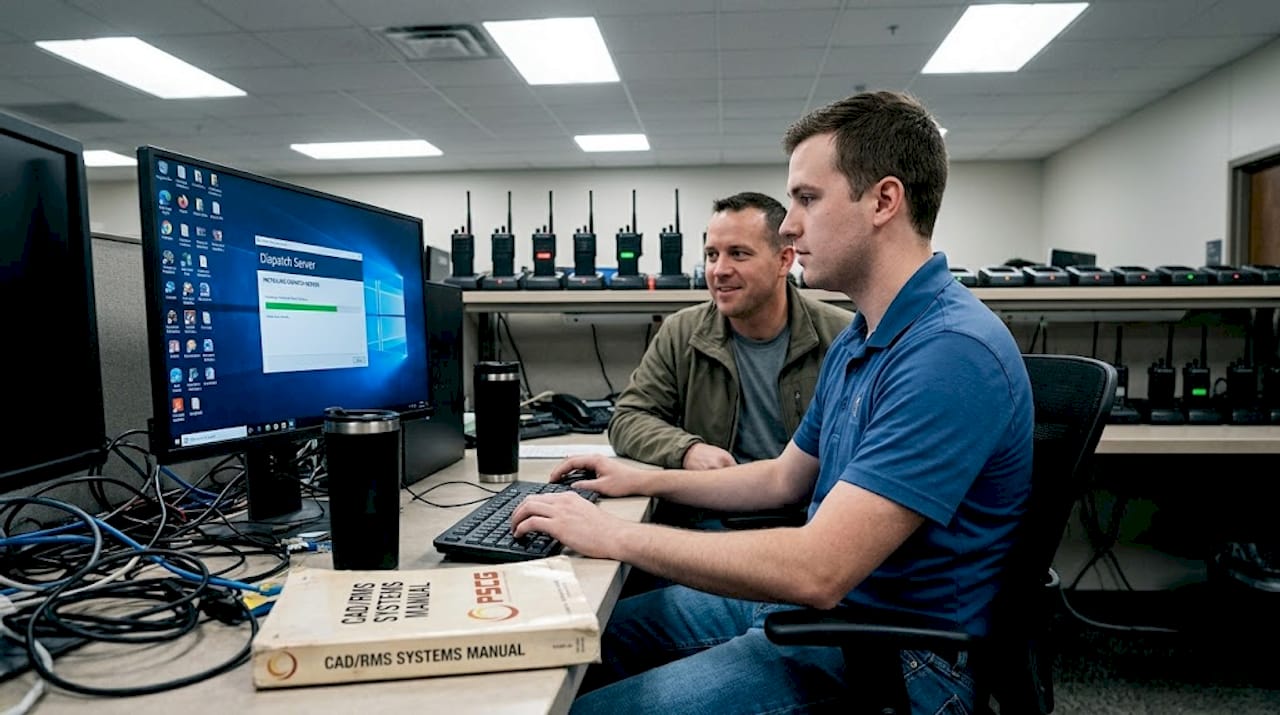
- Integrated computer-aided dispatch: Unified systems that share real-time information across police, fire, and EMS units
- Analytics dashboards: Command-level visibility into crime patterns, deployment efficiency, and officer performance metrics
- Predictive analytics tools: Data models that inform patrol allocation based on historical incident data and emerging trends
Stat to know: Over 70% of police consulting projects in 2026 focused on data and digital upgrades, reflecting how central technology has become to modern law enforcement strategy.
Technology adoption also requires deliberate staff buy-in. Consultants who understand organizational change know that the best system fails if front-line officers don’t trust or use it correctly. Structured training programs, phased rollouts, and feedback loops are all part of responsible technology consulting. Exploring public safety strategy tips for municipalities gives leaders a broader view of how technology investments fit within a complete operational strategy.
What most departments miss about police consulting
With all these benefits, why do some consulting efforts fall short? Here’s what we see behind the scenes. The most common failure mode isn’t a bad consultant or a bad plan. It’s a leadership team that expected a fast fix and disengaged when results didn’t appear in the first 90 days.
Police consulting is structural change work. Cultural resistance is real, and it compounds when staff feel the process was done to them rather than with them. We consistently observe that departments who keep their people involved throughout, from the initial assessment to the final performance review, achieve substantially better outcomes than those who treat consulting as an outside event.
Our recommendation is direct: insist on clear deliverables before signing any engagement, and treat your public safety consulting experts as facilitators rather than solution vendors. The best consultant activates your team’s existing capabilities and adds structure around them. They are not a replacement for leadership. They are a force multiplier for it. Departments that understand this distinction see lasting improvement. Those that don’t often find themselves cycling through consultants without gaining traction.
Connect with leading police consulting expertise
Ready to explore what consulting can do for your department? Connect with experienced advisors who understand your challenges. At PSCG, we work alongside municipal leaders and law enforcement executives to build operational strategies that produce measurable, sustainable results, not just written reports.
Whether you’re focused on optimizing EMS strategy, developing a complete strategic public safety plan, or simply determining where to start, our team is ready to help you move forward with clarity. Explore our consulting solutions and take the first step toward a department that performs at the level your community deserves.
Frequently asked questions
What is police department consulting?
Police department consulting is expert guidance from firms specializing in data analytics, process optimization, and digital transformation to help agencies operate more efficiently and serve communities more effectively. It applies to departments at all performance levels, not just those in crisis.
How do consultants improve police operations?
Consultants assess current practices, apply frameworks refined across public safety agencies, and support departments through implementation and training to produce improvements that hold over time, not just during the engagement period.
When should a police department consider consulting?
Departments should engage consulting when facing persistent performance gaps, compliance requirements they can’t meet internally, or technology transitions that require structured change management and external expertise.
Is police consulting only for large cities?
No. Smaller municipalities benefit significantly from consulting because they gain access to frameworks and benchmarking data that large city agencies have refined over years, without having to develop those systems independently.
What results can be expected from consulting?
Well-executed consulting engagements typically produce measurable gains in response efficiency, community trust metrics, data utilization, and officer accountability, with results that compound over time as new practices become embedded in daily operations.
Recommended
- Optimize public safety communication systems in 2026 – The Public Safety Consulting Group
- Effective Public Safety Partnerships: Examples For 2026
- Municipal EMS Best Practices: Optimize Response And Impact
- What is public safety leadership: strategies for 2026 – The Public Safety Consulting Group
- Digital Transformation Consulting Archívum – AI tanácsadás és megvalósítás