


TL;DR:
- Effective emergency response relies on assessing hazards before acting and remaining calm to prevent worsening outcomes. Building and reviewing a 72-hour emergency kit and practicing a household plan enhance community resilience. Mental preparation through scenario visualization and repeated drills ensures clear decision-making during crises.
Emergency response tips are defined as the practical, pre-planned actions that protect lives and reduce harm when a crisis strikes. The American Red Cross, FEMA, and the National Safety Council each publish guidelines confirming that preparation before an emergency determines outcomes more than any action taken during one. Whether you are a parent, educator, or community organizer, the gap between a good outcome and a tragic one often comes down to whether you practiced a plan. These tips give you that plan.
1. What are the best emergency response tips for immediate action?
The single most effective emergency response tip is this: assess before you act. Panicking is the most critical error in emergencies, and it consistently leads to unsafe decisions that worsen outcomes. Staying calm and reading the scene first prevents you from becoming part of the problem.
Your first three actions in any emergency should be:
- Check the scene for hazards such as fire, downed power lines, or unstable structures.
- Check yourself for injury before helping others.
- Call 911 for any life-threatening situation, then follow dispatcher instructions exactly.
Scene safety assessment is the non-negotiable first step. A responder who becomes a casualty reduces the total help available to everyone.
2. How to build a 72-hour emergency supply kit
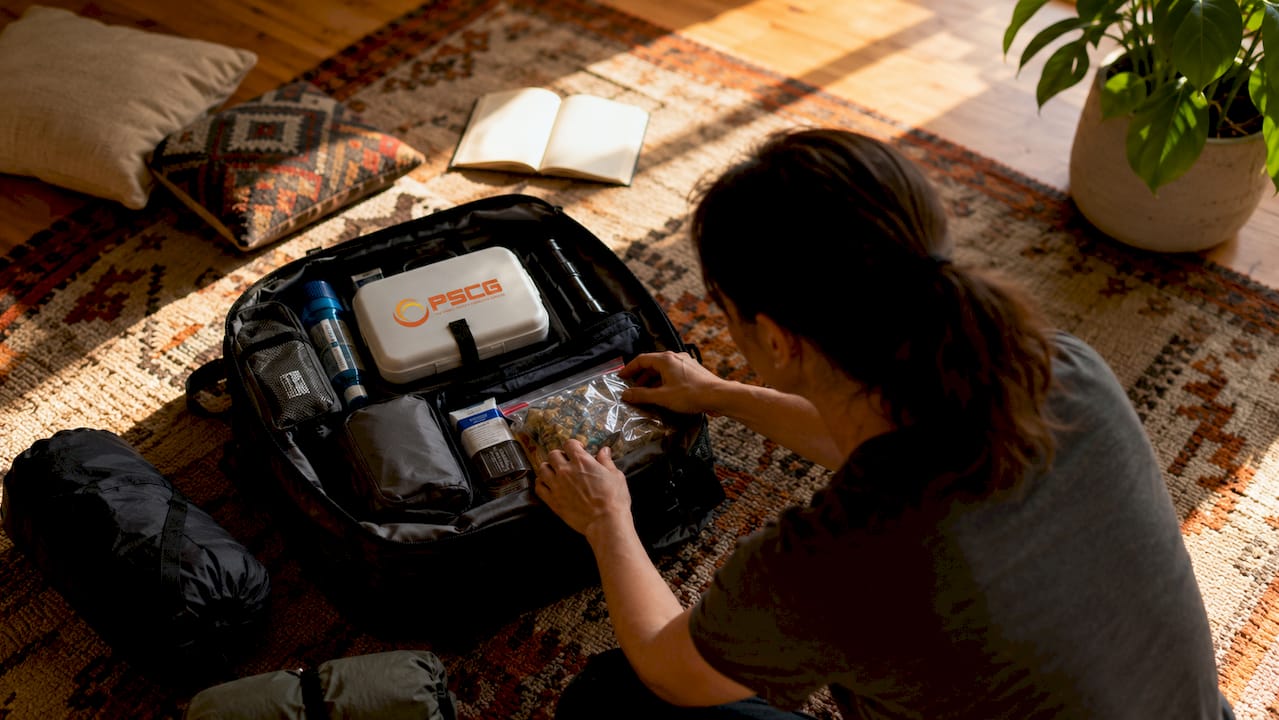
Every household kit should sustain your family for 72 hours, covering water, food, hygiene, and critical documents. That three-day window reflects the realistic delay before organized relief reaches most affected areas after a major disaster.
Core kit essentials:
- Water: One gallon per person per day for at least three days
- Food: Non-perishable items with a long shelf life (canned goods, energy bars, dried fruit)
- Medications: A buffer supply of prescriptions, built by refilling prescriptions early each month
- Documents: Copies of IDs, insurance cards, and medical records in a waterproof bag
- Tools: Flashlight, batteries, manual can opener, and a battery-powered or hand-crank radio
- Hygiene: Hand sanitizer, moist towelettes, and a basic first aid kit
Geographic needs matter. Residents in flood zones need waterproof storage. Those in earthquake-prone areas need sturdy containers that survive structural shaking. Tailor your kit to your local risk profile.
Pro Tip: Build your kit gradually. A phased approach to supplies means adding a few items each shopping trip rather than spending a large sum at once. This makes preparedness affordable for any household budget.
Review and refresh your kit every six months. Rotate food and water, check battery charge, and update any documents that have changed.
3. What are the critical first steps during an emergency?
The first 60 seconds of an emergency set the trajectory for everything that follows. Your goal in that window is to gather information, not to act impulsively.
“The ability to remain calm and assess the scene before acting is what separates effective responders from those who inadvertently cause additional harm. Panic is a physiological response, but it can be managed with practice and preparation.”
Follow this sequence:
- Stop and breathe. One slow breath resets your nervous system enough to think clearly.
- Identify the hazard. Fire, chemical spill, medical collapse, and structural failure each require different responses.
- Call or text for help. Text messaging during emergencies uses less bandwidth than voice calls and is more reliable when networks are congested. Use voice calls for 911 only.
- Warn others nearby without causing a stampede or additional panic.
- Begin aid only after confirming the scene is safe for you to enter.
Calling 911 is the right move for life-threatening situations. For non-urgent coordination, text your designated out-of-town contact so local lines stay clear for people in immediate danger.
4. What are essential first aid response strategies?
First aid response strategies are the structured actions you take to stabilize a person until professional EMS arrives. Knowing even three or four of these techniques makes you a meaningful asset in a crisis.
Approach and assess:
- Obtain verbal consent from a conscious adult before touching them (“I know first aid. Can I help you?”)
- Check responsiveness by tapping the shoulder and calling out
- Look, listen, and feel for normal breathing for no more than 10 seconds
Recognize stroke with FAST:
- F ace drooping on one side
- A rm weakness when both arms are raised
- S peech slurred or absent
- T ime to call 911 immediately
Manage seizures safely:
- Clear the area of hard or sharp objects
- Do not restrain the person or put anything in their mouth
- Seizures are often self-limited and rarely last longer than two minutes. Call EMS if the seizure exceeds five minutes or if the person has difficulty breathing, sustains an injury, or is in water.
Opioid overdose and CPR:
- Administer naloxone (Narcan) if available and an opioid overdose is suspected
- Begin hands-only CPR at a rate of 100–120 compressions per minute if the person is unresponsive and not breathing normally
- Continue until EMS arrives or an AED is available
Pro Tip: Take a certified CPR and first aid course through the American Red Cross or American Heart Association. Hands-on practice builds the muscle memory that kicks in when stress is highest.
5. How to create an effective emergency communication and evacuation plan
A written plan that your household has practiced is worth more than any supply kit. The plan answers three questions before the emergency happens: Where do we go? How do we get there? How do we reach each other?
Communication setup:
| Element | Action |
|---|---|
| Out-of-town contact | Designate one person outside your region as the family communication hub |
| ICE numbers | Program “ICE” (In Case of Emergency) contacts into every phone |
| Text over voice | Use texts for non-urgent updates; local networks get congested during major events |
| Meeting points | Identify two locations: one near home, one farther away |
Evacuation readiness:
- Map at least two exit routes from your neighborhood, not just the main road
- Know the location of your nearest emergency shelter
- Keep your vehicle’s gas tank at least 50% full at all times so you can leave without stopping
- Assign roles: who grabs the kit, who accounts for children or pets, who drives
Shelter-in-place preparation:
- Identify an interior room with few windows
- Store plastic sheeting and duct tape to seal gaps against airborne hazards
- Practice drills twice a year so every household member responds automatically, not from memory
Educators and community organization leaders should apply the same framework at the institutional level. A school or community center with a practiced emergency response plan reduces evacuation time and protects the most vulnerable members of any group.
6. What are practical crisis management tips to stay calm under pressure?
Psychological readiness is the least-discussed and most consequential part of emergency preparedness. Your ability to think clearly under stress determines how well every other skill performs.
“Visualizing emergency scenarios beforehand significantly eases anxiety and improves readiness by making the situation feel more manageable. Mental rehearsal is not wishful thinking. It is a recognized technique used by military, medical, and public safety professionals.”
Scenario visualization works by reducing the novelty of a crisis. When your brain has already “seen” a fire evacuation or a medical collapse in your mind, the real event triggers a practiced response rather than a freeze reaction. Spend five minutes once a month walking through a specific scenario: what you would do, who you would call, and where you would go.
Three additional techniques support calm decision-making:
- Anchor to your plan. When panic rises, return to step one of your written plan. Structure replaces the need for improvisation.
- Avoid rushed decisions. The first 30 seconds of a crisis rarely require irreversible action. Give yourself time to assess.
- Maintain a positive frame. Telling yourself “I know what to do” activates the prefrontal cortex. Telling yourself “this is hopeless” shuts it down.
Community organizations that incorporate EMS response planning into their training programs see measurably better outcomes during real events. Individual calm and institutional preparedness reinforce each other.
Key Takeaways
Effective emergency preparedness combines a practiced plan, a stocked kit, and the psychological readiness to act calmly when it matters most.
| Point | Details |
|---|---|
| Assess before acting | Check scene safety first to avoid becoming an additional casualty. |
| Build a 72-hour kit | Stock water, food, medications, and documents; review the kit every six months. |
| Use text over voice | Texts preserve network bandwidth during major emergencies when voice calls fail. |
| Practice drills twice yearly | Repetition converts plans into automatic responses under stress. |
| Visualize scenarios monthly | Mental rehearsal reduces anxiety and improves decision speed during real crises. |
Why preparedness is the most underrated public safety investment
I have spent years working alongside EMS leaders, municipal officials, and community organizations. The pattern I see most consistently is this: the communities that fare best in emergencies are not the ones with the most equipment. They are the ones where ordinary people practiced a plan.
The uncomfortable truth about emergency preparedness is that most households treat it as a one-time task. They buy a kit, put it in a closet, and assume the job is done. But a kit without a practiced plan is just a box of supplies. The plan is what converts supplies into outcomes.
What strikes me most is how disproportionately emergencies affect people who had no one to prepare with. Elderly neighbors, families without cars, children in under-resourced schools. Individual preparedness matters enormously, but community preparedness is what protects the people who cannot protect themselves. If you are an educator, a parent, or a local organization leader, your preparedness multiplies. Every drill you run, every plan you share, every neighbor you walk through a supply checklist extends your reach.
The other thing I would push back on is the idea that preparedness is expensive or complicated. A phased approach to building your kit, a free CPR class, and a 30-minute family meeting to walk through your evacuation plan cost almost nothing. The return on that investment is measured in lives.
Take it seriously. Practice it. Then share it.
— Mike
How Thepscgroup supports emergency readiness at every level
Thepscgroup works with municipalities, EMS agencies, and public safety leaders to build the systems that back up individual preparedness with professional response capacity.
When personal preparedness meets a well-designed EMS system, outcomes improve at every level of a crisis. Thepscgroup specializes in EMS system design that reduces response times, closes coverage gaps, and aligns resources with real community risk profiles. For municipal leaders and public safety officials ready to move from reactive to proactive, the municipal EMS strategy guide at thepscgroup.net is the right starting point. Contact us at thepscgroup.net to discuss how we can work alongside your team.
FAQ
What should every emergency supply kit include?
Every kit should contain water (one gallon per person per day), non-perishable food, a first aid kit, flashlight, batteries, copies of critical documents, and a supply of essential medications for at least 72 hours.
When should I call 911 versus send a text during an emergency?
Call 911 for any life-threatening situation requiring immediate dispatch. Use text messaging for non-urgent coordination, since texts use less network bandwidth and are more reliable when local cellular networks are congested.
How does the FAST method help in a stroke emergency?
FAST stands for Face drooping, Arm weakness, Speech difficulty, and Time to call 911. Recognizing these signs early and calling EMS immediately is the most effective action a bystander can take.
How often should I practice emergency drills at home?
Practice evacuation and shelter-in-place drills at least twice a year. Regular repetition converts written plans into automatic responses, which is critical when stress impairs memory recall.
What is the best way to stay calm during a crisis?
Anchor to your written plan, take one slow breath to reset your response, and use scenario visualization practiced monthly to reduce the novelty of the event when it occurs.