

TL;DR:
- Many small emergency agencies operate with minimal staff but achieve resilience through consulting partnerships.
- Effective consulting builds adaptive, data-driven plans that focus on real-world response rather than just compliance.
- Modern tools like FEMA’s risk index and AI optimize municipal emergency strategies and response outcomes.
Most people assume that stronger emergency management starts with hiring more staff. The reality is far more complex. Over 50% of local emergency management agencies operate with one or fewer full-time employees, yet many of these agencies achieve genuine resilience through strategic consulting partnerships. Hiring alone cannot close the gap between current capacity and the demands of modern threats. This article covers what emergency management consulting actually involves, the frameworks that drive results, how data and technology are reshaping municipal readiness, and how to select the right consulting partner for your jurisdiction.
Table of Contents
- What does emergency management consulting involve?
- Essential steps: Consulting frameworks and FEMA’s best practices
- How data and technology are transforming municipal EM strategies
- Moving from compliance to resilience: Building adaptive strategies
- Selecting and working with an emergency management consultant
- Why compliance isn’t enough: A hard-won lesson for municipal leaders
- Unlock custom strategies with expert consulting
- Frequently asked questions
Key Takeaways
| Point | Details |
|---|---|
| Consulting boosts readiness | Consultants provide frameworks and guidance that help even small teams build resilient emergency systems. |
| Data drives smart planning | Modern consultants use metrics like the National Risk Index and AI tools for better, faster decisions. |
| Resilience outperforms compliance | Communities that focus on adaptive, living strategies recover faster and withstand future disasters better. |
| Custom fit for any size | Even municipalities with just one staff member gain value when engaging specialized consulting help. |
What does emergency management consulting involve?
Emergency management consulting helps municipalities plan, prepare, and respond to threats using structured, evidence-based frameworks. It is not a one-size-fits-all service, and it is not reserved for large metropolitan governments. Consultants work alongside agencies of every size to build capacity, close compliance gaps, and develop strategies that hold up under real operational pressure.
The scope of emergency management consulting is broader than most leaders expect. Services typically include risk and hazard assessment, continuity of operations planning, stakeholder engagement design, regulatory compliance mapping, training program development, and after-action review facilitation. Consultants also guide agencies through grant readiness and FEMA documentation requirements, which are critical for securing federal mitigation funding.
A core reference point for any municipal consulting engagement is FEMA’s mitigation planning framework. The 2025 Local Mitigation Planning Handbook outlines a structured, multi-stakeholder approach covering process organization, public outreach, risk assessment, capability analysis, strategy development, plan maintenance, and regular updates. Consultants use this framework as a backbone while adapting it to local conditions, resource levels, and community priorities.
Key consulting services commonly offered to municipalities include:
- Hazard and risk identification using validated data sources
- Mitigation strategy development and prioritization
- Whole-community stakeholder engagement facilitation
- Emergency operations plan (EOP) development and review
- Grant application support and FEMA compliance documentation
- Tabletop exercises, drills, and after-action reviews
- Interagency coordination and mutual aid planning
Many municipal leaders assume consulting is only relevant for large cities with complex infrastructure. In practice, smaller agencies benefit most. When you have one staff member managing an entire jurisdiction’s emergency preparedness, a consulting partner is not a luxury—it is a force multiplier.
The advantages of EMS consulting extend well beyond compliance. Consulting relationships build institutional knowledge, improve cross-department coordination, and create plans that actually function when activated.
Essential steps: Consulting frameworks and FEMA’s best practices
Once you understand what consulting covers, the next question is how the process unfolds. FEMA’s seven-step mitigation planning process provides a clear, repeatable structure that effective consultants follow and adapt.
- Organize resources — Identify the planning team, define roles, and secure leadership commitment.
- Build the collaborative planning team — Engage whole-community stakeholders across sectors.
- Conduct a risk assessment — Analyze local hazards, vulnerabilities, and potential losses using current data.
- Review community capabilities — Evaluate existing plans, programs, policies, and resources.
- Develop a mitigation strategy — Set goals, identify actions, and prioritize based on risk and feasibility.
- Create a plan maintenance process — Define how the plan will be monitored, updated, and exercised.
- Review and adopt the plan — Secure formal adoption and submit for FEMA approval.
Understanding emergency management fundamentals is essential before selecting a consulting model. The table below compares two common approaches.
| Framework element | Compliance-based approach | Adaptive/resilience-building approach |
|---|---|---|
| Primary goal | Meet regulatory requirements | Build operational readiness |
| Plan updates | Scheduled (every 5 years) | Continuous, triggered by events and data |
| Stakeholder involvement | Minimal, checkbox-driven | Broad, cross-sector, ongoing |
| Risk data use | Historical incident records | Current NRI, SVI, and scenario modeling |
| Outcome measure | Plan approval status | Actual response performance |
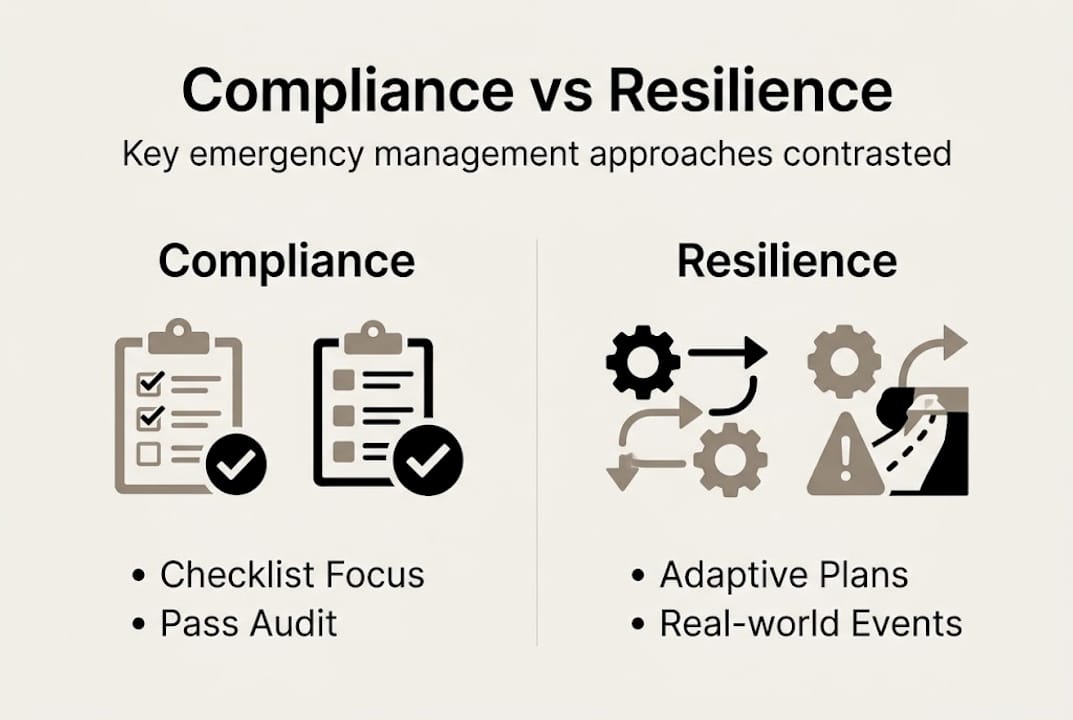
The distinction matters. Compliance-based plans satisfy auditors. Adaptive plans protect communities. Local staffing data consistently shows that under-resourced agencies are most vulnerable to the gaps that compliance-only approaches leave open.
Pro Tip: When building or updating your emergency plan, anchor every goal and action item to measurable risk data and current capacity metrics, not just the last major disaster your jurisdiction experienced. Past events are useful context, but they are not a substitute for current hazard analysis.
How data and technology are transforming municipal EM strategies
Process frameworks set the structure. Data and technology determine how precise and actionable your strategy becomes. Modern consulting leverages tools that were not available to most municipalities even five years ago.
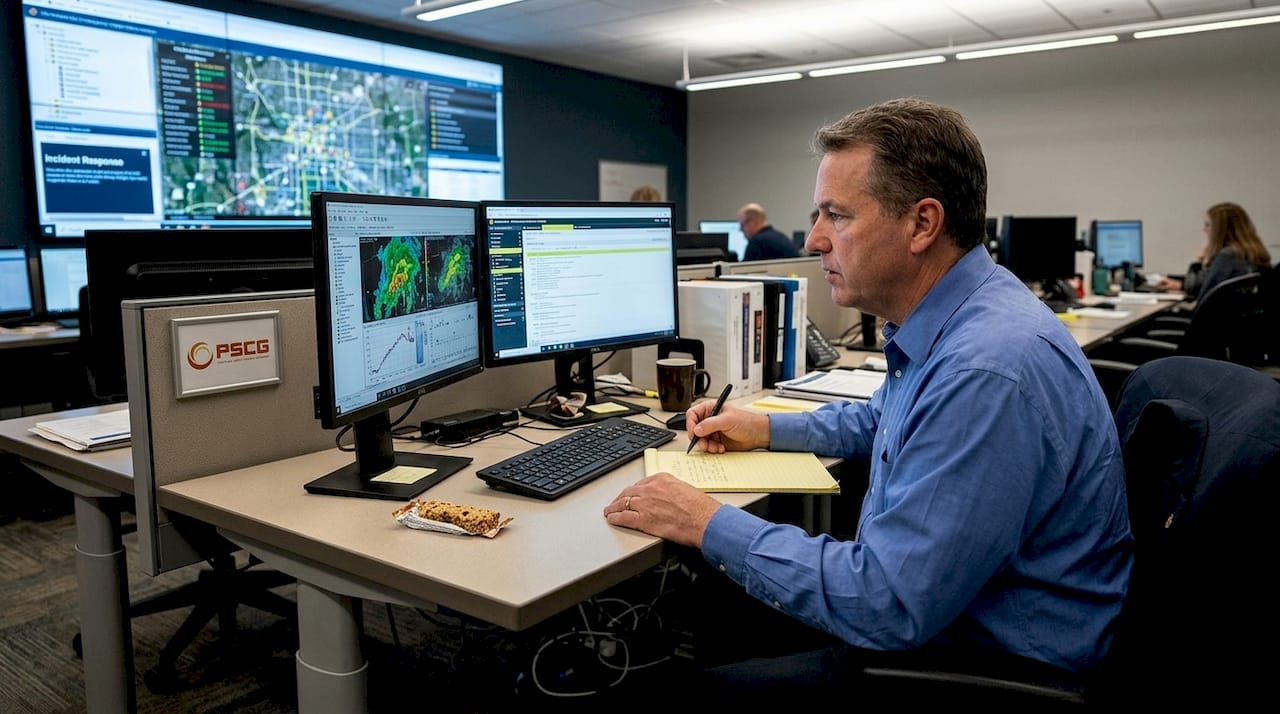
FEMA’s National Risk Index (NRI) is now a standard starting point. It provides Expected Annual Loss (EAL), Social Vulnerability Index (SVI), and Resilience scores for every county and census tract in the country. These metrics give consultants and municipal leaders a clear, data-driven risk profile to anchor planning decisions. AI-optimized dispatch models, such as CLOF-based systems, have demonstrated response time reductions of 19%, a measurable outcome that directly affects life-safety results.
The contrast between rule-based and data-driven systems is significant. Resilience-driven plans outperform compliance-only models when it comes to real-world incident outcomes, particularly in jurisdictions with limited staffing and high hazard exposure.
Here is an example of how NRI metrics compare across two hypothetical municipalities:
| Metric | Municipality A (urban) | Municipality B (rural) |
|---|---|---|
| Expected Annual Loss (EAL) | $4.2M | $870K |
| Social Vulnerability Index (SVI) | 0.61 | 0.78 |
| Resilience score | 0.72 | 0.44 |
| Primary hazard | Flooding | Severe storms |
| Recommended priority | Infrastructure hardening | Capacity building |
Municipality B has lower EAL but higher vulnerability and lower resilience, making it a higher-priority candidate for consulting investment despite appearing lower risk on the surface.
Technology tools that effective consultants bring to municipal engagements include:
- NRI and EAL dashboards for real-time risk profiling
- GIS-based hazard mapping and scenario modeling tools
- AI-assisted dispatch optimization platforms
- Interoperability assessment software for communications systems
- After-action review (AAR) platforms for structured learning
Review EMS best practices for impact and EMS continuity and resilience strategies to understand how these tools integrate with broader public safety operations.
Moving from compliance to resilience: Building adaptive strategies
Compliance is a floor, not a ceiling. Many municipal emergency plans are built to pass an audit, not to perform under stress. When an incident activates a plan that was designed primarily to satisfy a checklist, the gaps become visible fast.
Living, adaptive plans emphasizing resilience over checklist compliance consistently produce stronger outcomes at the local level. The difference is not just philosophical. Adaptive plans include built-in triggers for updates, defined roles for cross-functional teams, and regular testing cycles that expose weaknesses before a real incident does.
Consultants play a critical role in shifting agencies from static compliance to dynamic readiness. They help establish maintenance cycles, build cross-department ownership, and create the institutional habits that keep plans current and actionable.
Adaptive plan elements that every municipal strategy should include:
- Defined action items with clear ownership and timelines
- Trigger conditions that initiate plan review outside the standard cycle
- Scheduled review cycles tied to both calendar milestones and incident outcomes
- Tabletop and functional exercise programs that test plan assumptions
- After-action review integration that feeds lessons directly into plan updates
- Cross-department working groups that maintain shared situational awareness
Pro Tip: Do not wait for a declared disaster to test your plan. Embed scenario-based exercises into your annual calendar and treat after-action reviews as a planning tool, not a post-incident formality. The agencies that perform best in real emergencies are the ones that practice the hardest before one occurs.
Explore public safety strategic planning and public-private partnerships in EM as complementary strategies for building adaptive capacity.
Selecting and working with an emergency management consultant
Choosing the right consulting partner is as important as the decision to engage one. Not all consultants bring the same depth of municipal experience, and the wrong fit can cost your jurisdiction time and resources it cannot afford to lose.
Key criteria for selecting a consultant include demonstrated experience with municipalities of similar size and complexity, a data-driven approach to risk assessment and strategy development, familiarity with FEMA compliance requirements and grant processes, and a track record of delivering measurable outcomes rather than just deliverable documents.
With over 50% of local agencies operating with one or fewer full-time staff, the consulting relationship must be efficient and scalable. You need a partner who can work within your capacity constraints and still move the needle on readiness.
Steps to an effective consulting collaboration:
- Define scope clearly — Establish specific deliverables, timelines, and success metrics before signing any agreement.
- Assign an internal point of contact — Even with limited staff, designate someone to coordinate access and communication.
- Share all relevant data upfront — Existing plans, after-action reports, hazard assessments, and budget constraints all inform better consulting outcomes.
- Build in milestone reviews — Schedule check-ins at defined intervals to assess progress and adjust scope if needed.
- Plan for knowledge transfer — Ensure your team understands the frameworks and tools the consultant uses so capacity stays in-house after the engagement ends.
- Request post-project support options — Ongoing advisory relationships often deliver more long-term value than one-time engagements.
Questions to ask before signing an agreement:
- What municipalities of similar size have you worked with, and what were the outcomes?
- How do you incorporate local data and community input into your planning process?
- What deliverables will we own at the end of the engagement?
- How do you handle scope changes or emerging priorities mid-project?
- What does ongoing support look like after the initial engagement?
Review the EMS strategy guide for municipalities for additional guidance on building a high-performing public safety operation.
Why compliance isn’t enough: A hard-won lesson for municipal leaders
We have worked alongside agencies that had beautifully formatted emergency plans, current FEMA approval stamps, and zero operational confidence in what those plans actually required. When a multi-day weather event stressed their systems, the plan sat on a shelf while improvised decisions drove the response. That is not a staffing failure. It is a strategy failure.
Audit-passing plans often fail under stress because they were never designed to be used—they were designed to be reviewed. True readiness requires adaptive leadership, cross-department buy-in, and a consulting relationship that prioritizes continuous improvement over one-time deliverables.
The agencies that perform best are the ones that treat their emergency plans as living documents, not archived reports. Consulting that builds this culture—through exercises, reviews, and honest performance gap analysis—delivers far more value than consulting that simply produces a compliant document.
We encourage every municipal leader to ask one direct question of their current plan: if we activated this today, would our team know exactly what to do? If the answer is uncertain, that is where to start. See best practices for resilience to begin building the adaptive capacity your community deserves.
Unlock custom strategies with expert consulting
At The Public Safety Consulting Group, we work directly with municipal leaders to build emergency management strategies that perform when it matters most. Our approach combines rigorous data analysis, FEMA-aligned frameworks, and field-tested operational experience to close the gap between compliance and genuine readiness.
Whether you are starting from scratch or strengthening an existing program, we can help. Access our municipal EMS strategy guide for a structured starting point, explore our strategic planning resources for actionable frameworks, or review EMS system design examples to see how municipalities like yours have built stronger systems. Contact us today to schedule a consultation and take the first step toward a more resilient jurisdiction.
Frequently asked questions
How do consulting services improve a small municipality’s emergency readiness?
Most local emergency agencies operate with one or fewer full-time staff, yet consulting enables robust planning by bringing expert frameworks, data analysis, and proven strategies that maximize impact even with a lean team.
What’s the difference between compliance-based and resilience-focused emergency management?
Compliance plans check regulatory boxes; resilience-driven, adaptive strategies adapt to changing threats and consistently produce stronger real-world outcomes than compliance-only models.
Which data tools should local leaders request from their consultants?
Ask for risk assessment using the National Risk Index, including Expected Annual Loss, SVI, and Resilience rates, along with scenario modeling and regular metric-based plan updates.
How often should municipal emergency plans be reviewed and updated?
Plans should be updated at least annually, and FEMA’s mitigation planning framework identifies maintenance and regular updates as core requirements for effective, approvable emergency management plans.
Does consulting only benefit large cities, or can smaller towns see results?
Over 50% of local agencies are extremely small, yet achieve meaningful readiness improvements through strategic consulting relationships tailored to their specific resource levels and hazard profiles.