

TL;DR:
- First responders are essential for immediate medical care, scene safety, and effective coordination during emergencies, directly influencing survival rates. Effective collaboration relies on system design, shared communication, and structured leadership to ensure seamless multi-agency responses. Communities can support responders by promoting mental health awareness, training in emergency skills, and participating in preparedness initiatives, enhancing overall resilience.
First responders are defined as the trained professionals who arrive first at an emergency scene to provide immediate medical care, law enforcement, fire suppression, or critical communications support before additional resources arrive. This includes paramedics, EMTs, police officers, firefighters, and 911 dispatchers. The role of first responders extends beyond physical presence at a scene. It begins the moment a 911 call connects, and it shapes whether a person lives or dies in the critical minutes that follow. Understanding what these professionals do, how they work together, and what challenges they face is not just useful knowledge. It is a civic responsibility.
What are the primary responsibilities of first responders?
First responders carry out a broad set of duties that vary by discipline but share one common purpose: stabilize the situation and protect life. Emergency response teams do not arrive with a single script. Each responder type brings a distinct set of responsibilities that must integrate quickly under pressure.
The core duties break down clearly across disciplines:
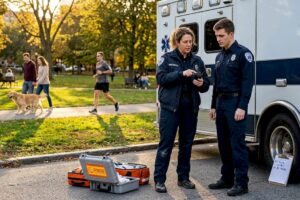
- Emergency Medical Services (EMS): Paramedics and EMTs assess patient condition, deliver pre-hospital medical care, manage airways, administer medications, and transport patients to appropriate facilities. Their decisions in the first minutes of a cardiac arrest or trauma event directly determine survival odds.
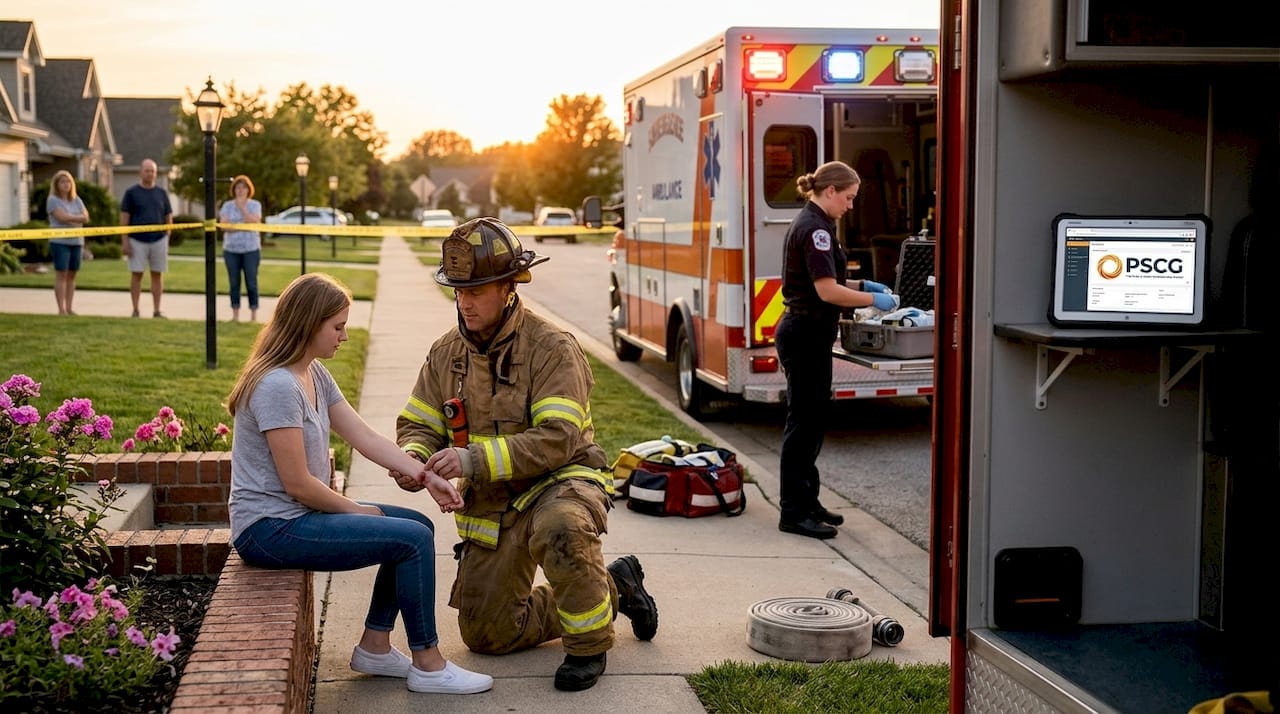
- Firefighters: Beyond fire suppression, firefighters perform technical rescue, hazardous materials response, and medical first response. Many departments cross-train personnel as EMTs or paramedics, making fire units a critical component of the medical response system.
- Law enforcement: Police officers secure scenes, manage crowds, gather evidence, and protect both the public and other responders from ongoing threats. In active shooter or domestic violence situations, their presence enables EMS to operate safely.
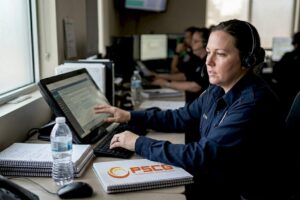
- 911 dispatchers: According to the NCSL First Responder Toolkit, telecommunicators help obtain information, dispatch emergency services, and provide medical instructions while help is en route. They are the first voice a caller hears, and their guidance can mean the difference between a bystander performing CPR correctly or not at all.
The importance of first responders in each of these roles is not abstract. It is measured in response time benchmarks, survival rates, and the quality of care delivered before a hospital ever sees the patient.
Pro Tip: The initial actions taken by the first unit on scene, whether that is a dispatcher giving CPR instructions or a paramedic securing an airway, set the trajectory for everything that follows. Training those initial actions to be automatic is what separates good systems from great ones.
How do first responders collaborate during major incidents?
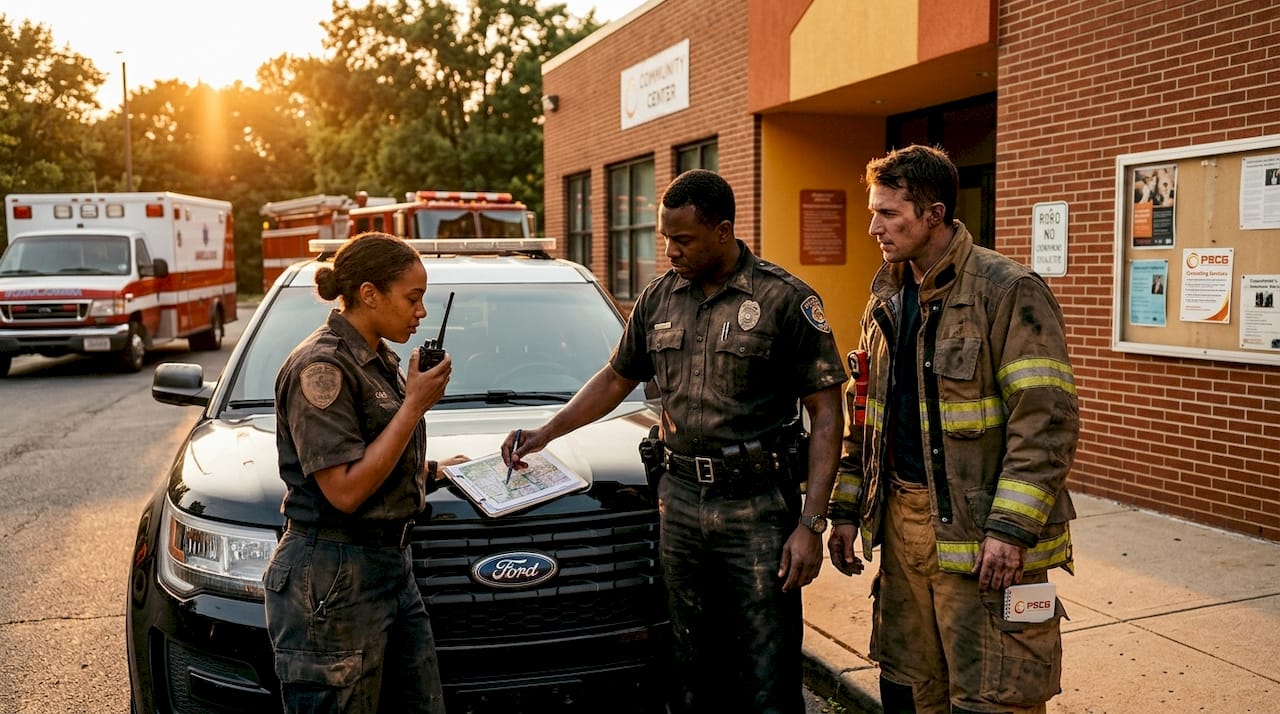
Effective collaboration during major incidents depends on three foundational elements: coordinated communication, structured leadership, and mutual understanding of each agency’s role. A 2026 study in the Scandinavian Journal of Trauma identified these three categories as critical for collaboration among ambulance services, fire brigades, and police at major incidents. This finding matters because it shifts the focus from individual competence to system design. A highly trained paramedic working alongside a poorly coordinated command structure will still produce worse outcomes than a moderately trained team operating with clear roles and shared communication protocols.
The table below illustrates how EMS, fire, and police each contribute to a coordinated incident response:
| Agency | Primary function at scene | Collaborative role |
|---|---|---|
| EMS / Ambulance | Patient assessment, treatment, transport | Communicates patient status to hospital and incident command |
| Fire department | Suppression, rescue, hazmat | Provides medical first response, supports scene safety for EMS |
| Law enforcement | Scene security, crowd control | Establishes perimeter, coordinates with EMS on access and threat level |
| 911 dispatch | Resource deployment, call coordination | Maintains communication bridge between field units and command |
The challenge in multi-agency response is not a lack of skill. It is a lack of interoperability. When agencies train separately, use different radio channels, and operate under different command terminology, coordination breaks down under stress. Public safety partnerships that include joint training exercises and shared communication protocols address this gap directly. The Scandinavian Journal of Trauma study reinforces that structured leadership and mutual role understanding, supported by preparation, are the factors that most reliably improve incident outcomes.
What mental health challenges do first responders face?
First responders face elevated risks for post-traumatic stress, depression, anxiety, and substance use disorders compared to the general population. SAMHSA documents that responders develop increased risk for mental health issues and often fear being seen as weak, which prevents them from seeking help. That fear is not irrational within many organizational cultures. It reflects a real professional environment where showing vulnerability has historically carried career consequences.
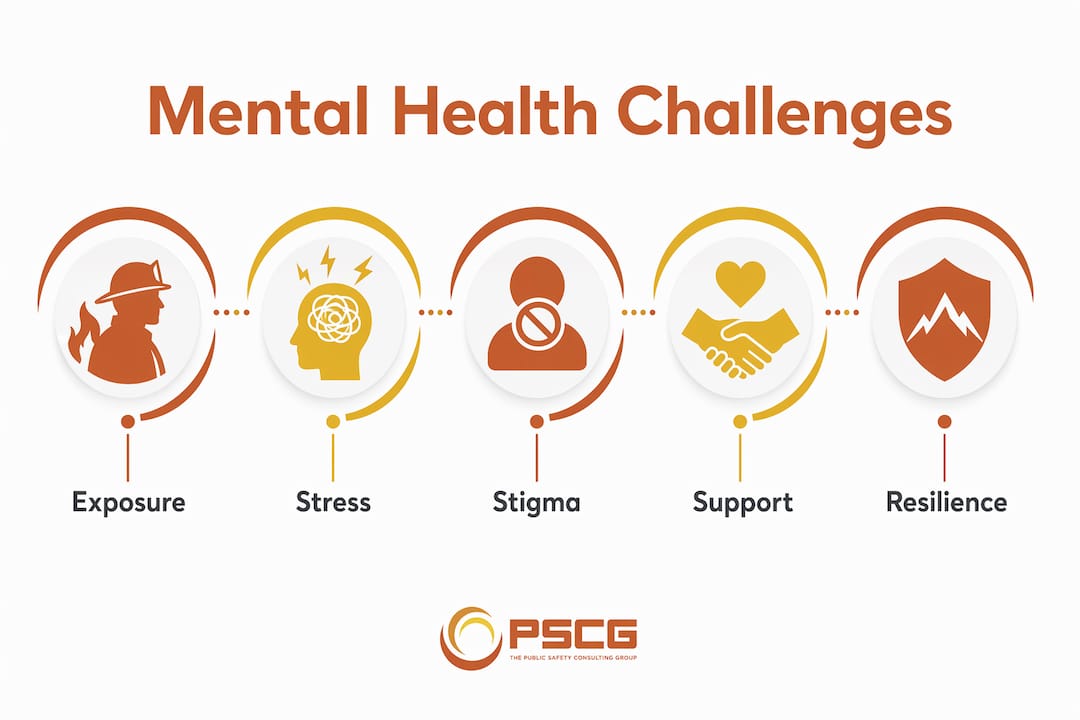
The mental health burden falls across all responder types, including dispatchers. A WPR investigation in 2026 found that 911 dispatch centers aim to answer 90% of calls within 15 seconds and 95% within 20 seconds, placing dispatchers under sustained cognitive pressure throughout every shift. Despite this, dispatchers are frequently classified as administrative support rather than first responders, which limits their access to mental health benefits and peer support programs designed for field personnel.
The barriers to help-seeking among first responders include:
- Stigma within the profession: Seeking mental health support is still perceived by many as incompatible with the identity of a first responder.
- Fear of career impact: Responders worry that disclosing mental health struggles will affect their assignments, promotions, or fitness-for-duty status.
- Lack of accessible programs: Many departments lack confidential, duty-compatible mental health resources that fit shift schedules and operational demands.
- Dispatcher exclusion: Because dispatchers are often not classified as first responders, they may be excluded from wellness programs designed for field personnel.
Pro Tip: Peer support programs, where trained colleagues provide confidential support to fellow responders, consistently outperform traditional counseling referrals in first responder populations. They work because they remove the power dynamic and the stigma. If your department does not have one, building it is one of the highest-return investments in workforce resilience you can make.
SAMHSA’s guidance is direct: wellness programs must reduce stigma and normalize help-seeking as a professional duty, not a personal weakness, to be effective.
How does fatigue management affect first responder performance?
Fatigue in first responders is not primarily a product of individual weakness. It is a systemic problem driven by organizational failures. A 2026 study highlighted by Asia Research News found that unclear tasks and command structures substantially increase fatigue among disaster responders, undermining both safety and effectiveness. This means that a responder working a well-organized incident with clear role assignments will sustain performance longer than one working a chaotic scene, regardless of individual fitness level.
The table below outlines key fatigue risk factors and the mitigation strategies that address them:
| Risk factor | Impact on performance | Mitigation strategy |
|---|---|---|
| Unclear command structure | Increases cognitive load, slows decisions | Implement Incident Command System (ICS) protocols consistently |
| Inadequate rest breaks | Degrades motor skills and judgment | Schedule mandatory rotation and rest periods during extended operations |
| Poor inter-agency coordination | Creates redundant effort and confusion | Conduct joint pre-incident planning and shared briefings |
| Lack of personal protective equipment | Increases physical and psychological stress | Standardize IFAK deployment and scene safety training |
Scene safety and personal protective equipment are not secondary concerns. A JEMS article in 2026 emphasizes that individual first aid kits (IFAKs) are lifesaving equipment and that self-care is a prerequisite for sustained patient care. A responder who is injured or incapacitated cannot help anyone. This principle, sometimes called “responder first,” is the operational foundation of every scene safety protocol.
Clear command systems and regular breaks during disaster response are not luxuries. They are operational requirements that directly affect how well first responders in crisis situations perform when it matters most.
How can communities support and prepare alongside first responders?
Communities that understand the first responders responsibilities within their local system are better prepared to act effectively during emergencies and better equipped to advocate for the resources responders need. Public education is not a soft priority. It is a force multiplier for emergency response teams.
Here are five concrete ways individuals, educators, and community members can contribute:
- Learn basic emergency skills. CPR certification, Stop the Bleed training, and basic first aid give community members the ability to act in the critical minutes before EMS arrives. Bystander CPR doubles or triples survival rates in cardiac arrest. That is not a marginal improvement.
- Understand what dispatchers do. Dispatchers are not call-takers. They are critical to emergency response speed and public safety. Educating the public on dispatcher roles reduces unnecessary calls, improves call quality, and builds respect for a profession that is chronically undervalued.
- Advocate for responder mental health resources. Community members and local officials can push for funded peer support programs, confidential counseling access, and dispatcher reclassification at the municipal and state level. These are policy decisions that communities influence directly.
- Engage with local emergency preparedness programs. Many fire departments, EMS agencies, and emergency management offices offer community training programs. Participating in them builds the kind of informed public that makes first responders’ jobs more manageable during large-scale events.
- Support public safety partnerships. Initiatives that connect municipalities, schools, and community organizations with emergency management resources create more resilient systems. These partnerships are documented to improve coordination and reduce response time gaps.
How first responders help communities is inseparable from how communities support first responders. The relationship is bidirectional, and the communities that invest in that relationship see measurably better outcomes.
Key takeaways
The role of first responders depends equally on individual training, system design, inter-agency coordination, and community support to produce reliable, life-saving outcomes.
| Point | Details |
|---|---|
| Dispatchers are first responders | Telecommunicators provide medical instructions and deploy resources before field units arrive. |
| Collaboration requires system design | Coordinated communication and shared leadership structures determine major incident outcomes. |
| Fatigue is a systemic problem | Unclear command structures and missed rest breaks drive performance degradation more than individual limits. |
| Mental health stigma reduces effectiveness | Programs must be confidential and duty-compatible to overcome professional barriers to help-seeking. |
| Community preparation multiplies response capacity | Trained bystanders and informed advocates extend the reach of emergency response teams. |
What I’ve learned about first responders that most people miss
I have spent years working inside public safety systems, and the most consistent gap I see is not a lack of dedication among responders. It is a lack of system design around them. We ask extraordinary people to perform under extraordinary conditions, and then we are surprised when unclear command structures, inadequate mental health resources, and poor inter-agency communication produce suboptimal outcomes.
The joint training piece is where I see the most untapped potential. When EMS, fire, and law enforcement train together, they build shared mental models that hold up under the stress of a real incident. When they train separately and only meet at the scene, they are improvising coordination in real time. That improvisation costs lives. The Scandinavian Journal of Trauma research confirms what experienced practitioners already know: structured preparation is what makes collaboration work.
On mental health, the progress is real but slow. The stigma is eroding, but it has not collapsed. The departments making the most progress are the ones that have built peer support into the operational culture rather than treating it as an add-on program. That distinction matters enormously. A program that lives in an HR manual is not the same as a culture where a lieutenant checks on a colleague after a difficult call.
The public has a larger role here than most people realize. When communities understand the importance of first responders and advocate for their systems, funding, and wellness resources, the entire system performs better. That is not sentiment. It is operational reality.
— Mike
How Thepscgroup supports first responder system readiness
Thepscgroup works directly with municipalities and EMS agencies to design systems that support first responders at every level, from response time benchmarks and System Status Management to leadership development and operational risk reduction. If your community’s emergency response system has gaps in coordination, dispatcher support, or performance measurement, those gaps have solutions.
Our municipal EMS strategy work is built around the same principles this article covers: clear command structures, inter-agency coordination, and workforce sustainability. We also offer EMS system design consulting for communities ready to move from identifying problems to building better systems. Contact us at thepscgroup.net to start the conversation.
FAQ
What is the role of first responders in an emergency?
First responders provide immediate medical care, scene safety, fire suppression, law enforcement, and critical communications at the onset of an emergency. Their actions in the first minutes directly determine patient survival and scene stability.
Are 911 dispatchers considered first responders?
Dispatchers manage 911 calls, deploy resources, and provide medical instructions before field units arrive, making them functionally first responders. Many states are working to reclassify them formally to improve their access to benefits and mental health support.
Why do first responders struggle with mental health?
First responders face repeated exposure to trauma, high-stakes decisions, and a professional culture that historically stigmatizes help-seeking. SAMHSA identifies stigma as the primary barrier preventing responders from accessing mental health support.
How does fatigue affect first responder decision-making?
Fatigue degrades cognitive function, slows reaction time, and increases error rates. Research shows that unclear command structures and inadequate rest breaks are the primary drivers of fatigue during extended operations, not individual fitness levels.
How can the public support first responders?
Learning CPR and Stop the Bleed, advocating for responder mental health funding, and participating in community emergency preparedness programs are direct ways the public strengthens the overall emergency response system.