



Every Municipal EMS manager knows the demands on emergency services keep growing while resources remain limited. Creating a strategic plan grounded in real operational data and meaningful stakeholder input is the difference between reactive decisions and sustainable service improvements. By following a systematic strategic planning process, American EMS leaders can clearly identify strengths, address service gaps, and set measurable objectives that drive real change for their teams and communities.
Table of Contents
- Step 1: Assess Current EMS Operations And Capabilities
- Step 2: Engage Stakeholders To Define Strategic Priorities
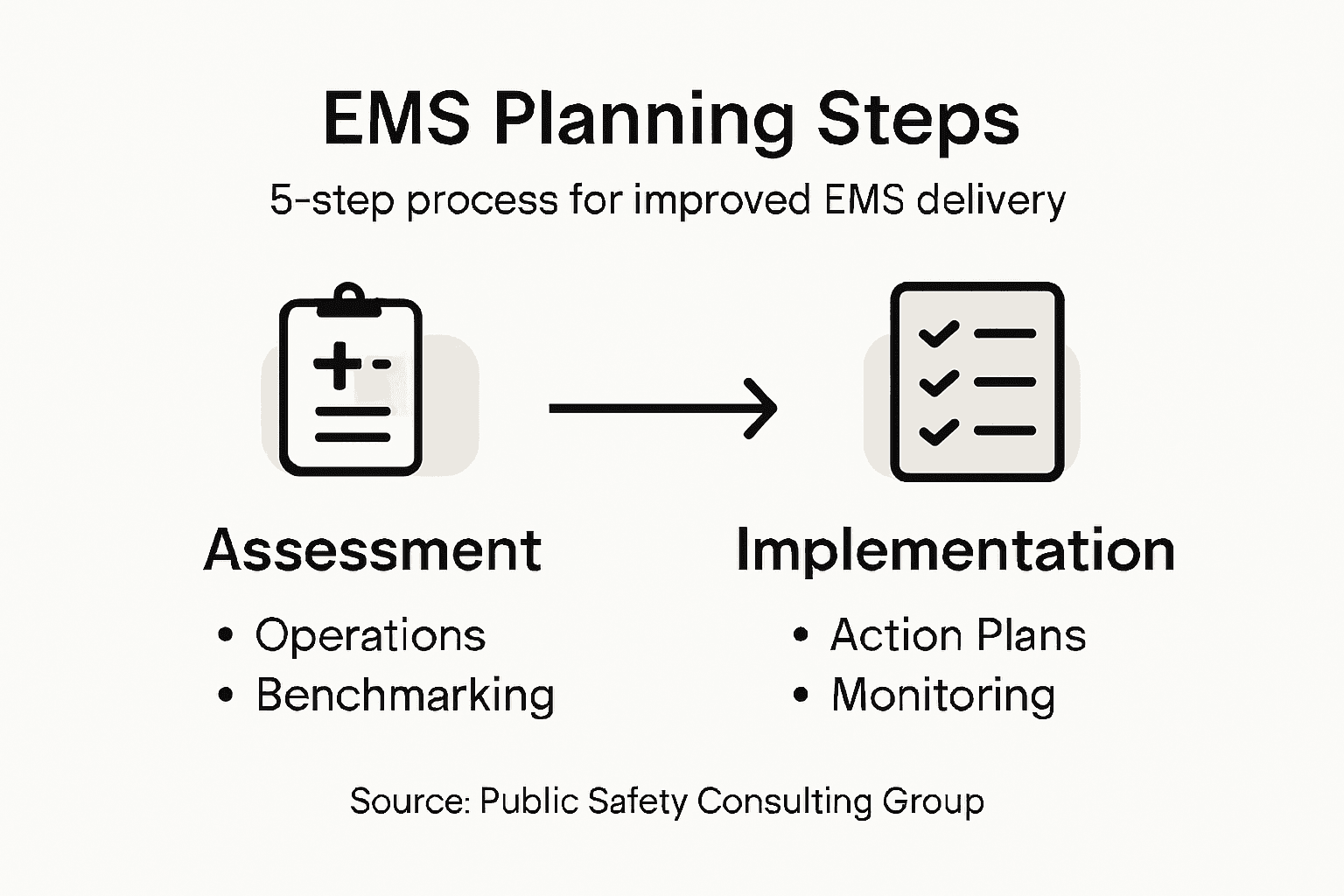
- Step 3: Develop Measurable Objectives And Action Plans
- Step 4: Allocate Resources And Assign Responsibilities
- Step 5: Monitor Progress And Adjust The Plan As Needed
Quick Summary
| Key Point | Explanation |
|---|---|
| 1. Assess EMS Operations Thoroughly | Analyze key performance indicators and operational data to identify strengths, gaps, and areas for improvement in your EMS system. |
| 2. Engage Diverse Stakeholders | Involve frontline personnel, government officials, and community members to ensure the strategic plan aligns with community needs and perspectives. |
| 3. Set SMART Objectives | Develop specific, measurable, achievable, relevant, and time-bound objectives to turn broad goals into actionable plans for EMS improvement. |
| 4. Allocate Resources Strategically | Match financial, human, and technological resources with your strategic priorities using tools like a RACI matrix for clear responsibility assignment. |
| 5. Continuously Monitor and Adapt | Establish regular review cycles and adaptive protocols to refine your strategic plan based on performance metrics and stakeholder feedback. |
Step 1: Assess Current EMS Operations and Capabilities
Assessing current EMS operations and capabilities is a critical foundation for strategic planning that enables municipalities to understand their existing service delivery landscape. By systematically evaluating current performance, resources, and potential gaps, organizations can develop targeted improvement strategies.
To conduct a comprehensive assessment, begin by gathering detailed operational data across multiple dimensions. Strategic assessment frameworks recommend analyzing key performance indicators such as:
- Response times
- Call volume patterns
- Geographic coverage
- Current staffing levels
- Equipment and technology inventory
- Training and certification status of personnel
- Historical incident data and response effectiveness
Review existing documentation including run logs, patient care reports, dispatch records, and performance metrics. Consider scheduling interviews with frontline staff, dispatchers, and leadership to gain qualitative insights into operational strengths and challenges. Quantitative data combined with staff perspectives provides a holistic understanding of your EMS system’s current capabilities.
Utilize standardized assessment tools and benchmarking resources to compare your organization’s performance against regional and national standards. This approach helps identify specific areas requiring strategic intervention and resource allocation.
Pro tip: Create a cross-functional assessment team representing different organizational roles to ensure comprehensive and objective evaluation of your EMS operations.
Step 2: Engage Stakeholders to Define Strategic Priorities
Engaging stakeholders is a crucial step in developing a comprehensive EMS strategic plan that reflects the diverse needs and perspectives of your community. Collaborative strategic planning ensures that your organization develops priorities with input from key participants who understand the intricate challenges of emergency medical services.
Begin by identifying a comprehensive list of stakeholders across multiple domains:
- Frontline EMS personnel
- Dispatch center supervisors
- Hospital emergency department administrators
- Local government officials
- Public health representatives
- Community healthcare providers
- Patient advocacy groups
- Regional emergency management coordinators
Utilize structured engagement methods to gather meaningful insights, such as facilitated workshops, targeted interviews, and collaborative feedback sessions. These interactions should focus on understanding each stakeholder’s perspective on current service challenges, potential improvements, and strategic opportunities for enhancing EMS delivery.
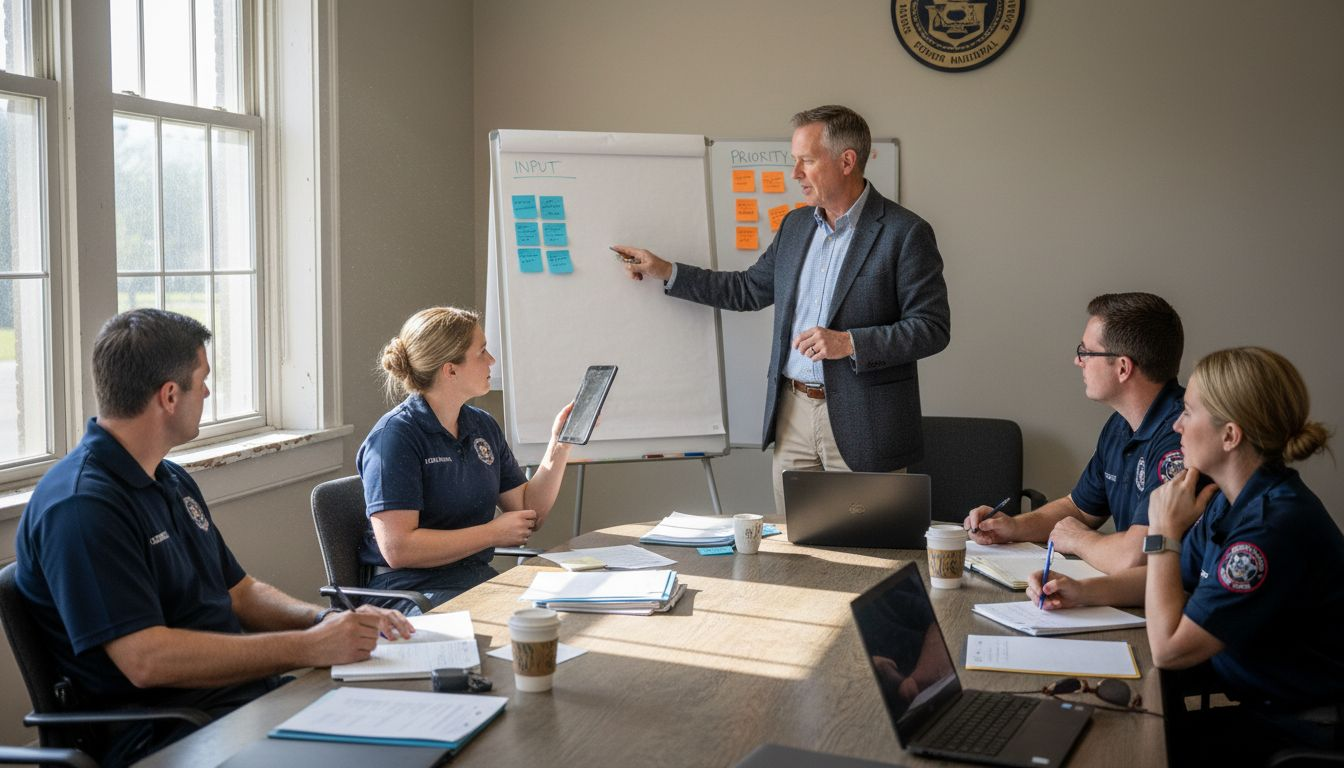
Develop a systematic approach to synthesizing stakeholder input, creating a weighted framework that allows you to prioritize strategic recommendations based on frequency, impact, and feasibility. This ensures that your strategic plan represents a balanced, comprehensive view of organizational needs and community expectations.
Pro tip: Create a stakeholder engagement matrix to track participation, contributions, and follow-up communications to maintain transparency and continued collaboration.
Step 3: Develop Measurable Objectives and Action Plans
Developing clear, actionable objectives is the cornerstone of a successful EMS strategic plan. Strategic planning frameworks provide a structured approach to transforming broad organizational goals into specific, measurable targets that drive meaningful improvements in emergency medical services.
Begin by crafting SMART objectives that are:
- Specific: Clearly defined and unambiguous
- Measurable: Quantifiable with concrete metrics
- Achievable: Realistic within your current resources
- Relevant: Aligned with organizational mission
- Time-bound: Include specific timelines for completion
For each strategic priority identified during stakeholder engagement, develop corresponding action plans that outline:
- Specific performance targets
- Responsible team members or departments
- Required resources
- Detailed implementation steps
- Key performance indicators (KPIs)
- Milestone tracking mechanisms
- Potential obstacles and mitigation strategies
Utilize a comprehensive tracking system that allows for regular monitoring and adaptive management. This approach enables your organization to remain flexible and responsive to emerging challenges while maintaining a clear strategic direction.
Effective action plans transform strategic vision into operational reality, bridging the gap between conceptual goals and tangible improvements.
Pro tip: Create a visual dashboard that displays real-time progress on strategic objectives, enabling quick performance assessment and facilitating data-driven decision making.
Step 4: Allocate Resources and Assign Responsibilities
Effective resource allocation and responsibility assignment are critical to transforming strategic objectives into operational success. Strategic resource management ensures that your EMS organization can efficiently execute its strategic plan by matching available resources with strategic priorities.
Begin by conducting a comprehensive resource inventory across key categories:
- Financial Resources: Budget allocations
- Human Capital: Staff skills and availability
- Technological Assets: Equipment and systems
- Infrastructure: Facilities and support mechanisms
- Training Resources: Professional development opportunities
Utilize a RACI matrix to clarify roles and responsibilities for each strategic initiative:
- Responsible: Who will perform the work
- Accountable: Who makes final decisions
- Consulted: Who provides input
- Informed: Who needs to be updated on progress
Clear role definition prevents organizational confusion and ensures focused, efficient implementation of strategic objectives.
Ensure that resource allocation aligns closely with your organization’s strategic priorities, creating a transparent process for tracking investments and expected outcomes. Regularly review and adjust resource distributions to maintain flexibility and responsiveness to emerging challenges.
Pro tip: Develop a dynamic resource allocation spreadsheet that allows real-time tracking of budget, personnel, and asset utilization across different strategic initiatives.
Step 5: Monitor Progress and Adjust the Plan as Needed
Continuous monitoring and strategic adaptation are essential for maintaining the effectiveness of your EMS strategic plan. Performance monitoring strategies enable your organization to track progress, identify potential challenges, and make data-driven adjustments that keep your strategic initiatives aligned with organizational goals.
Establish a comprehensive monitoring framework that includes:
- Quantitative Metrics: Numerical performance indicators
- Qualitative Feedback: Stakeholder insights and observations
- Regular Review Cycles: Scheduled assessment intervals
- Data Collection Mechanisms: Standardized reporting tools
- Comparative Benchmarking: External performance standards
Implement a systematic approach to tracking and evaluating strategic objectives:
- Define clear key performance indicators (KPIs)
- Set up automated reporting systems
- Conduct quarterly progress reviews
- Create adaptive adjustment protocols
- Document lessons learned
- Communicate status updates transparently
Strategic plans are living documents that require continuous refinement and responsive management to remain effective.
Remain flexible and open to modifying your strategic approach based on emerging data, changing organizational needs, and external environmental factors. Your ability to pivot and adapt will determine the long-term success of your strategic initiative.
Pro tip: Develop a centralized dashboard that provides real-time visibility into strategic performance metrics, enabling quick identification of potential bottlenecks or opportunities for improvement.
The table below compares key EMS monitoring methods and their primary uses:
| Monitoring Method | What It Tracks | Strategic Value |
|---|---|---|
| Quantitative Metrics | Numerical KPIs | Measures performance objectively |
| Qualitative Feedback | Staff and stakeholder insights | Captures operational nuances |
| Benchmarking | External standards | Identifies competitive position |
| Automated Reports | Real-time data trends | Supports timely intervention |
Here is a summary showing how each step of EMS strategic planning contributes to organizational effectiveness:
| Step | Main Focus | Organizational Benefit |
|---|---|---|
| Assess Operations | Identify strengths and gaps | Informs targeted improvements |
| Engage Stakeholders | Collect diverse perspectives | Ensures community alignment |
| Develop Objectives | Set clear, measurable goals | Drives organized progress |
| Allocate Resources | Assign tasks and funding | Boosts efficiency and clarity |
| Monitor Progress | Track and adapt initiatives | Maintains long-term success |
Strengthen Your EMS Strategic Planning with Expert Guidance
Facing challenges in assessing EMS operations or defining measurable objectives is common for many EMS leaders aiming for successful service delivery. This article highlights crucial steps like engaging stakeholders, allocating resources, and monitoring progress to ensure a strategic plan that truly works. If these concepts resonate with your current EMS system needs, you are not alone in seeking a proven partner to bring clarity and efficiency to your strategic initiatives.
Unlock the full potential of your EMS strategic plan by partnering with The Public Safety Consulting Group. As a leading Connecticut-based EMS and public safety consulting firm, PSCG specializes in EMS system design, municipal EMS strategy, and operational risk reduction to help you overcome the exact pain points discussed in this article. Take action now and explore how our tailored solutions can help you translate your strategic vision into real-world success by visiting The Public Safety Consulting Group. Begin your journey toward optimized EMS service delivery today.
Frequently Asked Questions
What are the first steps in the EMS strategic planning process?
Assess current EMS operations by gathering detailed performance data and reviewing documentation like run logs and patient care reports. Conduct interviews with frontline staff to gain insights and identify strengths and challenges in your service delivery.
How do I engage stakeholders effectively during the planning process?
Identify a diverse group of stakeholders, including frontline personnel and local government officials, to gather their perspectives on current challenges and potential improvements. Use structured methods such as workshops and feedback sessions to ensure their input is included in defining strategic priorities.
What are SMART objectives, and how do I develop them for my EMS plan?
SMART objectives are Specific, Measurable, Achievable, Relevant, and Time-bound goals that guide your strategic plan. Create these objectives by clearly defining performance targets, aligning them with your organizational mission, and setting deadlines for their achievement.
How can I ensure that resources are allocated effectively in my EMS strategic plan?
Conduct a comprehensive resource inventory that assesses financial, human, and technological resources to match with strategic priorities. Utilize a RACI matrix to clarify roles and responsibilities, ensuring that everyone understands their tasks and commitments to the plan.
What methods should I use to monitor progress and adjust my EMS strategic plan?
Establish a monitoring framework that includes quantitative metrics and qualitative feedback to evaluate progress. Schedule regular review cycles and adapt the plan based on data collected, focusing on key performance indicators to ensure ongoing effectiveness.
How can I create actionable plans for my EMS strategic priorities?
Develop detailed action plans for each priority, outlining specific performance targets, responsible team members, and necessary resources. Include tracking mechanisms and milestones to monitor progress, making adjustments as needed to stay aligned with your strategic objectives.