


Misunderstandings during a crisis can lead to costly delays, putting both responders and patients at risk across Connecticut. Public safety directors and EMS administrators face growing demands for clear, consistent communication that works across departments and jurisdictions. By focusing on standardized public safety terminology, teams eliminate confusion and streamline every handoff, laying the groundwork for better outcomes and operational efficiency in emergency response.
Table of Contents
- Defining Public Safety Terminology For EMS
- Key EMS And Public Safety Terms Explained
- Common Variations And Agency-Specific Language
- Operational Impact Of Terminology Consistency
- Legal Implications And Compliance Issues
- Best Practices For Adopting Standardized Terms
Key Takeaways
| Point | Details |
|---|---|
| Standardized Terminology Enhances Communication | Consistent use of public safety terminology streamlines information transfer and improves patient care across EMS teams. |
| Continuous Training is Essential | Ongoing education in standardized terms and regular review is crucial for maintaining effective communication among emergency responders. |
| Interagency Collaboration Requires Clarity | Universal communication standards help eliminate misunderstandings between different public safety agencies during emergencies. |
| Legal Compliance and Terminology Precision | Accurate terminology is critical for meeting legal requirements and protecting organizations from potential liabilities in communication practices. |
Defining Public Safety Terminology for EMS
Effective communication represents the critical backbone of emergency medical services (EMS), where precise language can mean the difference between life and death. Public safety terminology provides a standardized communication framework that enables rapid, accurate information exchange among medical professionals, ensuring patient care consistency and operational efficiency.
The foundation of effective EMS communication relies on understanding and implementing key medical abbreviations and acronyms. These shorthand references allow emergency responders to convey complex medical information quickly and precisely. Critical standard terminologies include:
- ABC: Airway, Breathing, Circulation – the primary assessment sequence
- ACLS: Advanced Cardiac Life Support
- AED: Automated External Defibrillation
- EMT: Emergency Medical Technician
- CPR: Cardiopulmonary Resuscitation
Standardized terminology serves multiple crucial functions in public safety communication. It reduces ambiguity, minimizes potential misunderstandings, and creates a universal language that transcends individual communication styles or regional differences. By adopting consistent terminology, EMS teams can streamline information transfer, enhance patient handoff procedures, and improve overall emergency response effectiveness.
Pro tip: Create a personal reference guide with standard EMS abbreviations and review it regularly to maintain sharp communication skills.
Key EMS and Public Safety Terms Explained
The landscape of emergency medical services (EMS) requires a sophisticated understanding of specialized terminology that ensures clear, precise communication during critical moments. Medical abbreviations serve as essential communication tools that enable rapid information exchange and standardized patient care protocols.
Critical terminology in public safety encompasses several key categories that professionals must master:
Operational Terms
- ICS: Incident Command System
- ERP: Emergency Response Plan
- MCI: Mass Casualty Incident
Medical Assessment Terms
- LOC: Level of Consciousness
- GCS: Glasgow Coma Scale
- ROM: Range of Motion
Transmission and Communication Terms
- 10-4: Message Received
- 10-20: Location
- Mayday: Emergency Situation Alert
Understanding these terms goes beyond memorization. Interoperability becomes crucial when multiple agencies collaborate during complex emergencies. Communication must be precise, eliminating potential misunderstandings that could compromise patient care or operational effectiveness.
The complexity of public safety communication requires continuous learning and adaptation. Emergency responders must stay current with evolving terminology, ensuring they can communicate effectively across different teams, departments, and emergency scenarios.
Pro tip: Develop a personal quick-reference guide with frequently used EMS abbreviations and review it monthly to maintain communication proficiency.
Common Variations and Agency-Specific Language
National emergency communication standards reveal the complex challenge of maintaining consistent terminology across diverse public safety agencies. Emergency responders frequently encounter language variations that can potentially compromise critical communication during high-stakes incidents.
Agency-specific language typically manifests in several distinct categories:
Geographic Variations
- Local code systems unique to individual regions
- State-level communication protocol differences
- Urban vs. rural terminology distinctions
Departmental Communication Codes
- Police 10-codes
- Fire department signal systems
- EMS specialized medical shorthand
Technological Communication Platforms
- Radio communication protocols
- Digital dispatch terminology
- Interagency communication software language
These linguistic variations create significant potential for misunderstanding. When multiple agencies respond to a single incident, communication breakdowns can occur if responders rely on agency-specific terminology rather than standardized plain language protocols.
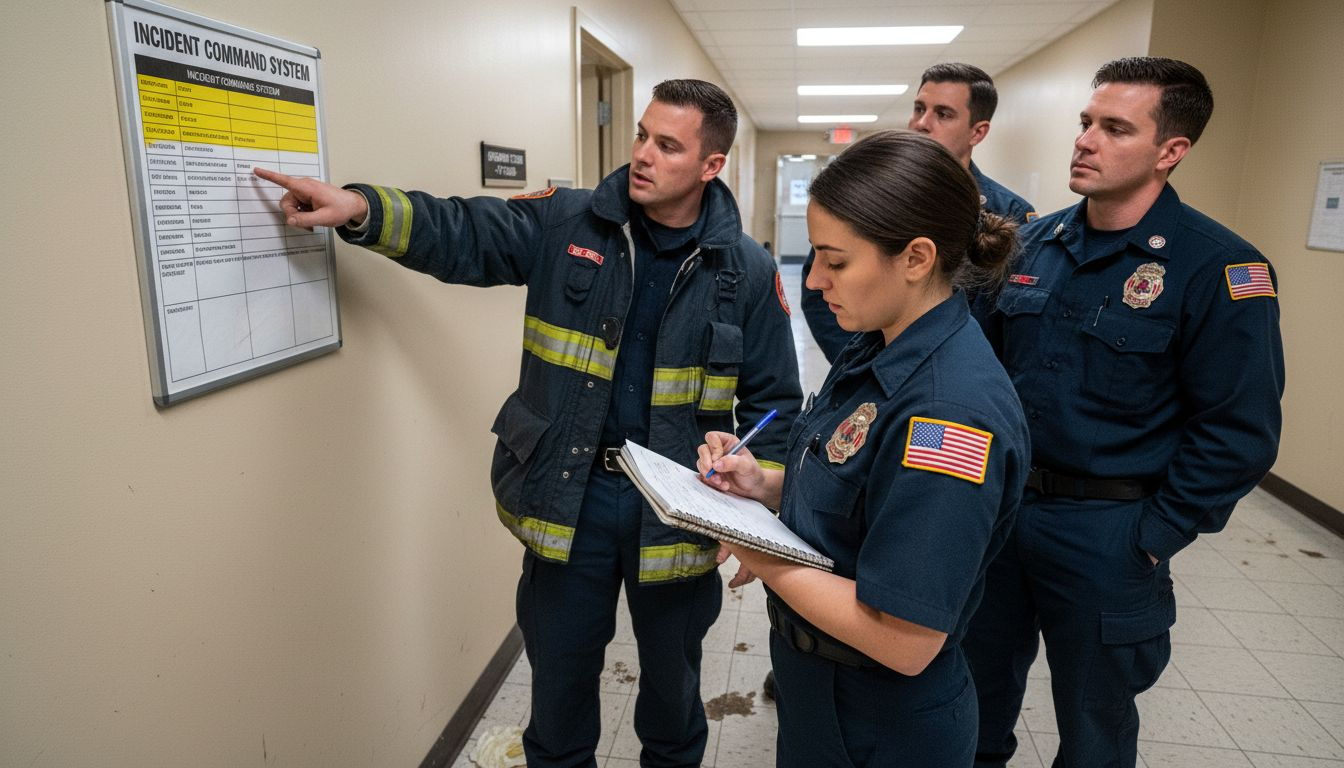
The critical solution involves adopting universal communication standards that prioritize clarity over traditional coded language. Emergency response organizations must continuously train personnel to use clear, concise language that transcends departmental boundaries and ensures accurate information transmission.
Pro tip: Develop a personal cross-agency terminology reference guide that highlights common communication variations and standardized language alternatives.
Operational Impact of Terminology Consistency
Common emergency communication standards dramatically influence operational effectiveness across public safety systems. Consistent terminology serves as the critical foundation for seamless inter-agency collaboration, reducing potential misunderstandings that could compromise emergency response outcomes.
The operational impacts of terminology consistency manifest in several key areas:
Decision-Making Speed
- Reduced communication processing time
- Faster incident assessment
- Quicker resource deployment
Risk Management
- Minimized miscommunication risks
- Enhanced situational awareness
- More precise incident reporting
Performance Measurement
- Standardized data collection
- Accurate quality assessment metrics
- Improved system-wide performance tracking
Emergency response organizations must recognize that language precision is not just a communication detail, but a fundamental operational strategy. When responders use consistent, clear terminology, they create a shared mental framework that transcends individual agency boundaries and personal communication styles.
The following table outlines how standardized EMS terminology impacts key operational outcomes:
| Operational Area | With Standardized Terminology | Without Standardized Terminology |
|---|---|---|
| Response Speed | Immediate understanding | Delays from clarification |
| Patient Safety | Lower risk of treatment errors | Increased chance of miscommunication |
| Interagency Collaboration | Seamless cooperation | Potential confusion and conflict |
| Data Accuracy | Reliable incident documentation | Inconsistent reporting |
The complex landscape of emergency services demands continuous adaptation and training. Implementing standardized communication protocols requires ongoing commitment from leadership, regular training sessions, and a culture that prioritizes clarity over traditional departmental communication practices.
Pro tip: Conduct quarterly inter-agency terminology review sessions to identify and resolve potential communication gaps across different emergency response teams.
Legal Implications and Compliance Issues
EMS legislative regulations create a complex framework governing public safety communication standards and professional conduct. Understanding these legal requirements is essential for emergency response organizations to maintain operational integrity and minimize potential liability risks.
Key legal compliance areas for EMS terminology and communication include:
Patient Confidentiality
- HIPAA privacy protection
- Medical record documentation standards
- Secure information transmission protocols
Professional Documentation
- Accurate incident reporting
- Legal standard for record-keeping
- Defensible communication practices
Regulatory Compliance
- State licensure requirements
- Federal emergency service guidelines
- Quality assurance documentation standards
Legal compliance extends beyond mere technical adherence. Terminology precision becomes a critical legal safeguard, potentially protecting organizations from potential litigation arising from miscommunication or documentation errors.
Emergency services must develop robust systems that integrate legal requirements into daily communication practices. This involves ongoing training, regular policy updates, and creating organizational cultures that prioritize both clear communication and legal compliance.
Here is a summary of legal compliance risks related to EMS communication and terminology:
| Compliance Area | Risk If Ignored | Benefit When Followed |
|---|---|---|
| Patient Confidentiality | Privacy violations, lawsuits | Protected patient information |
| Documentation Standards | Weak legal defense | Strong incident records |
| Regulatory Protocols | Fines or lost accreditation | Maintained operational licensure |
| Terminology Precision | Increased liability exposure | Reduced legal challenges |
Pro tip: Develop a comprehensive communication compliance checklist that integrates legal standards with operational communication protocols.
Best Practices for Adopting Standardized Terms
Electronic health record terminology standards provide a critical framework for transforming communication practices across emergency medical services. Successful adoption requires a strategic, multifaceted approach that addresses organizational culture, training, and technical infrastructure.
Key strategies for implementing standardized terminology include:
Organizational Preparation
- Conduct comprehensive communication audits
- Identify existing terminology variations
- Create baseline performance metrics
Training and Education
- Develop comprehensive terminology guidebooks
- Implement interactive learning modules
- Create scenario-based training experiences
Technical Implementation
- Update digital communication platforms
- Integrate standardized terminology databases
- Establish real-time terminology validation systems
Successful terminology standardization demands more than procedural changes. Organizational commitment requires leadership to model consistent language use, creating a culture that values precision and clarity in every communication interaction.
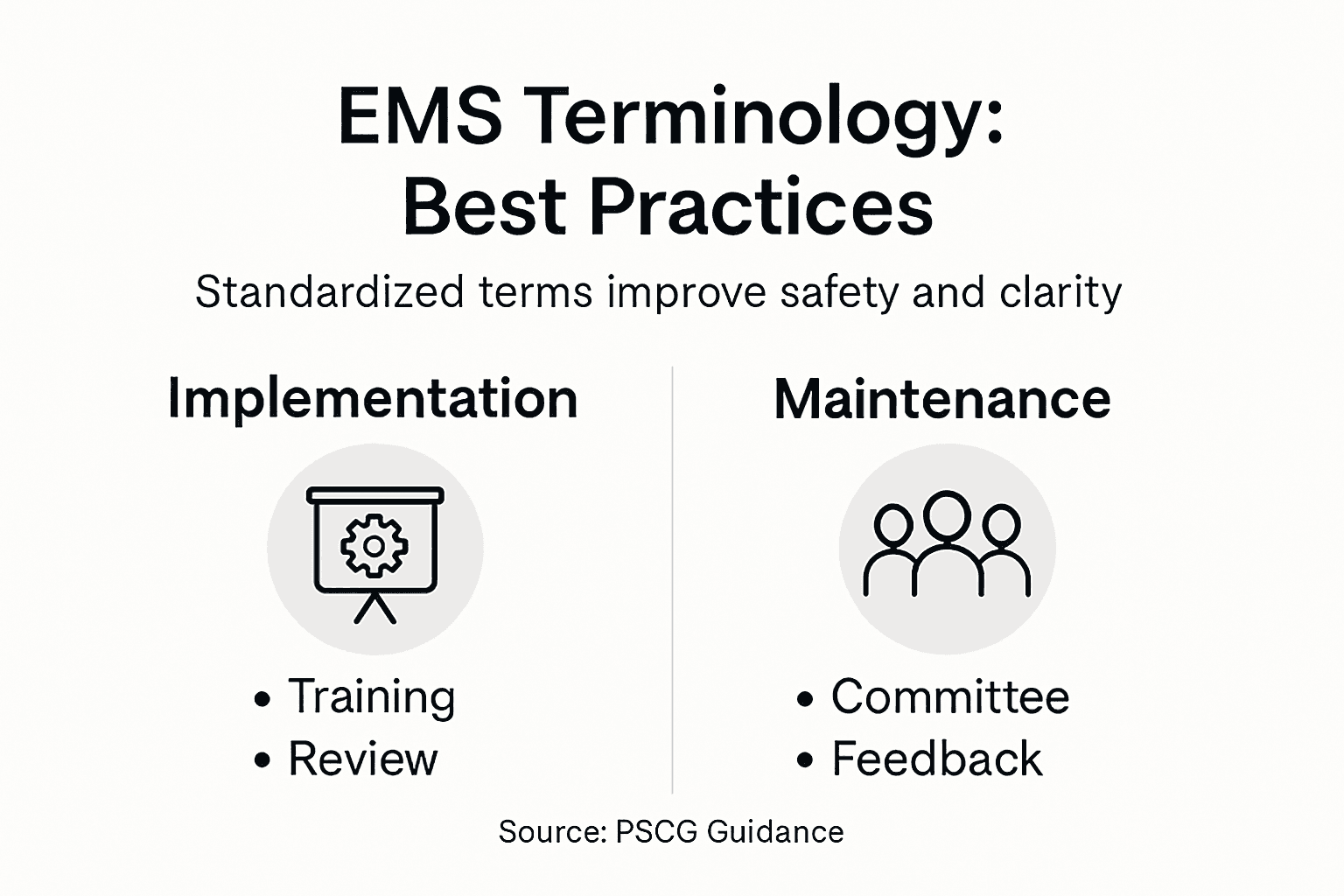
Emergency services must view terminology standardization as an ongoing process of continuous improvement. This involves regular review cycles, feedback mechanisms, and adaptive strategies that respond to emerging communication challenges and technological innovations.
Pro tip: Create a cross-departmental terminology review committee to continuously evaluate and refine communication standards.
Strengthen Your EMS Communication with Expert Guidance
In emergency medical services, clear and standardized public safety terminology is not just important it is vital for saving lives. The challenge discussed in this article highlights how inconsistent language and agency-specific codes can cause delays, misunderstandings, and increased risk during critical moments. If you are seeking to improve interoperability, reduce operational risks, and ensure legal compliance, understanding and implementing consistent EMS terminology is a key first step.
The Public Safety Consulting Group (PSCG) specializes in helping EMS systems and public safety organizations overcome these communication hurdles. Through strategic EMS system design, leadership development, and operational risk reduction, PSCG equips your team with the tools needed to adopt standardized terminology and enhance response effectiveness. Explore how expert consulting can transform your communication protocols and save precious time when it matters most.
Take the next step toward seamless EMS communication and stronger public safety outcomes today. Visit The Public Safety Consulting Group to learn more about our customized EMS system solutions. Let us partner with you to reduce risks, improve reimbursement strategies, and streamline terminology standards that save lives.
Frequently Asked Questions
What is public safety terminology in EMS?
Public safety terminology in EMS refers to standardized language, acronyms, and abbreviations used by emergency medical services to ensure clear and efficient communication among responders, enhancing patient care and operational effectiveness.
Why is standardized terminology important for EMS communication?
Standardized terminology reduces ambiguity, minimizes misunderstandings, and creates a universal language that improves information transfer, patient handoffs, and overall emergency response effectiveness.
How can EMS professionals improve their communication skills?
EMS professionals can improve their communication skills by creating a personal reference guide with standard abbreviations, participating in regular training, and conducting quarterly terminology review sessions with their teams.
What are some examples of critical EMS acronyms?
Some critical EMS acronyms include ABC (Airway, Breathing, Circulation), ACLS (Advanced Cardiac Life Support), AED (Automated External Defibrillator), EMT (Emergency Medical Technician), and CPR (Cardiopulmonary Resuscitation).
Recommended
- Practical examples of customer service principles in EMS | The Public Safety Consulting Group
- Interoperability Without Surrender | The Public Safety Consulting Group
- C-MED Dispatch Centers: A Dying Technology or a Sleeping Giant Ready to Evolve? | The Public Safety Consulting Group
- EMS Myth Buster’s: What the public needs to know | The Public Safety Consulting Group
- Enhancing Business Safety with Voipcom e911 Notifications – Voipcom