


TL;DR:
- EMS system design and response models matter more than fleet size for community health outcomes.
- Regionalization directs patients to specialized facilities, significantly reducing preventable mortality.
- Technological innovations like AI improve demand forecasting and dispatch efficiency, enhancing overall EMS performance.
Most municipal leaders assume EMS performance is primarily a staffing or equipment problem. Throw more ambulances at a coverage gap, and outcomes improve. The reality is more nuanced. EMS response models in the USA follow tiered structures involving 911 PSAPs, first responders, and transporting units staffed at EMR, EMT, AEMT, or paramedic levels, and the design of that structure matters far more than the number of vehicles in the fleet. Understanding which model fits your community’s geography, call volume, and clinical needs is the foundation of every effective public safety strategy.
Table of Contents
- Core EMS response models explained
- Regionalization and destination protocols
- Response time benchmarks and operational realities
- Innovative models: Optimization, technology, and resource sharing
- A fresh perspective on EMS model evolution
- Connect with experts to advance your EMS system
- Frequently asked questions
Key Takeaways
| Point | Details |
|---|---|
| Tiered EMS structures | Most American EMS systems use a tiered approach, coordinating responders based on call urgency and resources. |
| Regional destination protocols | Directing patients to the best-suited facility through regionalization significantly reduces preventable deaths. |
| Time-critical benchmarks | Faster response times correlate directly with improved survival rates, especially for cardiac emergencies. |
| Innovative optimization options | Emerging models, including treat-in-place and AI-supported dispatch, are transforming EMS efficiency and resource use. |
Core EMS response models explained
With common misconceptions laid out, let’s clarify the actual structures behind EMS response in American communities. The USA operates one of the most complex pre-hospital care systems in the world, with over 21,000 EMS agencies and approximately 6,000 Public Safety Answering Points (PSAPs) coordinating emergency response across vastly different environments.
The primary EMS response structures you’ll encounter include:
- Single-tiered systems: One unit responds to all calls, typically staffed at the ALS (Advanced Life Support) or BLS (Basic Life Support) level. Simple to manage but resource-intensive.
- Tiered systems: Multiple response levels are dispatched based on call severity. A BLS unit handles lower-acuity calls while ALS units respond to critical emergencies, optimizing resource use.
- Fire-based EMS: Fire departments provide both suppression and EMS services. Common in urban areas, though it can create competing operational priorities.
- Third-service models: A standalone municipal EMS agency operates independently from fire and police. This model allows dedicated EMS leadership and focused clinical quality improvement.
- Public/private partnerships: Municipalities contract private ambulance providers for transport or supplemental coverage. Useful for managing surge capacity and cost control.
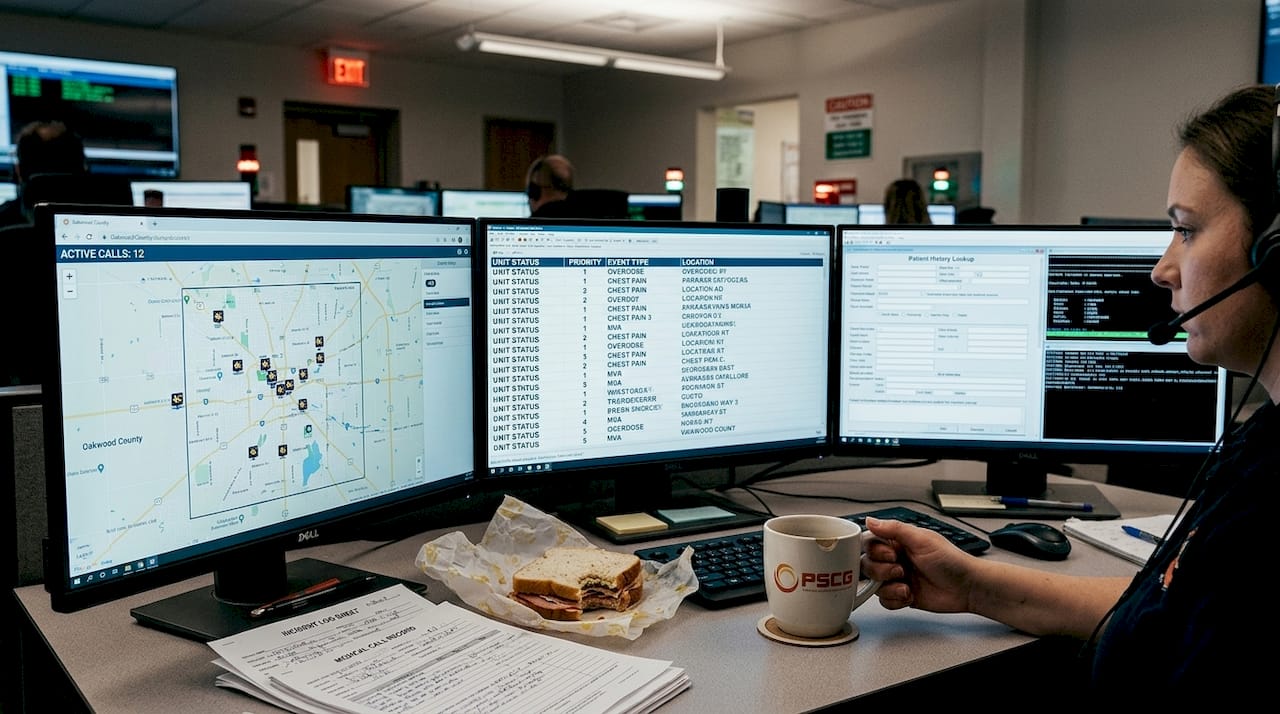
The workflow from emergency call to patient handoff follows a predictable sequence: a caller contacts 911, a PSAP dispatcher triages the call and assigns resources, first responders (often fire) arrive first to initiate care, and a transporting ambulance completes the response and delivers the patient to an appropriate facility. Each handoff point in that sequence is an opportunity for either efficiency or delay.
| Model type | Governance | Best suited for | Key tradeoff |
|---|---|---|---|
| Single-tiered ALS | Municipal or private | Dense urban areas | High cost per call |
| Tiered BLS/ALS | Municipal | Mixed urban/suburban | Coordination complexity |
| Fire-based EMS | Fire department | Communities with fire integration | Dual mission tension |
| Third service | Standalone EMS agency | Mid-to-large municipalities | Requires dedicated leadership |
| Public/private hybrid | Contracted | Rural or low-volume areas | Quality oversight challenges |
Understanding EMS service models at this level allows leaders to move beyond reactive budget decisions and toward deliberate system design. Reviewing system design examples from comparable municipalities can accelerate that process significantly.
Regionalization and destination protocols
Understanding the foundational EMS structures sets the stage to explore how advanced strategies like regionalization save lives. Regionalization is not simply about geography. It is a clinical and operational strategy that routes patients to the facility best equipped to treat their specific condition, rather than the nearest available hospital.
Regionalization directs patients to appropriate facilities such as trauma centers, stroke centers, and cardiac catheterization labs based on triage criteria, and the evidence supporting this approach is strong. Trauma regionalization alone can reduce preventable mortality by up to 50%, a figure that should anchor any serious conversation about destination protocol design.
How regionalization is implemented varies considerably across the country. Full and partial regionalization models exist side by side: Minnesota’s Prepositioning Service Areas represent a fully integrated regional approach, while states like Texas and California operate partial models where coordination is more fragmented. Research consistently shows that flexible regulatory frameworks outperform rigid, mandate-heavy structures in achieving regional EMS goals.
A well-designed destination protocol follows a structured decision sequence:
- Initial triage: Paramedic or EMT assesses patient condition using validated tools (e.g., GCS, Cincinnati Stroke Scale, trauma criteria).
- Condition classification: Determine whether the patient meets criteria for a specialty center (trauma, STEMI, stroke, pediatric).
- Facility availability check: Confirm receiving facility status and capacity via real-time communication.
- Transport decision: Select the closest appropriate facility, not simply the nearest hospital.
- Notification and handoff: Pre-notify the receiving team to activate specialty resources before arrival.
“Routing a STEMI patient past a community hospital to a cardiac catheterization center is not a delay. It is the intervention.”
Building regional partnerships between EMS agencies, hospitals, and public health authorities is what makes these protocols sustainable. Without formal agreements and shared data systems, even the best-designed destination protocol breaks down under real-world operational pressure.
Response time benchmarks and operational realities
With destination and resource sharing models addressed, it’s vital to understand how response times shape both policy and public health outcomes. Response time is the most visible EMS performance metric, and it is also the most frequently misread.
National benchmarks establish that urban EMS systems should target an average response time of approximately 7 minutes, with a goal of reaching 90% of Priority 1 calls in under 8 minutes. Rural systems face a fundamentally different reality, with average rural response times running 20 or more minutes longer than the national average. Total rural call times average 92.8 minutes compared to 74.1 minutes nationally, and rural calls involve higher acuity patients, with 39% classified as high-acuity versus 26% nationally.
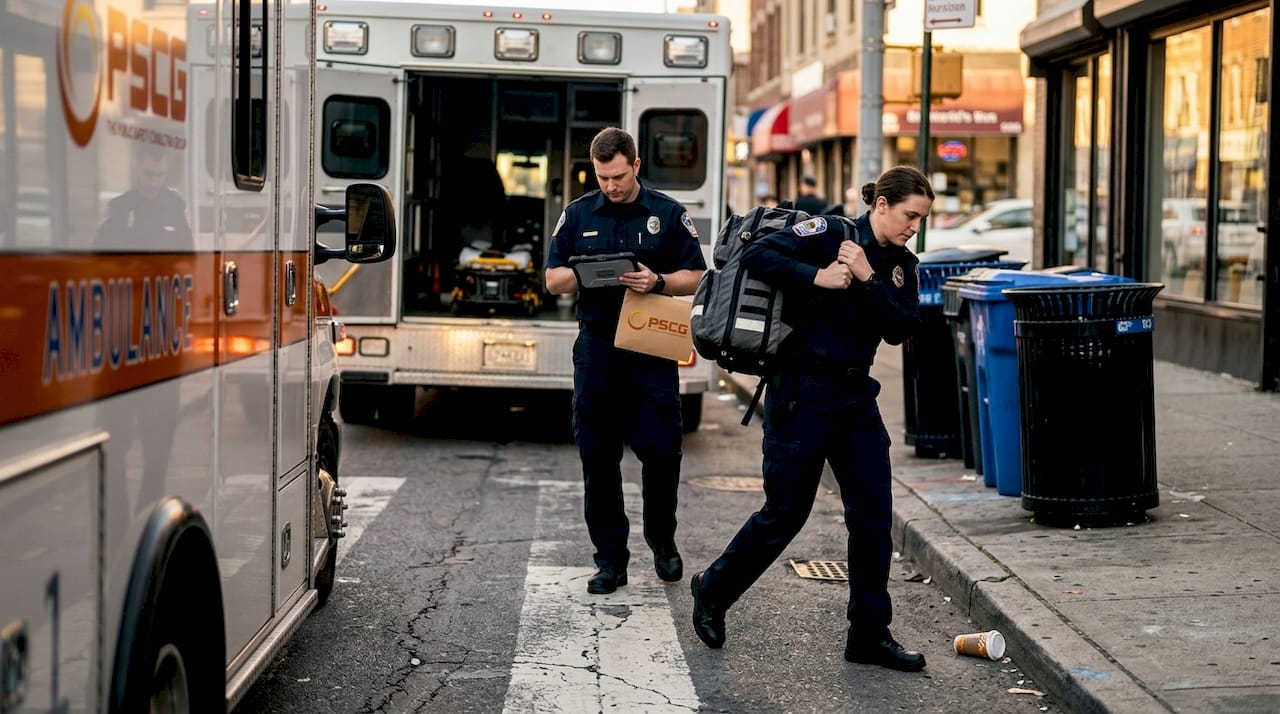
The clinical stakes behind these numbers are significant. Cardiac arrest survival drops 7 to 10% for every one-minute delay in defibrillation. That means a system running 2 minutes slower than benchmark is not just underperforming on paper. It is producing measurably worse patient outcomes.
Factors that drive response time variability include:
- Population density and geography: Urban systems benefit from shorter travel distances; rural systems face unavoidable distance challenges.
- Unit deployment strategy: Static posting versus System Status Management (dynamic deployment) significantly affects response time consistency.
- Call volume and resource availability: Peak demand periods create queuing delays when unit availability is low.
- Dispatch protocols: Inconsistent triage at the PSAP level leads to either over-dispatch or under-dispatch, both of which affect response efficiency.
- Infrastructure: Road conditions, traffic patterns, and seasonal weather all affect travel time in ways that aggregate data often obscures.
Pro Tip: Don’t evaluate your EMS system’s response time performance using averages alone. Percentile-based analysis, specifically 90th percentile performance, gives a far more accurate picture of how your system performs for the patients who need it most.
Leaders who want to optimize EMS response should pair benchmark data with call-level analysis to identify whether delays are occurring at dispatch, travel, or scene time. Each has a different operational fix. A solid EMS strategy guide can help frame that analysis in a way that drives actionable decisions rather than just generating reports.
Innovative models: Optimization, technology, and resource sharing
With a foundation in what works today, let’s look to the cutting edge, specifically the future-ready models and technologies that are redefining EMS effectiveness. The most forward-looking systems are moving beyond the traditional “send an ambulance, transport to the ED” model toward patient-centered care pathways that match the right resource to the right need.
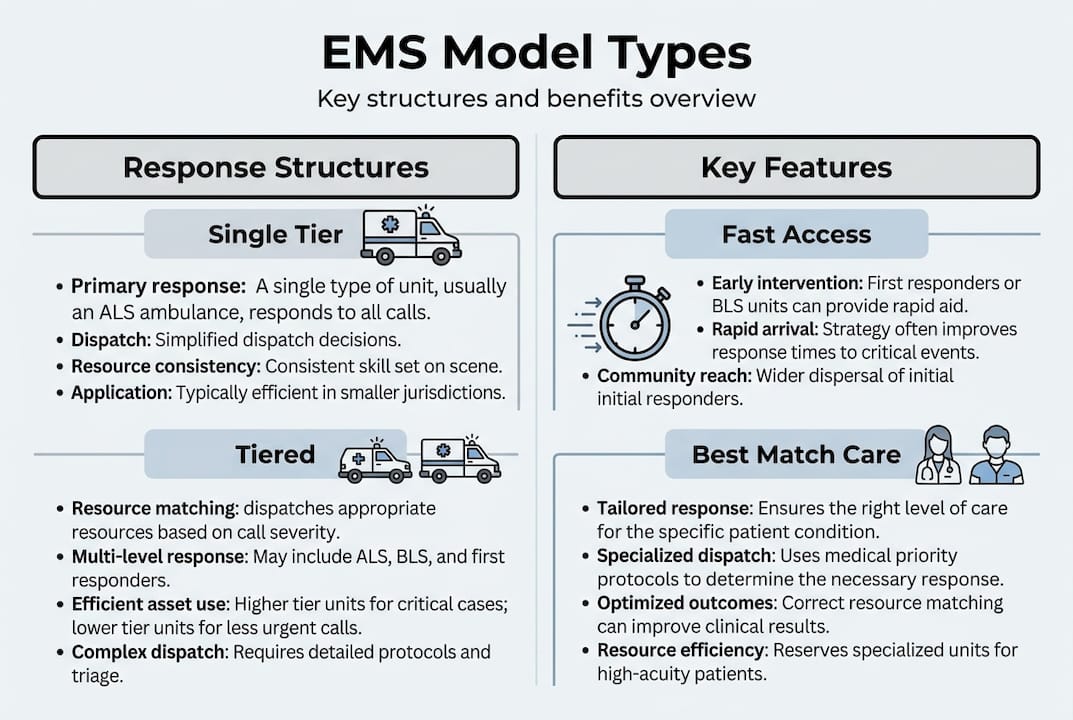
Treat-in-place and alternate destination programs are among the most impactful innovations in current EMS practice. These patient-centered care pathways can reduce emergency department overcrowding by up to 80% for appropriate low-acuity calls, freeing ALS units for true emergencies and reducing unnecessary ED utilization costs for both patients and municipalities.
Artificial intelligence and machine learning are also reshaping how EMS systems operate:
- Predictive demand modeling: AI systems analyze historical call data, weather patterns, and event schedules to forecast demand and pre-position units accordingly.
- Dispatch optimization: Machine learning algorithms support dispatchers in matching call severity to the most appropriate resource in real time.
- Dynamic deployment: AI-assisted System Status Management continuously repositions units based on current system load and geographic coverage gaps.
Rural EMS systems face unique variability driven by weather, call priority distributions, and resource constraints, and ML-based analysis is proving particularly valuable in identifying patterns that human planners miss. Regional resource sharing, including shared fleet agreements, mutual aid protocols, and flexible cross-trained staffing, addresses the capacity gaps that technology alone cannot close.
Pro Tip: Before piloting any new technology or alternate destination program, map your existing regulatory framework first. Many promising innovations stall not because of operational failure but because of unaddressed scope-of-practice or billing compliance issues. Engage your state EMS office early. Review EMS best practices from systems that have already navigated those regulatory pathways to avoid repeating avoidable mistakes.
A fresh perspective on EMS model evolution
Stepping outside data and models, here is what our consulting experience highlights as the real keystone issues most municipal leaders overlook. The conversation about EMS model selection almost always centers on visible metrics: response times, unit hour utilization, and cost per call. Those metrics matter. But the system dynamics that determine long-term performance live underneath those numbers.
Regulatory flexibility, case mix variability, and the quality of inter-agency coordination are the factors that separate systems that sustain improvement from those that plateau after an initial investment. We have seen municipalities spend significantly on new vehicles and technology without parallel investment in protocol development or triage training, and the performance gap persists regardless of the hardware upgrade.
The rural-urban divide deserves particular attention. Applying urban EMS benchmarks to rural systems as a performance standard is not just unhelpful. It actively misdirects resources. Regional solutions, built around shared infrastructure and flexible mutual aid, are the only sustainable answer for communities where geography makes individual agency performance targets unrealistic. Leaders who pursue practical EMS improvements grounded in their community’s actual case mix and resource profile will consistently outperform those chasing national averages that were never designed for their context.
Connect with experts to advance your EMS system
If your municipality is ready to innovate or solve performance gaps, here is how The Public Safety Consulting Group can help. Navigating EMS model selection, destination protocol design, and technology integration requires more than good intentions. It requires structured analysis, regulatory knowledge, and experience working across diverse system types.
At PSCG, we work alongside municipal leaders and emergency management officials to translate complex EMS data into clear, actionable strategy. Whether you need a full EMS strategy consulting engagement, a review of real-world EMS models relevant to your community, or a structured process to assess EMS needs before committing to a model change, we bring the expertise to move your system forward. Contact us today to start the conversation.
Frequently asked questions
What is a tiered EMS response model?
A tiered EMS response model dispatches different levels of care such as basic EMTs, paramedics, and specialized units based on call severity and resource availability. This structure optimizes resource use by matching response capability to clinical need rather than defaulting to the highest level of care for every call.
How does regionalization improve EMS outcomes?
Regionalization ensures patients are taken to the best-equipped facility for their condition, greatly reducing preventable deaths in emergencies like trauma and stroke. Routing patients past the nearest hospital to a specialty center is a clinical decision that directly improves survival rates.
Why do EMS response times differ between urban and rural areas?
Rural EMS responses are typically longer due to distance, fewer resources, and higher acuity calls compared to urban settings. Rural total call times average 92.8 minutes versus 74.1 minutes nationally, reflecting structural challenges that cannot be resolved through staffing adjustments alone.
What role does technology play in EMS optimization?
AI and advanced analytics help predict demand, optimize dispatch routes, and support real-time decision-making for better outcomes. These tools are most effective when integrated with strong protocols and regulatory frameworks rather than deployed as standalone solutions.