


Municipal leaders face a critical challenge: determining whether their community’s EMS system truly meets local emergency response demands. Without a structured assessment approach, gaps in coverage, staffing, and equipment can go unnoticed until a crisis exposes them. This guide provides municipal leaders and public safety officials with practical, actionable methods to evaluate EMS needs systematically, identify service gaps, and implement improvements that enhance emergency response effectiveness and save lives.
Table of Contents
- Key takeaways
- Understanding EMS needs assessment: defining the problem and objectives
- Gathering and analyzing EMS data: what to measure and how to benchmark
- Engaging stakeholders and prioritizing EMS needs for actionable improvements
- Implementing EMS improvements and monitoring outcomes for sustained success
- Learn expert strategies for optimizing municipal EMS systems
- FAQ
Key Takeaways
| Point | Details |
|---|---|
| Define SMART objectives | Set clear SMART objectives aligned with local EMS needs before collecting data. |
| Interdisciplinary team | Form an early interdisciplinary assessment team including EMS leadership, municipal finance staff, dispatch supervisors, and frontline paramedics. |
| Data gathering and benchmarking | Collect response times, call volumes, staffing patterns, equipment status, and patient outcomes, then benchmark against standards to identify gaps. |
| Continuous monitoring | Implement ongoing performance tracking to sustain improvements and adjust strategies as needs evolve. |
Understanding EMS needs assessment: defining the problem and objectives
Before collecting data or analyzing performance, you must establish what you’re trying to accomplish. A needs assessment without clear objectives becomes an unfocused data collection exercise that wastes resources and produces vague recommendations. Start by identifying the specific community challenges your EMS system should address: Are response times in rural areas too long? Does call volume overwhelm your current staffing during peak hours? Is your aging population creating different medical emergency patterns?
Structured steps for EMS system assessment include defining clear, measurable objectives aligned with community needs. Your objectives should be SMART: specific, measurable, achievable, relevant, and time bound. Instead of “improve response times,” aim for “reduce average emergency response time to under 8 minutes for 90% of Priority 1 calls within 18 months.” This precision gives your assessment team concrete targets and makes success measurable.
Consider these community factors when setting objectives:
- Population demographics and growth trends that affect call volume and types
- Geographic challenges like rural areas, traffic congestion, or natural barriers
- Current response time performance across different zones and call priorities
- Staffing levels compared to call volume patterns throughout the day and week
- Equipment age, condition, and technological capabilities
Common pitfalls include setting objectives that sound impressive but lack measurable outcomes, focusing solely on cost reduction without considering service quality, and failing to involve frontline EMS personnel who understand operational realities. Your objectives should balance service quality, fiscal responsibility, and community expectations.
Pro Tip: Form an interdisciplinary assessment team early that includes EMS leadership, municipal finance staff, dispatch supervisors, and frontline paramedics. This diverse perspective prevents blind spots and ensures objectives address both operational realities and strategic priorities.
Gathering and analyzing EMS data: what to measure and how to benchmark
Comprehensive data collection transforms subjective opinions about EMS performance into objective evidence that drives smart decisions. You need quantitative metrics that reveal how your system actually performs, not how stakeholders believe it performs. Gather comprehensive data on response times, call volumes, staffing, equipment, and analyze against benchmarks to identify gaps.
Start with these essential data points:
- Response time metrics: Track time from 911 call receipt to unit arrival on scene, broken down by call priority, time of day, and geographic zone
- Call volume analysis: Document total calls, call types, peak demand periods, and seasonal variations over at least 12 months
- Unit hour utilization: Calculate the percentage of time each ambulance spends on calls versus available for response
- Staffing patterns: Record shift schedules, overtime usage, vacancy rates, and turnover statistics
- Equipment inventory: Assess vehicle age, maintenance records, medical equipment condition, and technology capabilities
- Patient outcomes: Review survival rates for cardiac arrests and other critical conditions where EMS intervention affects outcomes
Benchmarking provides context for your data by comparing your performance against recognized standards. The National Fire Protection Association recommends emergency medical response within 8 minutes for 90% of calls in urban areas, while rural standards may extend to 14 minutes. Statewide EMS assessments provide regional context that accounts for geographic and demographic differences.
| EMS metric | Urban benchmark | Suburban benchmark | Rural benchmark |
|---|---|---|---|
| Response time (Priority 1) | 8 minutes, 90% | 10 minutes, 90% | 14 minutes, 90% |
| Unit hour utilization | 30 to 40% | 25 to 35% | 15 to 25% |
| Ambulance per population | 1 per 15,000 | 1 per 20,000 | 1 per 10,000 |
| Cardiac arrest survival | 10 to 12% | 8 to 10% | 6 to 8% |
Digital EMS data systems dramatically improve analysis accuracy and efficiency. Computer aided dispatch systems, electronic patient care reporting platforms, and GPS tracking provide real time data that manual record keeping cannot match. These systems eliminate transcription errors, enable geographic heat mapping of call patterns, and allow you to spot trends that inform resource deployment decisions.
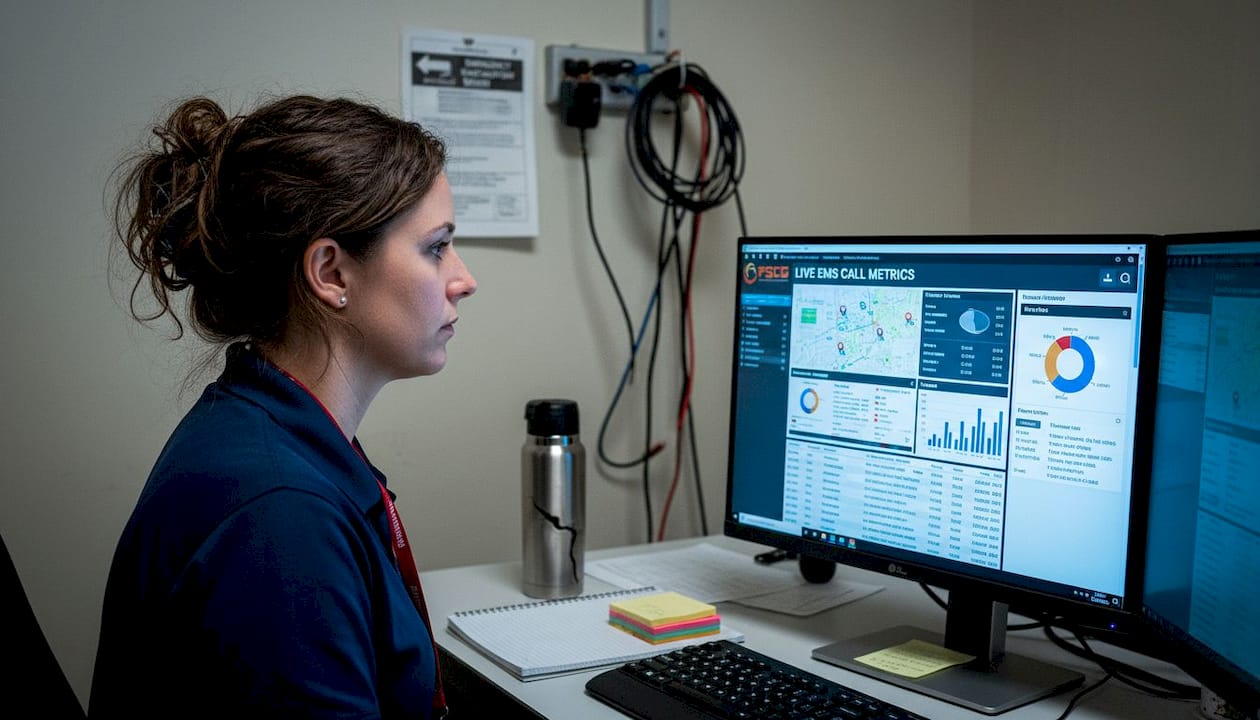
Pro Tip: When analyzing response times, separate “wheels rolling” time (how quickly crews leave the station) from travel time. This reveals whether delays stem from crew readiness issues or geographic coverage gaps, pointing you toward the right solutions.
Engaging stakeholders and prioritizing EMS needs for actionable improvements
Data analysis identifies problems, but stakeholder engagement determines which problems matter most to your community. Different groups bring valuable perspectives: EMS personnel understand operational constraints, elected officials balance competing budget priorities, healthcare partners see how EMS fits into the broader care continuum, and citizens experience the service firsthand. Engage stakeholders for priorities to ensure EMS enhancements align with community and operational expectations.
Effective stakeholder engagement requires multiple channels. Anonymous surveys allow EMS personnel to share concerns without fear of repercussion. Public forums give citizens a voice in service priorities. Advisory committees with rotating membership prevent any single interest group from dominating. Each method captures different insights that together form a complete picture of community needs and expectations.
When facilitating stakeholder input, present data visually through maps, charts, and comparison tables that make complex information accessible. Explain what the data means for service quality and public safety outcomes. Ask specific questions: “If we could only improve one aspect of EMS service next year, which would have the greatest impact on your community?” Vague questions produce vague answers.
Prioritization becomes necessary when needs exceed available resources. Use a scoring matrix that weights factors like life safety impact, cost to implement, timeline to see results, and community support. This structured approach prevents decisions based solely on who advocates most loudly. Some public safety strategy tips include transparent prioritization processes that build trust even when not everyone’s top choice gets funded immediately.
Stakeholder engagement do’s and don’ts:
- Do communicate assessment findings transparently, including unfavorable results
- Do explain the rationale behind prioritization decisions clearly
- Do provide multiple opportunities for input across different formats and times
- Don’t allow any single stakeholder group to dominate the conversation
- Don’t make promises about improvements before understanding full implementation costs
- Don’t ignore dissenting opinions, use them to identify potential implementation challenges
Conflicting priorities are inevitable. Frontline crews may prioritize new equipment while administrators focus on staffing costs and citizens want faster response times. Acknowledge these tensions openly and use data to show how different improvements interconnect. Adding staff may improve response times more cost effectively than adding stations. New equipment may reduce maintenance downtime that currently delays responses.
Implementing EMS improvements and monitoring outcomes for sustained success
Assessment without implementation wastes everyone’s time and erodes trust in future improvement efforts. Translate your prioritized needs into concrete action plans with assigned responsibilities, realistic timelines, and defined success metrics. Implement enhancements and monitor outcomes to ensure ongoing EMS system effectiveness.
Follow this implementation sequence:
- Develop detailed project plans for each improvement initiative, breaking large changes into manageable phases
- Secure necessary funding through budget allocations, grants, or alternative financing before announcing changes publicly
- Communicate implementation plans to all stakeholders, explaining what will change, when, and why
- Train personnel on new equipment, procedures, or protocols before deployment
- Launch improvements with clear start dates and initial performance targets
- Collect performance data from day one to establish baseline measurements under the new system
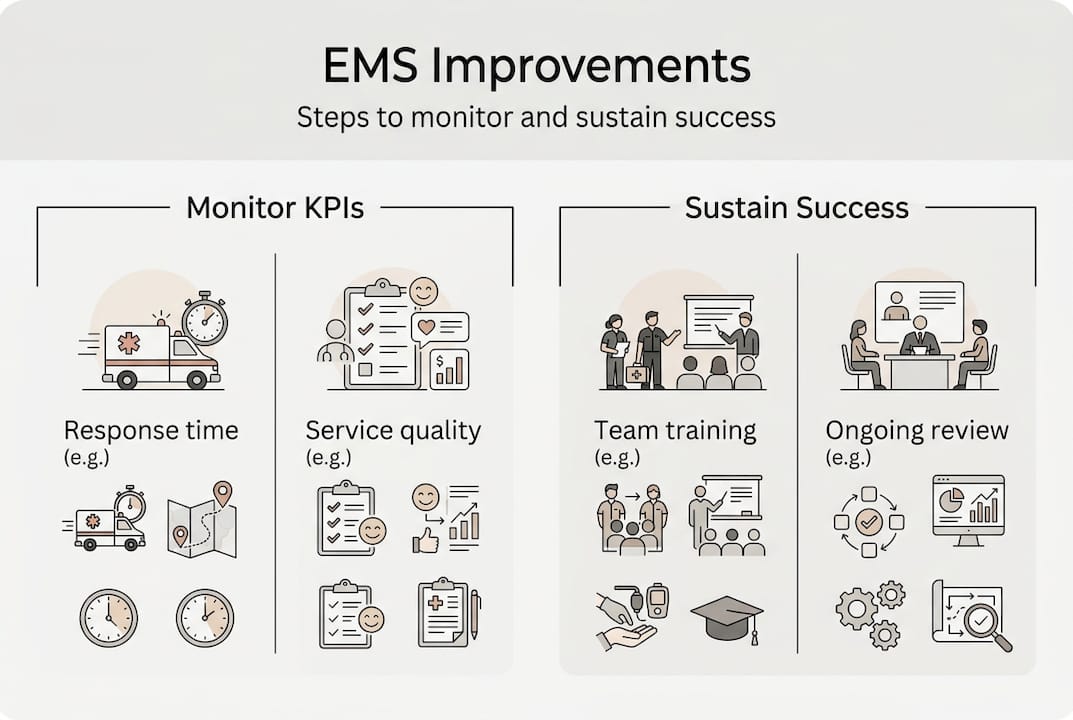
Establishing key performance indicators provides objective evidence of whether improvements deliver expected results. KPIs should directly connect to your original assessment objectives. If you aimed to reduce response times, track monthly average response times by zone. If you wanted to improve cardiac arrest survival, monitor save rates quarterly. Technology plays a crucial role here, as manual data collection rarely captures the detail needed for meaningful analysis.
| Approach | Characteristics | Outcomes | Best for |
|---|---|---|---|
| Reactive improvement | Respond to crises and complaints | Addresses immediate problems but misses systemic issues | Organizations with severe resource constraints |
| Proactive improvement | Regular assessment and continuous optimization | Prevents problems before they become crises | Organizations committed to service excellence |
Regular review cycles keep improvements on track and allow course corrections when results fall short. Schedule quarterly performance reviews for the first year after implementation, then shift to semi annual reviews once systems stabilize. These reviews should compare actual performance against targets, identify barriers to success, and adjust strategies as needed. System status management techniques help maintain optimal resource deployment as call patterns evolve.
Pro Tip: Create a public dashboard that displays key EMS performance metrics updated monthly. Transparency builds community trust and creates accountability that motivates sustained performance. Citizens who see response times improving become advocates for continued EMS investment.
Ongoing monitoring is not optional for public safety systems. The difference between a one time improvement and sustained excellence lies entirely in whether you measure, analyze, and adjust continuously. Communities that treat EMS assessment as an annual event rather than a continuous process inevitably see performance gains erode over time.
Technology integration accelerates improvement implementation and monitoring. Computer aided dispatch systems optimize unit deployment in real time. Electronic patient care reporting enables immediate quality assurance review. GPS tracking validates response time data and identifies optimal station locations. Predictive analytics forecast call volume patterns to guide staffing decisions. These tools require upfront investment but deliver ongoing operational efficiencies that justify their cost.
Sustained success requires embedding continuous improvement into organizational culture. Train EMS leadership in data analysis and performance management. Celebrate wins publicly when metrics improve. Address performance gaps promptly with additional training or resource adjustments. Make assessment and optimization routine parts of operations, not special projects that happen every few years.
Learn expert strategies for optimizing municipal EMS systems
Conducting a thorough EMS needs assessment and implementing effective improvements requires specialized expertise that many municipalities lack internally. Professional consulting services provide proven methodologies, objective analysis, and implementation support that accelerates results while avoiding common pitfalls that waste resources and delay improvements.
Expert consultants bring experience from dozens of municipal EMS systems, allowing them to quickly identify opportunities and challenges specific to your community’s context. They provide access to EMS system design examples tailored for municipal needs, demonstrating what works in communities similar to yours. This comparative perspective helps you avoid reinventing solutions that others have already perfected.
Consulting support benefits your assessment and improvement process by:
- Conducting objective analysis free from internal politics or preconceived solutions
- Providing specialized expertise in data analysis, benchmarking, and performance optimization
- Facilitating stakeholder engagement with neutral third party credibility
- Developing implementation roadmaps based on proven EMS strategic planning processes
- Training your team to sustain improvements through ongoing monitoring and adjustment
Professional guidance proves especially valuable when applying advanced techniques like system status management for EMS, which optimizes ambulance deployment dynamically based on real time demand patterns. These sophisticated approaches require expertise to implement correctly but deliver substantial response time improvements without adding vehicles or staff.
FAQ
How often should a municipality conduct an EMS needs assessment?
Municipalities should conduct comprehensive EMS needs assessments every two to three years to account for population changes, call volume trends, and system performance evolution. Annual reviews of key performance indicators between full assessments help identify emerging issues early. Communities experiencing rapid growth or significant demographic shifts may need more frequent assessments to ensure EMS capacity keeps pace with changing demands.
What data sources are most reliable for EMS assessment?
Electronic patient care reports and computer aided dispatch logs provide the most reliable operational data, capturing detailed information about every call and response. These digital systems eliminate manual transcription errors and enable sophisticated analysis of response times, call patterns, and patient outcomes. Supplementing internal data with benchmarking information from state EMS offices and national organizations like the National Highway Traffic Safety Administration adds valuable context for interpreting your performance metrics.
How can municipalities engage community stakeholders effectively?
Use multiple engagement methods to reach diverse stakeholders: online surveys for broad input, public forums for detailed discussion, and advisory committees for ongoing involvement. Communicate assessment goals and preliminary findings transparently, explaining what the data means for service quality in plain language. Schedule engagement opportunities at various times and locations to accommodate different schedules and ensure representative participation across your community.
What are common mistakes to avoid during EMS needs assessments?
The most damaging mistakes include setting vague objectives without measurable outcomes, collecting insufficient data to support reliable conclusions, and ignoring community specific factors that make your situation unique. Many municipalities also fail to align assessment findings with realistic implementation budgets, creating recommendations that never move forward. Finally, treating assessment as a one time project rather than establishing ongoing monitoring mechanisms prevents you from knowing whether improvements actually work as intended.
Recommended
- Interoperability Without Surrender | The Public Safety Consulting Group
- System Status Management: Improving EMS Response
- Mutual Aid in EMS: Not a Failure—A Sign of a System That’s Grown Up | The Public Safety Consulting Group
- The Impact of Climate Change on EMS: Preparing for More Extreme Weather Events | The Public Safety Consulting Group